
 by
by 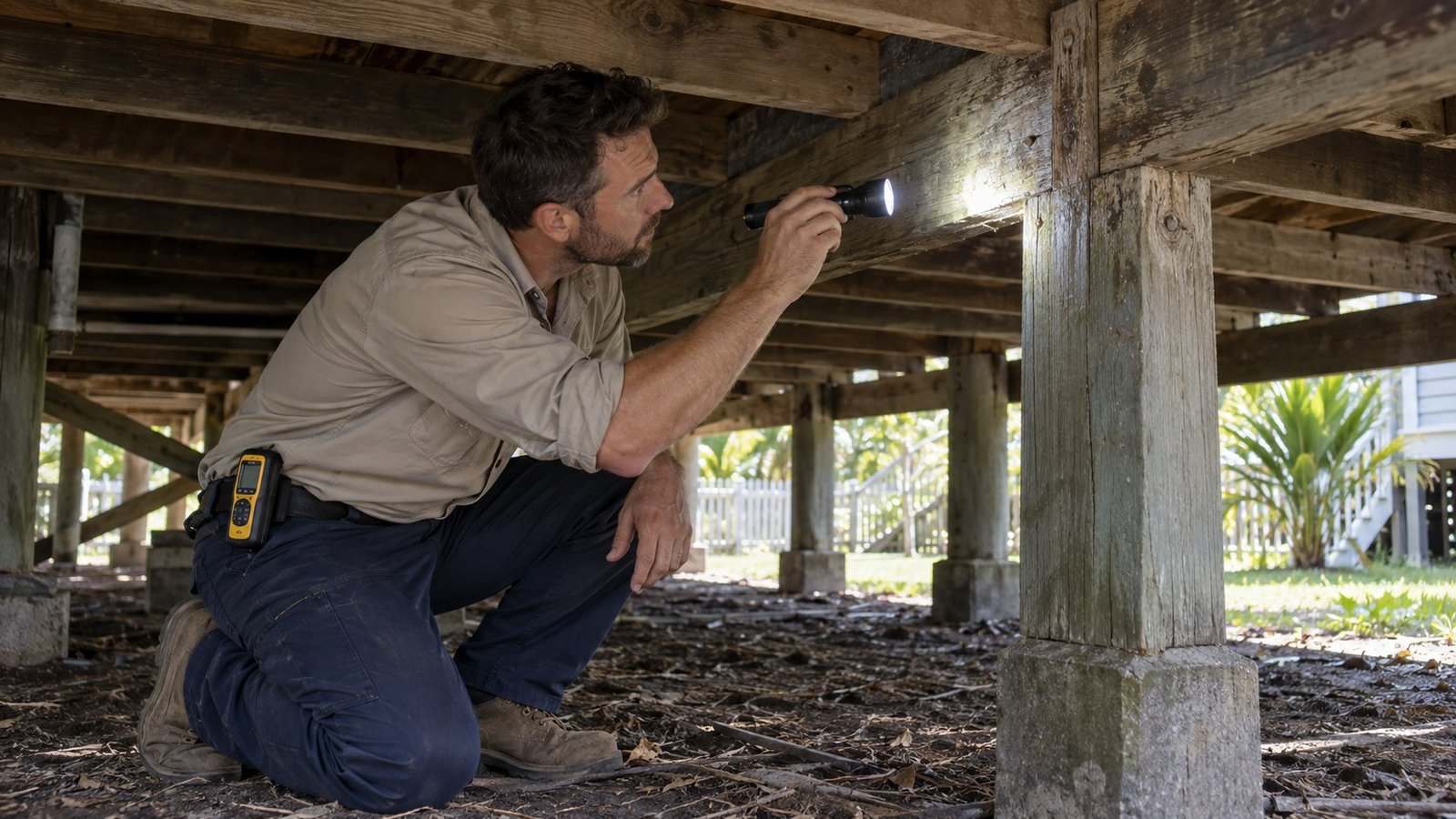
A building and pest inspection is one of the most useful steps a buyer can take before committing to a Queensland property, but it is not a guarantee and it does not cover everything. This guide explains what these inspections generally check, their limitations, and how to use the findings properly rather than treating the report as the final word.
What a Building Inspection Generally Checks
A pre-purchase building inspection is generally carried out in line with Australian Standard AS 4349.1. It typically covers the visible condition of the structure and fabric of the building, including the roof exterior and roof space, walls, floors, subfloor where accessible, ceilings, and site drainage. The inspector is generally looking for evidence of movement, cracking, dampness, and other defects that could affect the building’s structural performance.
What a Pest Inspection Generally Checks
A timber pest inspection is generally carried out in line with Australian Standard AS 4349.3. It focuses on termites, borers, wood decay, and conducive conditions, meaning circumstances that make termite attack more likely, such as timber in contact with soil, moisture build-up, or garden beds against the house. In Queensland, most areas carry some level of termite risk, which is part of why this inspection is treated as standard practice rather than optional.
Common Limitations and Exclusions
Both inspections are generally visual and non-invasive. Inspectors do not cut into walls, lift flooring, or move furniture and stored items, and they cannot see inside sealed wall cavities or below ground. A report reflects the condition that was visible and accessible on the day of inspection. Areas that were locked, obstructed, or not safely accessible are usually excluded and noted as such in the report.
Why an Inspection Is Not a Guarantee
Because these inspections are visual and point-in-time, a clear report is not a guarantee that no problems exist or that none will develop later. Conditions can change after the inspection date, and some defects only become apparent once walls are opened up or during renovation work. Treat the report as a professional opinion based on what was visible on the day, not a certification that the property is fault-free.
When Inspections Are Commonly Arranged
In Queensland, the standard REIQ contract includes a building and pest inspection condition, commonly under clause 4.2, which allows a buyer to make the contract conditional on receiving satisfactory building and pest reports by a nominated date. This means the inspection is typically arranged after the contract is signed but before that nominated date, working within the same general timeframe as your cooling-off period or due diligence condition. See our guide to the Queensland cooling-off period for how that timing works.
Questions to Ask Your Inspector
- Are you licensed by the Queensland Building and Construction Commission (QBCC) to carry out residential building inspections?
- Will the inspection follow AS 4349.1 and AS 4349.3, and will that be stated in the report?
- Can I attend the inspection or a walkthrough afterwards to see any issues in person?
- What areas were not accessible, and why?
- How soon will I receive the written report, and can I ask follow-up questions about it?
Queensland requires building inspectors to hold a specific QBCC licence for completed residential building inspections, so checking this before booking is a reasonable first step.
Warning Signs Worth Taking Seriously
Some findings are worth paying close attention to and following up with the inspector or another qualified professional before proceeding, including mud shelter tubes on walls or piers, sagging or springy floors, doors and windows that stick or no longer close properly, fresh paint patches that seem to cover something up, musty or damp smells in enclosed areas, and cracking that goes beyond fine hairline cracks in cornices or paint.
Cosmetic Issues vs Structural, Moisture, or Termite Concerns
Not every defect carries the same weight. Cosmetic issues, such as scuffed paint, worn carpet, or minor cosmetic cracking in old plaster, are generally low-risk and expected in an established home. Structural movement, active or historical termite activity, and ongoing moisture problems are a different category, since they can affect the building’s integrity or lead to significant future cost. A good inspection report should help you tell these apart, and if it does not make the distinction clearly, that is a reasonable question to put back to the inspector.
What Buyers Can Observe Themselves First
Before paying for a professional inspection, it is reasonable to walk the property yourself and note anything that stands out, such as visible dampness or staining, uneven or sloping floors, doors and windows that do not close properly, cracked or lifting tiles, and the general condition of the roof, gutters and downpipes from ground level. Our free Property Inspection Notes tool gives you a structured way to record these observations at an inspection or open home, so you can compare notes against the professional report later.
How Findings Should Feed Into Further Advice
If a building and pest report raises anything significant, the next step is professional advice, not a decision made on the report alone. This might mean asking the inspector for clarification, engaging a specialist such as a structural engineer or licensed pest controller for a specific concern, or discussing your contract options with your conveyancer or solicitor. See our guide to choosing a conveyancer or solicitor and our broader guide on what to check before making an offer. Building and pest findings sit alongside, not instead of, the seller’s own disclosure obligations. See our guide to Queensland seller disclosure for what that separately covers.
Where Narevella Can Help
Our free Queensland Property Research Checklist covers the wider research process a building and pest inspection fits into. If you have a specific property in mind, our Property Review can help with an independent research pass alongside your inspection.
Disclaimer
This guide provides general research information only. Narevella does not perform building, pest, engineering, legal, valuation or financial services, and this article is not a substitute for a licensed building and pest inspection or professional advice. Always engage a QBCC-licensed building inspector and a licensed pest inspector, and seek advice from a qualified professional for any specific concern before proceeding with a purchase.



Join The Discussion