
 by
by 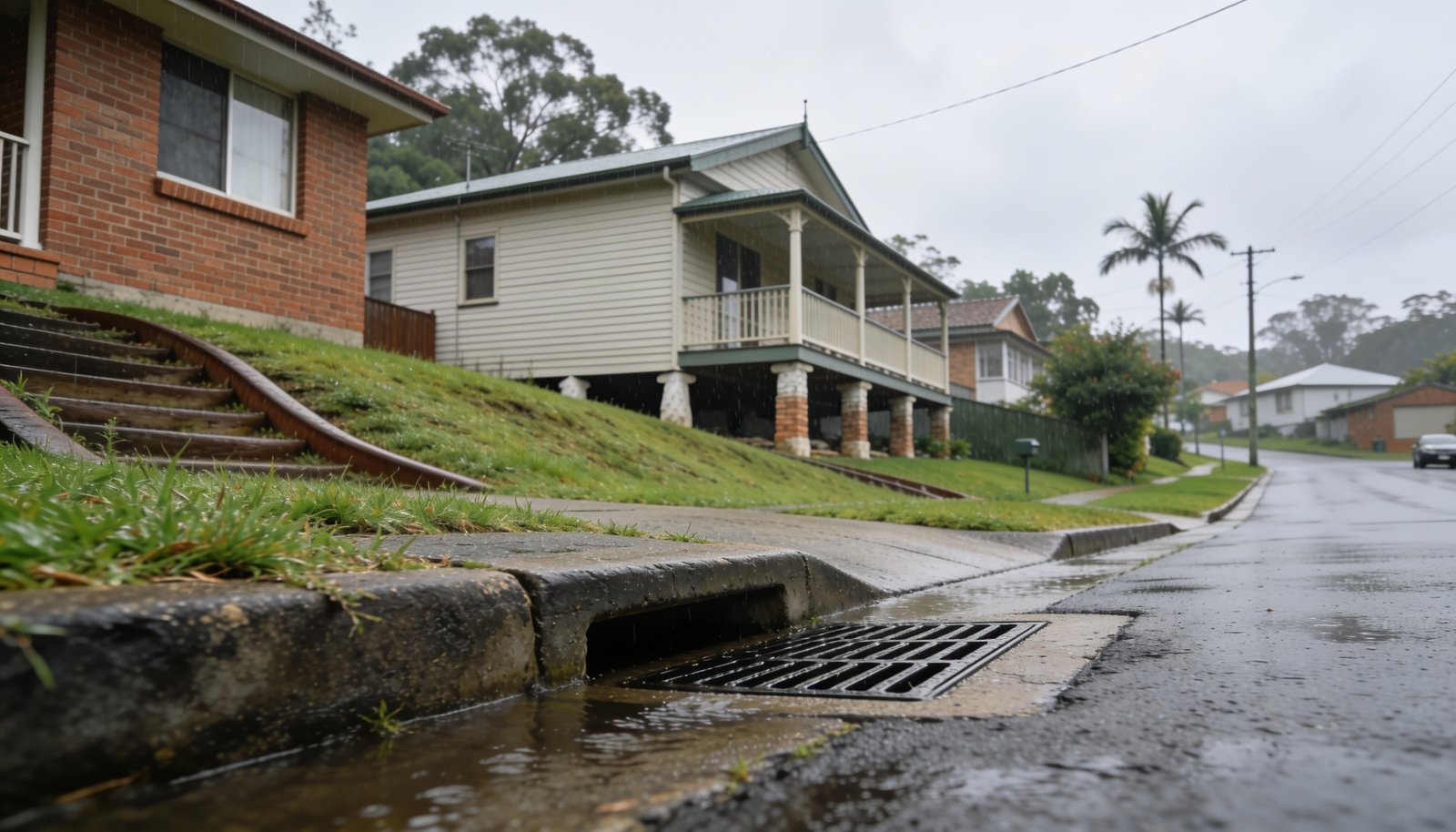
Flood risk in Queensland is property-specific, not just a suburb-wide label. This guide covers the different forms of flood risk, the official mapping tools available, and what buyers should independently verify before relying on a general impression of an area.
Different Forms of Flood Risk
Flooding is not a single risk. Riverine flooding comes from a river or creek breaking its banks. Storm surge is a coastal risk driven by severe weather pushing seawater inland. Overland flow is different again, since it happens when heavy rain flows across land during a storm, independent of any nearby watercourse, and can affect properties well away from a mapped floodplain.
Council and State Mapping Tools
FloodCheck Queensland is the state government’s web mapping application, showing modelled and historic flood information and the existence of flood studies over an area. Importantly, FloodCheck Queensland itself notes that it should not be used to determine flood potential at the individual property level, and it directs property-level enquiries to the relevant local council. Some councils provide more detailed, property-specific reports. Brisbane City Council, for example, provides a flood mapping search tool called Flood Awareness Online, which lets you search by address, lot and plan, or suburb, and from which you can generate a more detailed free FloodWise Property Report covering historical flooding, flood types, and predicted flood levels for a specific address. Other councils generally offer an equivalent property-level flood search or report, though the exact process varies by council.
Historical vs Modelled Risk, and Their Limits
Historical flood information records events that have actually occurred. Modelled flood information is based on rainfall and catchment modelling rather than a recorded event. Neither is a guarantee of future behaviour. Catchments change over time as upstream development, waterway works, and climate patterns shift, so past flood history and current modelling are both useful inputs, not a certainty about what will happen next.
Overland Flow Is Easy to Miss
Because overland flow is not tied to a mapped floodplain, it is easy to overlook if you only check official flood maps. Low points on a block, the direction water naturally moves during heavy rain, and any history of pooling near the house are worth checking directly, alongside formal mapping.
Property-Specific Checks vs Suburb Assumptions
A suburb having a flood-prone reputation does not mean every property within it carries the same risk, and the reverse is also true. Flood risk can vary significantly from one street, or even one block, to the next depending on elevation and local drainage. Always check the specific address rather than relying on a general suburb impression.
Insurance Implications
Flood cover is not automatically included in every home insurance policy, and insurers can define flood differently to storm or stormwater damage. Understanding a property’s flood exposure is directly relevant to insurance decisions, though the specific cover and cost is a matter for your insurer. See our guide to home and contents insurance in Queensland for general policy structures.
What Buyers Should Independently Verify
Before making an offer, check FloodCheck Queensland for a general overview, request a property-specific flood report or search from the relevant local council, ask the agent or seller directly about any known flood history, and review the title search and contract for any flood-related notices. See our guides on reading a Queensland title search and seller disclosure, and our broader guide on what to check before making an offer.
Where Narevella Can Help
Our free Queensland Property Research Checklist covers flood and other risk checks alongside the wider research process. For a specific address, our Property Review can help.
Disclaimer
This guide provides general research information only and is not insurance, engineering, or professional advice. Flood risk assessment for a specific property should be confirmed with the relevant local council and, where relevant, a qualified professional.



Join The Discussion