
 by
by 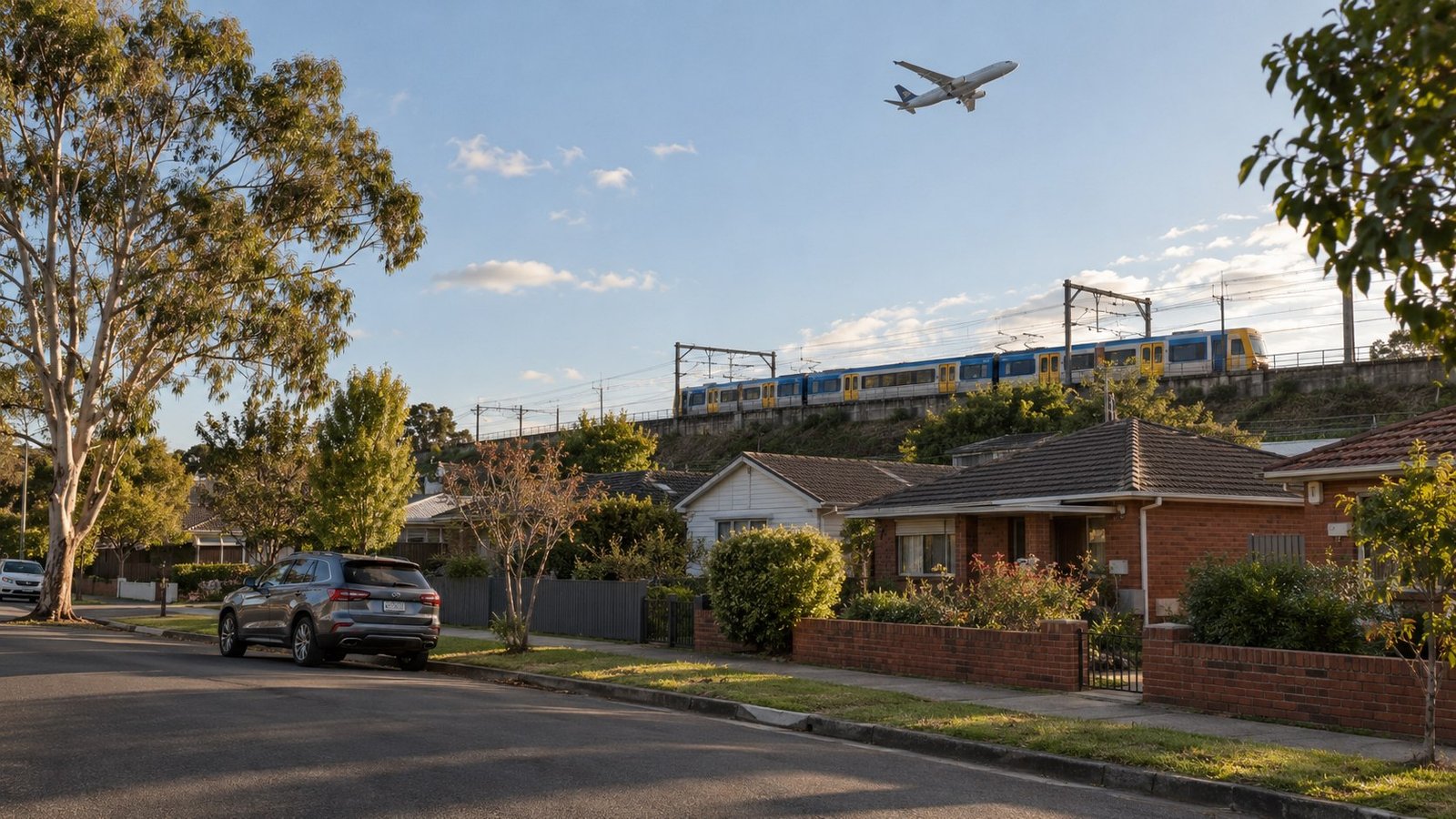
Proximity to a main road, railway, or flight path can make daily life very different depending on how it actually feels at different times of day, not just how the property looks in a photo. This guide covers what to check before deciding whether the trade-off works for you.
Noise at Different Times of Day
A single inspection, often on a quiet weekend morning, will not tell you what the property sounds like during weekday peak hour, late at night, or during an early morning freight or flight schedule. Visiting at more than one time of day gives a far more realistic sense of ongoing noise than one open home ever can.
Traffic and Access
Check how you would actually enter and exit the property from the road it fronts, since some main roads restrict turns to left-in and left-out only, which can add real time and inconvenience to daily trips. Also consider how street parking works if the road carries heavy traffic or has clearway restrictions at peak times.
Future Road and Rail Projects
The Queensland Department of Transport and Main Roads, along with local councils, plan and publish information about upcoming road and rail projects. Checking whether a planned upgrade, duplication, or new corridor is proposed near the property is worth doing, since construction periods and long-term changes to traffic patterns can both affect the property. See our guide to nearby development and planning applications.
Reserved Transport Corridors
Some land is formally reserved for a future transport corridor under state planning frameworks well before any construction begins. This can affect zoning and development potential even while the land looks like an ordinary property today. Checking zoning and overlay maps for the specific address is the way to identify this. See our guide to zoning and property overlays in Queensland.
Flight Path and Aircraft Noise
Near major airports, aircraft noise exposure is generally documented through published noise information such as Australian Noise Exposure Forecast (ANEF) mapping, an example of the kind of noise planning information published around larger airports like Brisbane Airport. Checking this kind of published information for a specific address gives a more objective picture than assuming based on how far the property looks from the airport on a map.
Nearby Infrastructure More Broadly
Beyond roads, rail and flight paths, consider other nearby infrastructure that could affect daily amenity, such as bus routes, level crossings, or industrial areas, and factor these into your overall impression of the property rather than assessing transport noise in isolation. The Gold Coast Light Rail Stage 3 extension, which opened new stations south of Broadbeach through to Burleigh Heads in August 2026, is a reminder that transport corridors can change during ownership, not only before you buy, so it is worth checking whether a property sits near an existing or planned light rail, bus or rail corridor either way.
What This Guide Does Not Do
This is a research checklist about amenity and access, not a prediction of how proximity to transport infrastructure might affect property values. Narevella does not provide valuation advice or forecast price movements.
Where This Fits Into Your Research
See our broader guide on what to check before making an offer. If you are comparing different areas, our free Compare Suburbs tool can help.
Where Narevella Can Help
Our free Queensland Property Research Checklist covers location and amenity checks alongside the wider research process. For a specific address, our Property Review can help.
Disclaimer
This guide provides general research information only and is not valuation or planning advice. Always confirm current and planned transport infrastructure with the relevant council, the Department of Transport and Main Roads, or the relevant airport corporation.



Join The Discussion