
 by
by 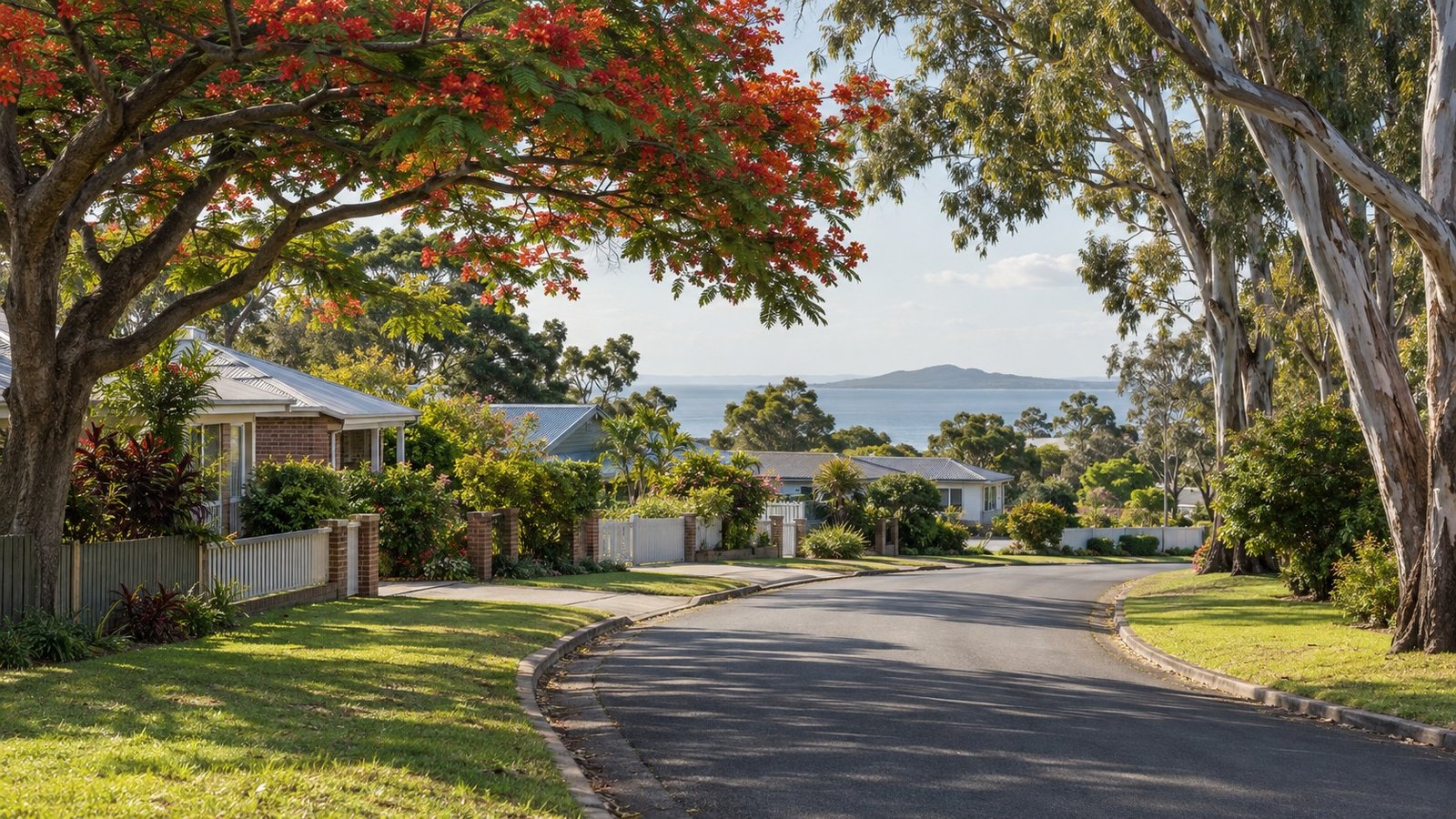
Cleveland is Redland City’s principal centre, an established bayside town on the shores of Moreton Bay. It is one of the more mature suburbs in the Redlands, with a distinct town character built around its harbour, rail terminus and heritage precinct, quite different from the newer master-planned estates found elsewhere in South East Queensland. This guide covers what is genuinely useful to know before choosing Cleveland, including a well-documented flood and storm-tide history that is worth understanding properly before you buy.
Population and Housing
At the 2021 Census, Cleveland’s population was 15,850, with a median age of 51, the oldest median age among the nearby Redlands suburbs covered in this series. This reflects Cleveland’s long-established character and its popularity with retirees and older residents, alongside families and commuters drawn to its bayside lifestyle and strong transport links. Housing stock ranges from older, established homes in the town centre and foreshore areas through to more recent infill development further out.
Transport
Cleveland railway station is the terminus of the Cleveland line, giving direct rail access into Brisbane, a genuine advantage over some neighbouring Redlands suburbs that rely purely on bus connections. Cleveland is also home to Toondah Harbour, the SeaLink ferry terminal for North Stradbroke Island, a distinctive local transport asset that adds a tourism and lifestyle dimension not found in most other Redlands suburbs. Between the rail terminus and the ferry terminal, Cleveland functions as a genuine transport hub for the wider region, not just a local town centre.
Schools
Cleveland State School (public primary) and Cleveland District State High School (public secondary, an IB World School with around 2,254 students) are the main local government schooling options. Star of the Sea Catholic Primary School is a well-known local Catholic option, and Ormiston College, in the neighbouring suburb of Ormiston, is a well-known nearby independent school. As with any suburb, always verify the specific address using the official Queensland Government EdMap tool (qgso.qld.gov.au/maps/edmap) before assuming catchment eligibility, since proximity never guarantees enrolment.
Health
Redland Hospital on Weippin Street is the area’s major public hospital, run by Metro South Health with 172 beds, and is currently undergoing expansion. It is the primary hospital not just for Cleveland but for the wider Redlands area, so ongoing works there are worth keeping an eye on if hospital access is a priority for your household.
Shopping and Everyday Life
Stockland Cleveland and the broader Cleveland Central shopping precinct serve the town centre, alongside a range of independent retail and hospitality along the harbour and heritage strip. The mix of a shopping centre and a walkable, older town centre gives Cleveland a different everyday feel to some of the more purely retail-centric Redlands suburbs.
Parks and Local Life
The Redland Performing Arts Centre and the Redland Museum are notable cultural amenities that give Cleveland a stronger arts and heritage identity than many neighbouring suburbs. The foreshore area around the harbour also provides genuine everyday recreation space, from walking paths to views out over Moreton Bay.
Planning and Development
Cleveland sits within the Redland City Plan, and there is a genuinely well-documented planning story here worth understanding in some depth. The plan identifies flood and overland-flow risk from both Hilliards Creek and Ross Creek, and the Redlands Disaster Plan separately flags storm-tide and tidal inundation risk for parts of the town. Council mapping has gone as far as flagging the rail line itself as being at risk in major flood or storm-tide events, a genuinely specific and sourced planning detail rather than a general assumption. This is worth knowing regardless of whether you are buying near the water or further inland, since it reflects how seriously this risk is treated in official planning documents.
Flood and Property Due Diligence
This is a well-documented flood and storm-tide story, and it is particularly relevant if you are considering a property near Ross Creek or along the Cleveland foreshore. That said, flood and storm-tide exposure varies significantly from street to street and even property to property, so it should never be treated as a reason to rule Cleveland in or out as a whole. Always check Redland City Council’s official flood-mapping tools for the specific address you are considering, rather than relying on a blanket suburb-wide verdict.
Nearby Suburbs Worth Comparing
Cleveland is commonly compared with Capalaba and Victoria Point, both covered in Narevella’s Redlands series, as well as Ormiston and Wellington Point, each offering a different mix of bayside access, transport and lifestyle character.
Useful Narevella Reading
Our Redlands Area Guide gives a wider regional overview of the Redlands local government area. If you are weighing Cleveland’s flood and storm-tide profile, our guide on flood risk checks before buying a property in Queensland is a useful starting point. The Queensland Property Research Checklist is worth working through before making an offer, and our Compare Suburbs tool lets you weigh Cleveland against other Redlands or bayside suburbs side by side.
This article is general research information only and is not financial or legal advice. Always confirm specific details, including flood information, school catchments and planning provisions, directly with the relevant official sources before making a property decision.
Join The Discussion