
 by
by 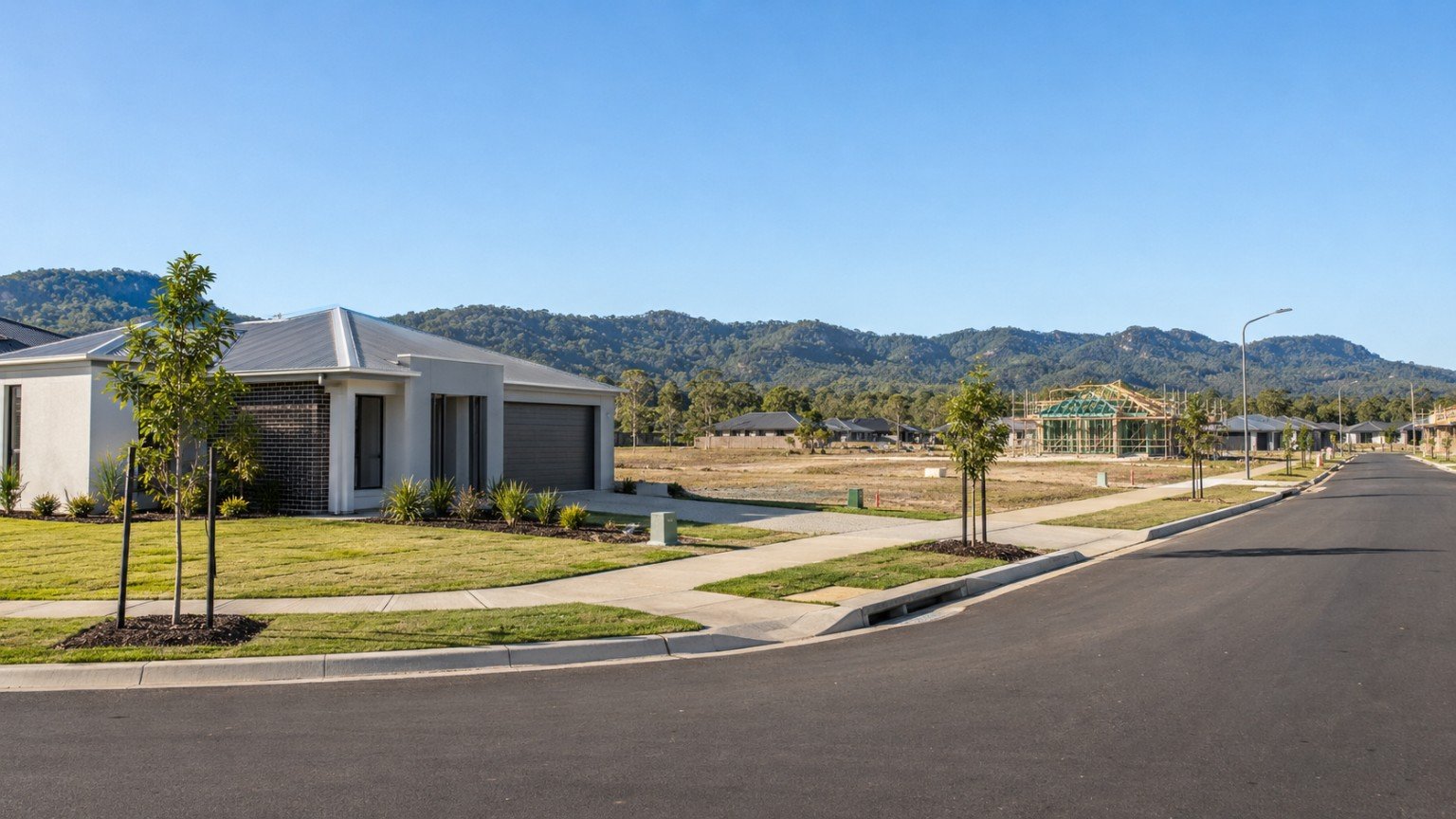
House and land packages are a major buying pathway through the Logan, Ipswich and Moreton Bay growth corridors, and they carry a genuinely different risk profile from buying an established home. The structural point many buyers miss at the outset is that a house and land package is usually two separate contracts: a land contract, and a building contract with the builder. They can settle at different times, and they have different cooling-off mechanics and different consumer protections attached to each one.
Land Contract Risks
The land contract is often conditional on registration of the plan of subdivision, which means settlement cannot happen until the plan actually registers — a timing risk worth understanding upfront. Watch for sunset clauses, the developer’s ability to make minor changes to the plan before registration, and any design covenants attached to the estate that will apply to what you can eventually build. Narevella’s covenants article and off-the-plan article both cover related ground in more depth: Covenants and Property Restrictions in Queensland: What Buyers Should Know and Buying Off-the-Plan in Queensland: What Buyers Should Check Before Signing.
Building Contract Risks
On the building side, compare the specification and inclusions schedule closely against what you saw in the display home — display homes routinely include upgrades that are not standard. Understand which items are provisional or prime cost allowances rather than fixed prices, what site costs are allowed for (this is exactly where a sloping or reactive-soil site can blow out a budget), how the variation process works, the progress-payment stages, and what liquidated damages apply for late completion.
QBCC and the Home Warranty Scheme
This is verified, current information as at September 2026. Residential building work in Queensland valued at more than $3,300, including materials, labour and GST, must be covered by the Queensland Home Warranty Scheme administered by the QBCC. The premium is calculated on the insurable value of the work, with QBCC’s premium tables stepping in $1,000 increments of that value; the insurable value assumes the contractor supplies all materials and includes associated contract work such as labour. Where a project is valued over $150,000 excluding GST, the QLeave levy also applies and forms part of the calculation.
Before signing, take three practical steps: confirm the builder holds a current QBCC licence of the correct class, confirm the home warranty premium has actually been paid rather than simply mentioned in the contract (it should appear on the QBCC record), and be aware that cover carries claim time limits. This article will not state the specific claim periods, since they can change — confirm the current cover periods directly with QBCC before you rely on them.
Builder Solvency
Builder solvency is a genuine, practical risk in the current Queensland market. The QBCC licence search shows licence status and history, which is worth checking as a matter of course, and buyers should be cautious of any contract that requires unusually large payments early in the build. This article will not name any builder or cite any insolvency statistic, since that kind of claim needs to be current and specific to be useful, and is easy to get wrong.
Transfer Duty on a Package
Transfer duty on a house and land package is typically assessed on the land component only where the land and building contracts are genuinely separate, and this can represent a real dollar difference in what you owe. Because the correct treatment depends heavily on exactly how the contracts are structured, do not treat this as a universal rule — read Narevella’s transfer duty guide for the general framework, and confirm your specific situation with a conveyancer: Transfer Duty in Queensland: A Plain-English Guide for Home Buyers.
New Build Versus Established: A Different Comparison
If you are still weighing up a house and land package against buying established, Narevella’s comparison article is a useful companion piece and covers ground this article deliberately does not repeat: New Build vs Established Home: Questions Worth Asking. It is also worth knowing that new-build thermal and design standards are changing under Queensland’s updated Housing Code, effective August and September 2026: Queensland’s New Housing Code and Modern Homes Standards.
Three Documents to Get Before You Sign
Before signing anything, obtain the registered or proposed plan showing the actual lot dimensions, the full inclusions specification in writing, and the builder’s current QBCC licence record. A qualified conveyancer or solicitor should review both contracts before you sign, and a building and pest inspection remains just as relevant once the build is complete, even though the property is new.
This article provides general research information only and is not legal, financial or building advice. Buyers should have both the land contract and the building contract reviewed by a qualified Queensland conveyancer or solicitor, and confirm current QBCC requirements directly with QBCC, before signing.
Useful Narevella Reading
Use the Queensland Property Research Checklist as your starting point before you sign anything on a house and land package.


Join The Discussion