
 by
by 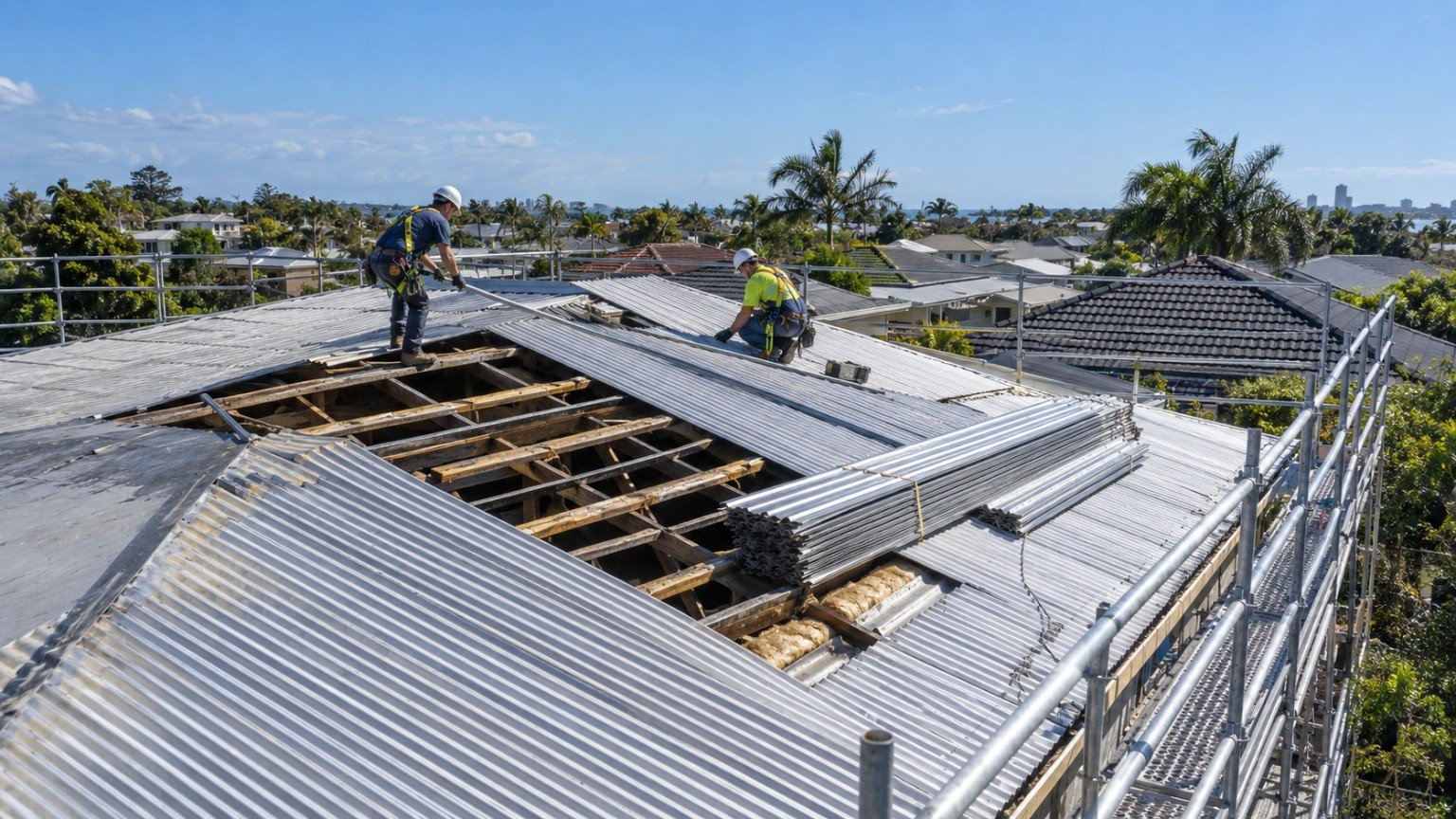
Roof condition gets plenty of attention on a Queensland inspection day, but most of what is written about roofs on this site so far covers upkeep – clearing gutters, storm preparation, seasonal checks. Roof material types, comparative lifespan and the replace-or-repair decision are a genuinely different research question, and one worth understanding before you are standing under a roof deciding what it actually needs.
The Common Roof Types on Queensland Homes
Three broad categories cover most of Queensland’s housing stock, and each has practical differences a buyer or owner can assess visually.
- Metal or profiled steel roofing, including the Colorbond-style coated products common on newer homes and on re-roofed older properties. Metal roofing is comparatively light, and is a common choice when an older tiled roof is replaced.
- Concrete tiles, which are heavier and place different structural demands on the roof frame than metal sheeting.
- Terracotta tiles, also heavier, and often found on older established homes across South East Queensland.
This article does not name specific brands or products, and does not compare warranty terms – those details are properly a conversation with a roofing professional for a specific property.
Comparative Lifespan: General Knowledge, Not a Firm Figure
Well-maintained metal and tiled roofing are both commonly discussed in the building industry as having multi-decade service lives, with actual lifespan depending heavily on maintenance, coastal exposure and the quality of the original installation. This article will not put a specific number of years on any roofing material, because that figure depends too much on the individual roof to state responsibly here. If you want an opinion on how much life is left in a specific roof, that is a question for a roofing professional or a building inspector who can assess age and condition directly, not something to estimate from a listing photo.
What Actually Shortens a Roof’s Working Life in Queensland
A handful of factors show up repeatedly in roofs that need attention earlier than expected:
- Coastal salt exposure, relevant across the Gold Coast, Redlands and bayside Brisbane suburbs Narevella covers.
- A history of storm or hail damage.
- Poor original installation or flashing detail around penetrations.
- A lack of routine gutter and valley maintenance, letting debris and moisture sit longer than they should.
Narevella already covers the maintenance side of this in detail, so rather than repeat it here, see Queensland Storm and Cyclone Season: What Property Owners Should Prepare For and Common Household Issues in a Queensland Home: A Practical Owner’s Checklist for the seasonal and storm-prep tasks that keep a roof performing as long as it should.
The Repair-Versus-Replace Decision, as a Research Framework
Rather than a cost guide, this is a way to think through the decision:
- Age and visible condition – how the roof presents against what a building inspector would expect for its type and age.
- Localised versus widespread damage – a handful of cracked tiles or a small area of surface corrosion is generally a repair question; damage spread across the whole roof plane points toward a replacement conversation.
- Planned works timing – for a unit or townhouse in a strata scheme, a roof due for replacement may already be flagged in the scheme’s forward planning for major capital works, which is worth asking about directly rather than assuming.
- An existing solar system – if solar panels are already installed, that changes the practical logistics of any future re-roof, since panels typically need to come off and go back on as part of the job.
What to Ask a Building Inspector, Specifically
A generic “roof sighted, no issues noted” line on an inspection report is not the same as a specific comment on age, material and condition. It is reasonable to ask an inspector directly for that level of detail, and to ask whether roof penetrations – vents, solar mounts, aerials – have been properly flashed, since these are common and easily missed water-ingress points. For what a standard inspection does and does not cover more broadly, see Building and Pest Inspections in Queensland: What Buyers Should Check.
Roof Age and Insurance
A roof’s age and condition is a genuine input into how an insurer assesses a property, alongside the many other factors covered in Narevella’s existing insurance content – see A Beginner’s Guide to Home and Contents Insurance in Queensland rather than have that ground repeated here.
For Buyers of an Established Home
Roof age sits alongside the wider set of “how old is everything” questions worth asking about an established property’s major services and systems. See New Build vs Established Home: Questions Worth Asking for that broader comparison.
This article is general research information only and does not constitute building, engineering or insurance advice. Roof condition, remaining service life and replacement needs should always be assessed on site by a qualified roofing professional or building inspector for the specific property in question.


Join The Discussion