
 by
by 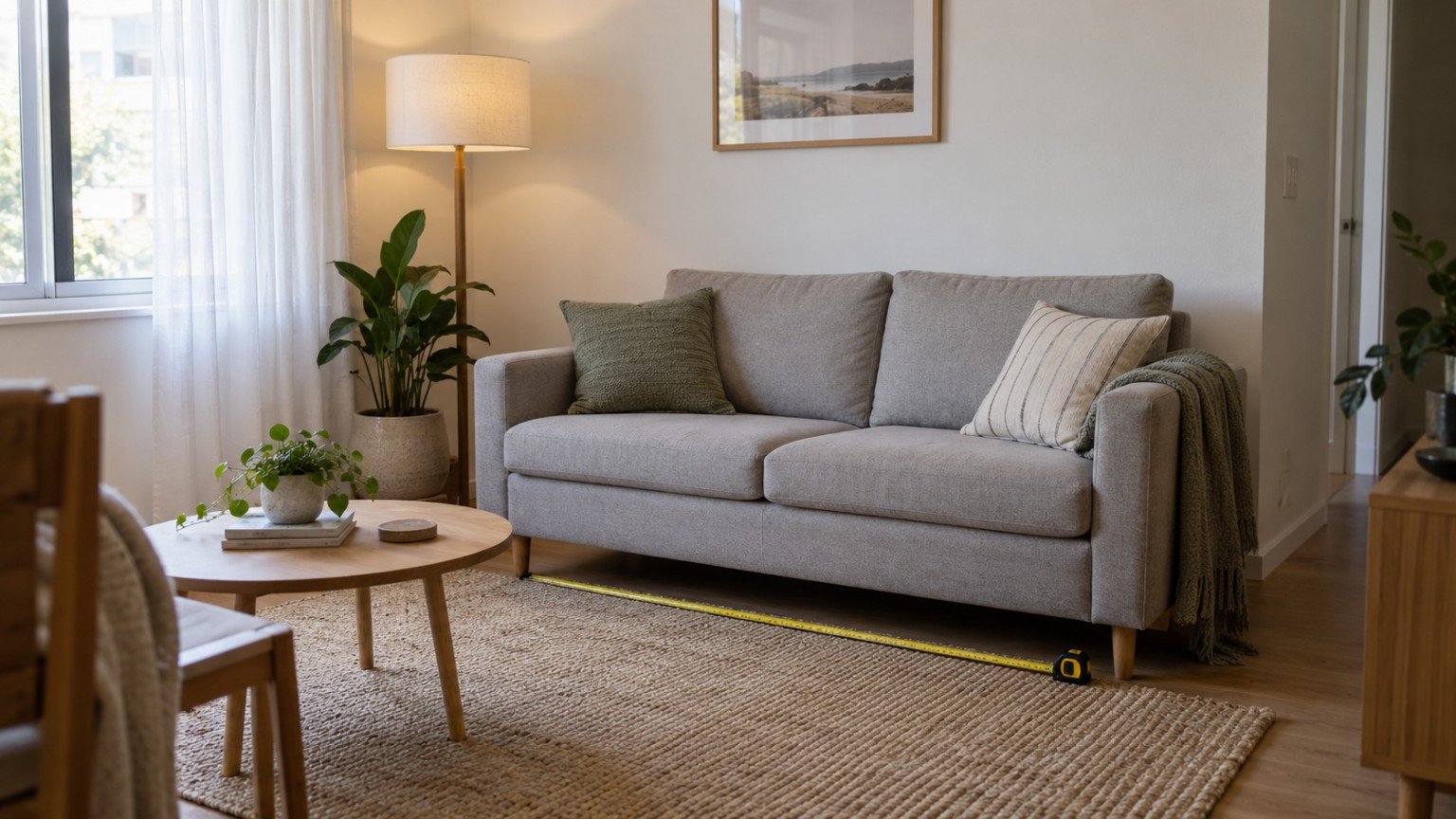
A sofa is usually the single largest piece of furniture in a living room, and in a smaller space, getting the choice wrong is hard to hide. Buy something too bulky and the room feels cramped from the day it arrives. Choose well, and even a modest-sized living room can feel comfortable, open and genuinely liveable. Here is how to approach the decision properly.
Measure before you fall in love with anything
It is tempting to shop by eye, but the single most useful thing you can do before browsing is measure your actual space. Note the full width and depth of the room, the location of doorways, windows and power points, and crucially, the width of your hallway, stairwell and doorframes the sofa will need to pass through to get inside. A sofa that fits the room perfectly is no use if it cannot physically get past the front door.
Mark out the sofa’s footprint on the floor with painter’s tape or newspaper before you buy, using the exact dimensions from the product listing. Standing in the room and seeing the taped outline is far more useful than imagining it, and often reveals that a size you assumed would work is either too big or, just as usefully, that you have more room than you thought.
Leave room to move
A common mistake in small living rooms is pushing furniture to fill every available space. Aim to leave at least 60 to 90 centimetres of clear walking space around the main pieces of furniture, and roughly 35 to 45 centimetres between the sofa and a coffee table, so the room still feels comfortable to move through rather than like an obstacle course.
Choosing the right shape
Two and three-seater sofas
A well-proportioned two or three-seater is usually the safest choice for a genuinely small room, offering solid seating without dominating the space the way a larger sectional can.
Compact or modular corner sofas
Corner or modular sofas can work surprisingly well in small rooms because they make efficient use of an awkward corner rather than jutting into the centre of the room. Look for a modular design with a smaller-scale chaise section rather than a full-size L-shape sectional built for a larger space.
Armless or track-arm designs
Sofas with slim, armless or narrow track arms can gain you meaningful extra centimetres of usable seating width compared with a sofa featuring bulky rolled or padded arms of the same overall footprint.
Sofa beds and daybeds
If the living room occasionally doubles as a guest space, a well-made sofa bed or daybed can be a practical way to avoid needing a separate piece of furniture altogether, though they are generally a little deeper than a standard sofa, so measure carefully.
Colour, fabric and visual weight
In a small room, a sofa in a lighter or more neutral tone tends to feel less imposing than a large piece in a dark, saturated colour, simply because it does not visually dominate the space in the same way. Exposed, slim legs rather than a solid, boxy base also help a sofa feel lighter and let more floor visually “breathe” underneath it, which matters more in a compact room than a large one.
Fabric choice matters practically too. A hard-wearing, easily cleaned fabric is worth prioritising in a small living room, since these tend to be higher-traffic, multi-purpose spaces used for everything from relaxing to entertaining to family life.
Second-hand and budget options
A well cared for second-hand sofa can be excellent value, provided you check it properly before buying. Look closely at the frame for any wobbling or creaking, check cushion foam has not gone flat or lumpy, examine upholstery for tears, stains or odours, and if buying online without seeing it in person, ask for extra photos and exact measurements rather than relying on a generic product description.
A simple checklist before you buy
- Have you measured the room, the doorway and any stairs or hallways it needs to pass through
- Have you marked out the footprint on the floor to check it in person
- Does the shape suit your room’s layout, rather than just looking good in a showroom
- Is there enough clearance left for comfortable walking space
- Does the scale and colour suit a smaller room, rather than a display space designed to showcase a larger piece
Taking the time to measure properly and consider scale before buying is what separates a sofa that makes a small living room feel genuinely comfortable from one that simply takes up too much of it.
Join The Discussion