
 by
by 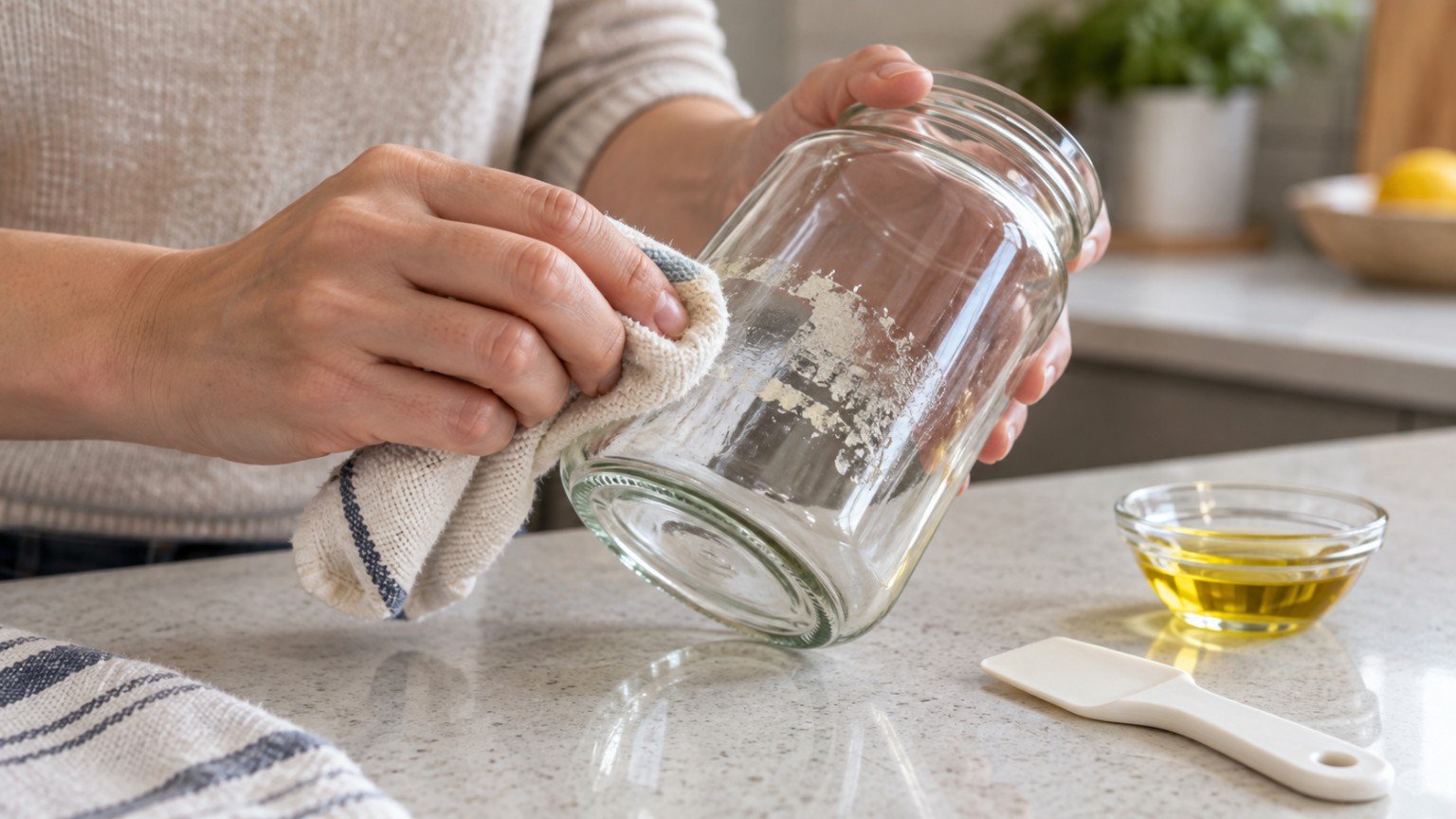
Price stickers, shipping labels, old tape and stubborn sticker residue seem to turn up everywhere, from a new appliance in the kitchen to boxes left over from a move. The good news is that most sticky residue on glass and plastic comes off with things you probably already have at home, as long as you use the right method for the surface you are dealing with.
Why residue is trickier on plastic than glass
Glass is a hard, non-porous surface, so it can generally handle a bit of scraping and stronger solvents without being damaged. Plastic is softer and can scratch, cloud or even melt slightly if you use the wrong product or too much heat, which is why the same method that works perfectly on a glass jar can leave a plastic container looking worse than when you started. It pays to test any method on a small, hidden area first, especially on coloured or textured plastic.
Start with the simplest method: warm soapy water
Before reaching for anything stronger, soak the sticky area in warm water with a little dish soap for ten to fifteen minutes. This softens the adhesive and often lets the label peel away in one piece, or at least loosens it enough that the remaining residue wipes off easily with a cloth or an old credit card used as a gentle scraper.
For stubborn residue, try an oil-based approach
Adhesive is oil-soluble, which means everyday kitchen oils are surprisingly effective at breaking it down.
- Cooking oil, olive oil or baby oil rubbed into the sticky patch and left for a few minutes will usually soften even old, hardened residue.
- Peanut butter works the same way if that is what is on hand, though it is a messier option and best kept for small areas.
- Once the residue has softened, wipe it away with a cloth, then follow up with warm soapy water to remove the oily film.
Alcohol-based options for glass
On glass, methylated spirits or isopropyl alcohol on a cloth will usually dissolve residue quickly and evaporate without leaving a film. This is a good option for glass jars you want to reuse, glass cookware, or glass surfaces around the home. Alcohol-based solutions are much harsher on plastic, so it is best to stick to the oil or soapy water methods for plastic items, or check the product is genuinely plastic-safe before using it.
A gentle heat and scrape combination
Warming the residue slightly makes it more pliable and easier to lift. A hairdryer on a low or medium setting, held a reasonable distance away for a few seconds, softens the adhesive enough to peel or scrape it off with something plastic or wooden, such as an old gift card. Avoid metal scrapers on plastic, as they can leave permanent scratches, and never apply concentrated heat directly to plastic for an extended time, since it can warp or discolour.
Dealing with tape residue specifically
Old packing tape and sticky tape residue tend to leave a stringier, gummier mess than a simple label. The oil-based method generally works best here, worked in gently with a soft cloth. For fabric or cardboard surfaces where wet methods are not suitable, freezing the item briefly, if it is small enough, can make tape residue brittle enough to scrape off.
A few things to avoid
- Steer clear of abrasive scourers on plastic. They can dull the surface even if they remove the residue.
- Avoid strong solvents like nail polish remover on painted or coated plastic, since it can strip the finish along with the adhesive.
- Do not use a scraper blade or knife on curved or textured plastic surfaces, since it is easy to slip and scratch the surrounding area.
- Always test a new product on a small, inconspicuous spot first, particularly with printed or coloured items.
When residue is on something you are about to pack or unpack
Sticky residue shows up constantly around a move, whether it is labels on new glassware, tape residue on furniture, or price stickers on kitchen items you are unwrapping for the first time. Dealing with it as you unpack, rather than living with it for months, makes settling into a new home feel more finished. If you are in the middle of planning a move more broadly, our practical pre-move checklist covers the wider organising side of the process.
With a bit of patience and the right method for the surface, sticky residue is one of those small household annoyances that is genuinely easy to sort out once you know what actually works.
Join The Discussion