
 by
by 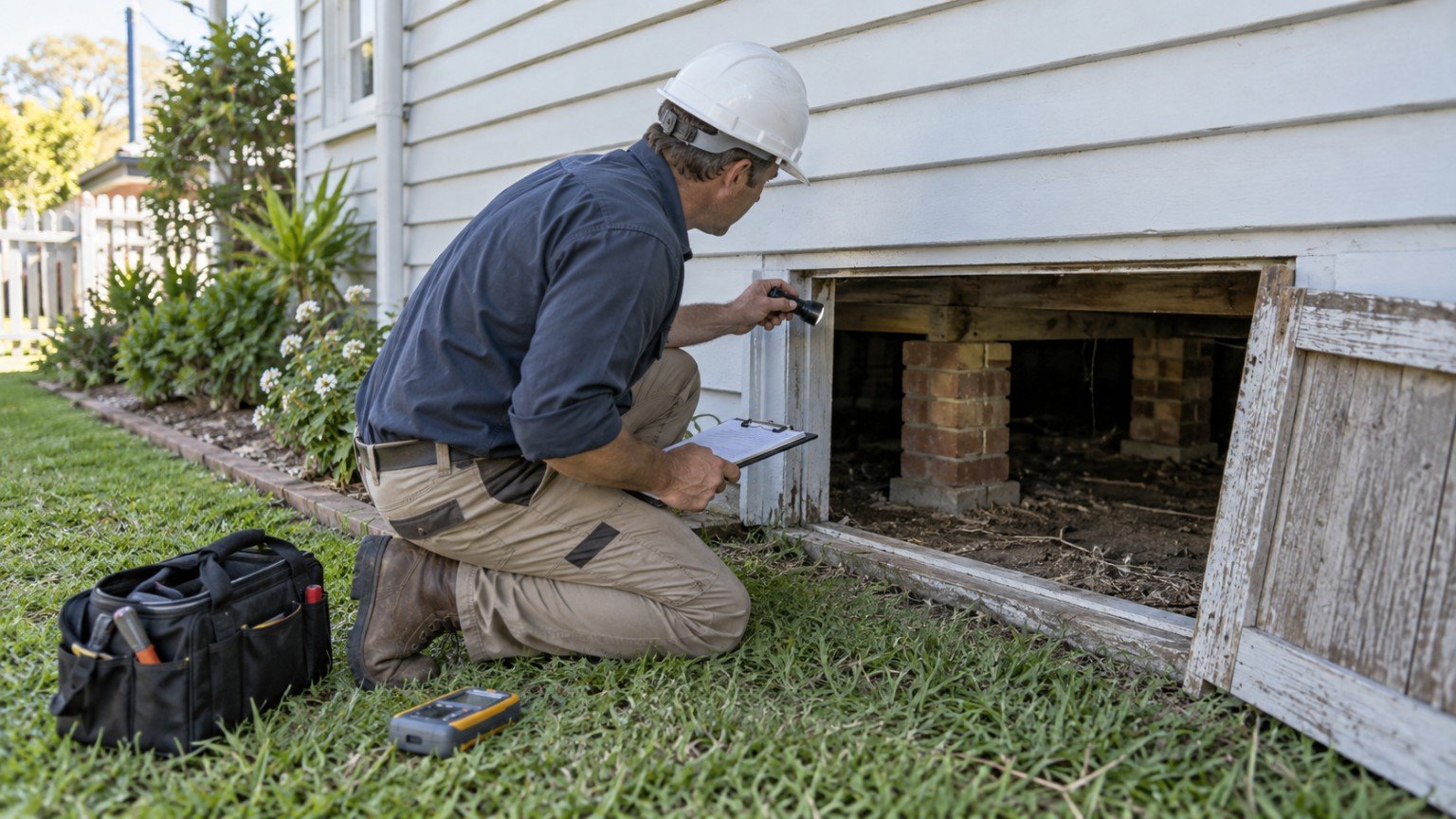
A building and pest inspection is one of the most common conditions buyers put on a property contract across Australia, but there’s often confusion about what these inspections actually check, and just as importantly, what they don’t. Understanding the scope in general terms, before requirements and standards start varying by state, helps buyers get real value out of the report rather than treating it as a formality to tick off.
What a standard building inspection covers
A building inspection is a visual assessment of the property’s structure and condition, carried out by a licensed building inspector. It typically covers the roof exterior and roof space where safely accessible, the exterior walls, cladding and paintwork, the interior including walls, ceilings, floors and doors, and the subfloor space where accessible. Inspectors look for visible defects such as cracking, movement, water damage, damp, and signs of structural issues, and they generally note the general condition and apparent age of major elements like the roof covering. Most standard inspections also comment on safety hazards like unsafe balustrades or missing smoke alarms, since these are common compliance issues that come up during a sale.
What a standard pest inspection covers
A pest inspection focuses specifically on evidence of timber pest activity, most commonly termites, along with borers and timber-rotting fungi. The inspector checks accessible timber, subfloor areas, roof voids and the areas immediately surrounding the building for damage, live activity, or conditions that make the property more vulnerable to future infestation, such as timber in contact with soil or poor drainage against the foundations. A pest inspection report will generally note both current evidence of activity and risk factors that increase the likelihood of problems developing later.
What these inspections typically don’t cover
Both inspections are visual and non-invasive, meaning inspectors don’t cut into walls, lift flooring, or move furniture and stored goods to check concealed areas. This means problems hidden behind fixed panelling, under carpet, inside wall cavities, or in areas blocked by belongings can be missed, not because the inspector did a poor job, but because of the inherent limits of a visual inspection. Standard inspections also generally don’t include swimming pools, detached structures beyond a basic mention, council compliance or approval history, plumbing and electrical systems in detail, or a structural engineering assessment. Where a report flags a concern that needs deeper investigation, such as suspected structural movement, it will typically recommend a specialist follow-up, such as a structural engineer, rather than diagnosing the issue itself.
Why the two are usually done together
Building and pest inspections are frequently bundled as a single visit because the same areas, particularly the subfloor and roof space, are relevant to both. Timber pest damage can also directly affect structural integrity, so a building inspector’s structural findings and a pest inspector’s timber activity findings genuinely inform each other. Buying a property without either, or with only one, leaves a real gap in a buyer’s understanding of the property’s actual condition.
How to read the report and what to do with it
A building and pest report is usually long and can look alarming at first glance, since inspectors are trained to note everything visible, including very minor issues, for completeness and liability reasons. It helps to read it with an eye for severity and urgency rather than treating every listed item as equally serious. Most reports will distinguish, explicitly or by tone, between minor maintenance items, moderate concerns worth budgeting for, and significant issues that could affect a decision to proceed or a price negotiation. If anything in the report is unclear, a good inspector will generally take a follow-up call to talk through the findings in plain language, which is worth doing before making a final decision on the property.
A general framework, not a state-specific standard
Building and pest inspection standards, licensing requirements, and even the standard report format can vary between states and territories, so it’s worth confirming what’s specifically included with your inspector before booking, rather than assuming national uniformity. For readers researching a property specifically in Queensland, our detailed guide on building and pest inspections in Queensland covers the state-specific standards, licensing and what local buyers should check in more depth.
An inspection is a decision-making tool, not a guarantee
A building and pest inspection significantly reduces a buyer’s risk, but it isn’t a guarantee that a property has no hidden issues, since it’s fundamentally a visual, point-in-time assessment. Understood correctly, alongside its real scope and its limits, it remains one of the most valuable pieces of information a buyer can get before committing to a property.



Join The Discussion