
 by
by 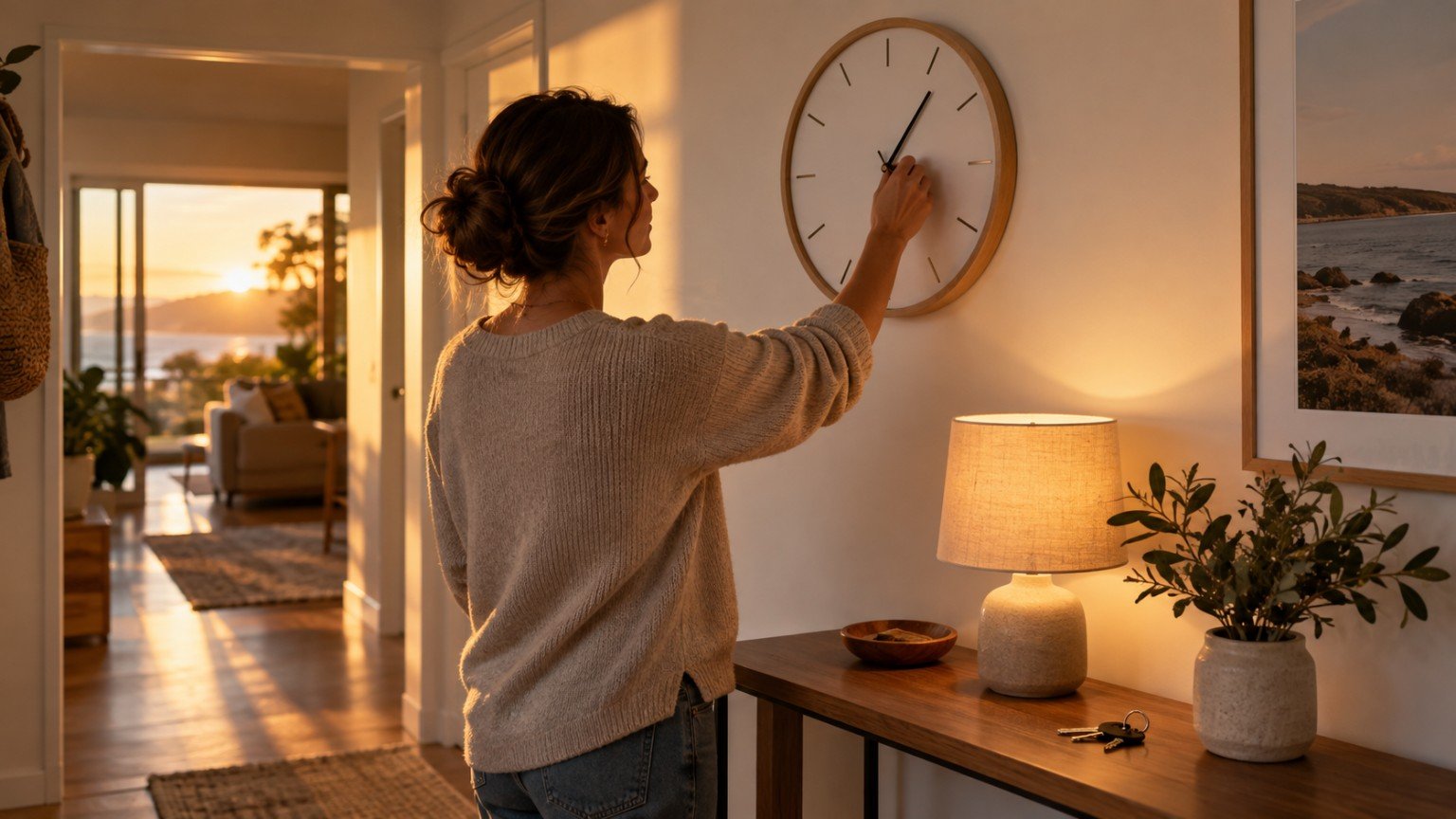
Daylight saving time returns to most of the eastern and southern states on the first Sunday in October each year, and a handful of small, practical checks around the home make the transition smoother, particularly for households with young kids, pets or older family members whose routines are tied to daylight.
Information current as at September 2026: daylight saving in Australia begins on Sunday 4 October 2026, when clocks move forward one hour at 2am to 3am. It applies in New South Wales, Victoria, South Australia, Tasmania and the Australian Capital Territory. Queensland, Western Australia and the Northern Territory do not observe daylight saving.
Who this actually affects
If you live in NSW, Victoria, SA, Tasmania or the ACT, your clocks move forward an hour, which means losing an hour of sleep on the night of the change and gaining an extra hour of evening daylight through summer. If you’re in Queensland, Western Australia or the Northern Territory, none of this applies to your own clocks, though it’s worth remembering when coordinating with family, tradespeople or businesses interstate, since the time difference between daylight-saving and non-daylight-saving states temporarily changes by an hour.
Practical things to check around the home
Clocks that don’t update automatically
Phones and computers generally adjust themselves, but ovens, microwaves, standalone alarm clocks, some smart home devices and car dashboards usually need manual adjustment. Doing a quick sweep of the house on the Monday after the change avoids the confusion of a household running on two different times for a week.
Smoke alarm batteries
The daylight saving changeover is a well-known, easy-to-remember prompt to test smoke alarms and replace batteries if needed, since it happens twice a year and is simple to build into a routine.
Kids’ and pets’ routines
An hour’s shift in daylight can throw bedtime and morning routines off for a few days, particularly for younger children and pets used to being fed or walked at a consistent time relative to daylight. Shifting bedtime by 10 to 15 minutes a night in the days leading up to the change, rather than all at once, tends to make the adjustment easier on everyone.
Evening lighting and cooling
With an extra hour of evening daylight, many households naturally use less indoor lighting in the evenings through the daylight saving months, though the later, warmer evenings can also mean air conditioning or fans run longer into the night during the hotter part of the year. It’s a reasonable time to double check that outdoor sensor lights, timers on lighting or irrigation systems, and any smart plugs on a schedule are still set to a time that matches the new clock.
A simple daylight saving checklist
- Move clocks forward one hour on the night of the change (or check they’ve updated automatically)
- Test smoke alarms and replace batteries if due
- Adjust manual clocks on ovens, microwaves and other appliances
- Check timers on lighting, irrigation or smart home devices are still set correctly
- Ease kids into the new bedtime gradually over the preceding week if possible
- If you’re in Queensland, WA or the NT, simply note the interstate time difference for the next six months when coordinating with family or businesses elsewhere
When daylight saving ends
Daylight saving typically ends on the first Sunday in April each year, when clocks move back an hour. The same checklist broadly applies in reverse: check appliance clocks, and be ready for another short adjustment period for kids and pets as the evenings get darker earlier again.
Common questions
Does daylight saving affect appliance warranties or smart devices?
No, but some older smart home hubs and security systems can occasionally need a manual firmware check if their internal clock doesn’t shift correctly, which is worth a quick look if you notice a device’s schedule seems out by an hour after the change.
Why doesn’t the whole country do it?
Each state and territory sets its own position, and Queensland, WA and the NT have chosen not to observe daylight saving, largely due to their geography and the more limited seasonal daylight variation compared with the southern states.
For a broader run-through of seasonal home tasks, see our companion guide, the Seasonal Home Maintenance Calendar for South East Queensland (note: as a non-daylight-saving state, this calendar’s timing references don’t include the clock change itself, but it covers the same time-of-year household tasks).

Join The Discussion