
 by
by 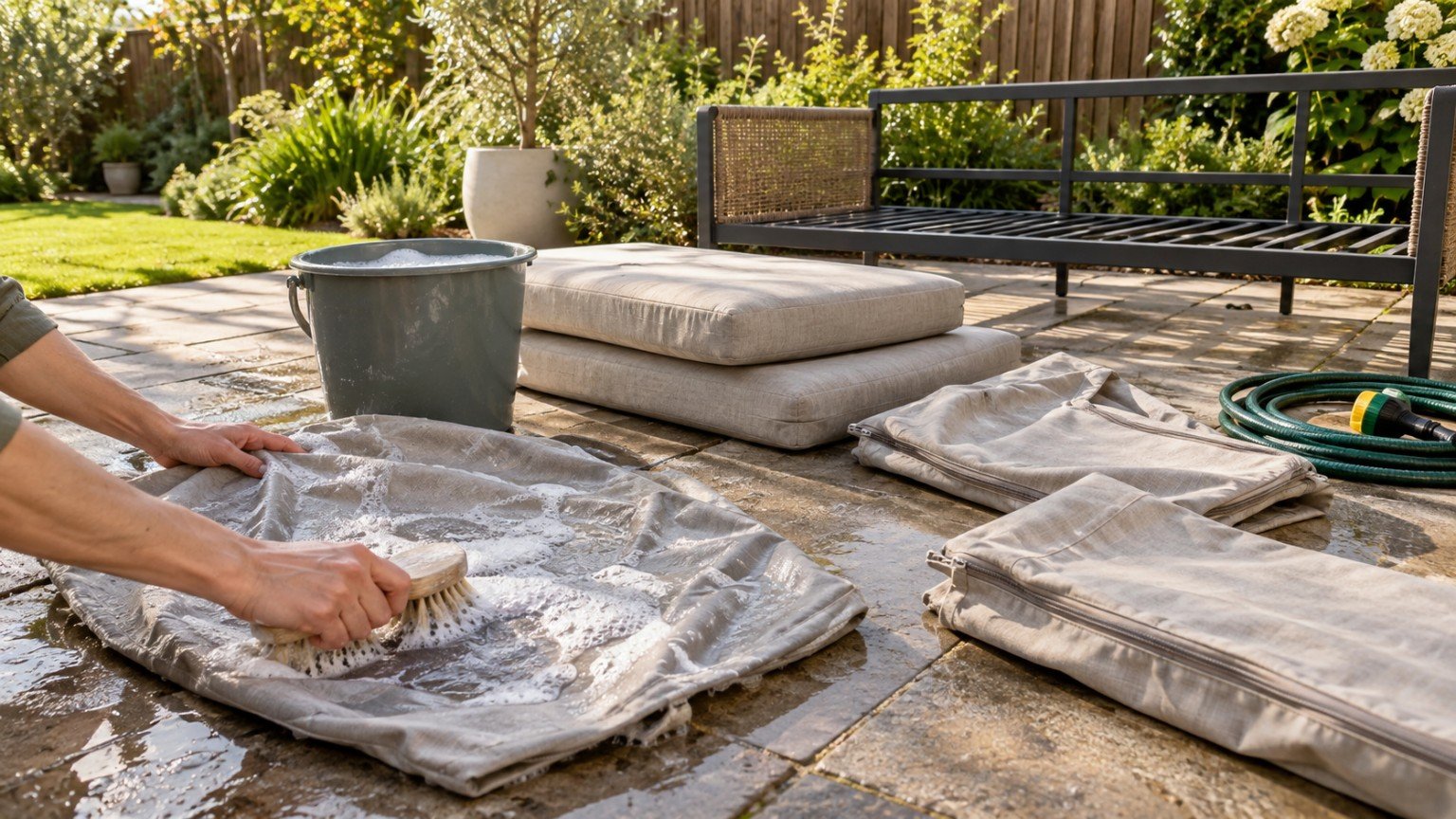
Outdoor cushions and furniture covers take a beating over an Australian summer, between sun exposure, dust, pollen, sudden rain and the occasional bird visitor. A bit of regular care keeps them looking good for years instead of fading, staining or growing mildew after just one season outside.
Know what fabric you are dealing with
Most outdoor cushions today use solution-dyed acrylic or polyester fabric, which is designed to handle sun and moisture better than regular indoor fabric because the colour runs all the way through the fibre rather than sitting on the surface. Check the care tag if there is one still attached. Solution-dyed outdoor fabric can generally handle a mild soapy water clean without the colour running, while older or budget covers may be less forgiving, so it is worth testing a small hidden patch first if you are unsure.
Regular maintenance clean
A simple routine clean every few weeks through the warmer months keeps dirt and pollen from building up into something harder to shift.
- Vacuum or brush off loose dust, pollen and debris before doing anything wet, so you are not just working grit further into the fabric.
- Mix a mild dish soap with warm water and use a soft brush or sponge to work over the fabric in a circular motion.
- Rinse thoroughly with a hose to remove all soap residue, since leftover soap can attract more dirt.
- Let cushions and covers air dry fully in a shaded, well-ventilated spot rather than leaving them damp, which is the main cause of mildew developing.
Dealing with mould and mildew
Mildew shows up as small black or grey spots and tends to appear after cushions have been left damp, folded up wet, or stored in a humid spot. For light mildew, a solution of one part white vinegar to four parts water applied with a soft brush, left for ten to fifteen minutes, then rinsed and dried in the sun, usually clears it up. Sunlight itself has a natural bleaching and drying effect that helps prevent mildew returning, so drying cushions outdoors in full sun where the fabric allows it is genuinely useful, not just convenient.
Removable covers you can machine wash
If your cushion covers unzip and are labelled machine washable, remove the foam insert first and wash the cover on a gentle, cold cycle using a mild detergent. Avoid the tumble dryer, since heat can shrink the fabric or damage any water-resistant coating, and instead hang or lay covers flat to air dry. Leave the zip open slightly while drying so trapped moisture does not build up inside the seam.
Spot treating specific stains
- Bird droppings and food spills should be scraped off gently first, then treated with soapy water while still fresh where possible.
- Rust marks from metal furniture frames respond well to a paste of lemon juice and salt, left briefly and rinsed off, though this is best tested on a small area first.
- Sunscreen and body oil marks benefit from a pre-treatment with a small amount of dish soap rubbed directly into the stain before the regular wash.
Storage between uses
Always make sure cushions and covers are completely dry before storing them, even if that means an extra day in the sun. Store them in a breathable bag or box rather than sealed plastic, which traps any residual moisture and encourages mould. If you have the space, storing cushions upright rather than stacked flat also helps air circulate and reduces the chance of damp patches forming where cushions press against each other.
A few habits that reduce how often you need to clean
- Bring cushions in, or at least under cover, ahead of forecast rain rather than after the fact.
- Give furniture a light brush down after windy days when pollen and dust tend to settle heavily.
- Consider a fabric protector spray designed for outdoor textiles at the start of the season, which can make future spills easier to wipe away before they set in.
With a simple regular clean and the right approach to drying and storage, outdoor cushions and covers can genuinely last several seasons rather than needing replacement every year.

Join The Discussion