
 by
by 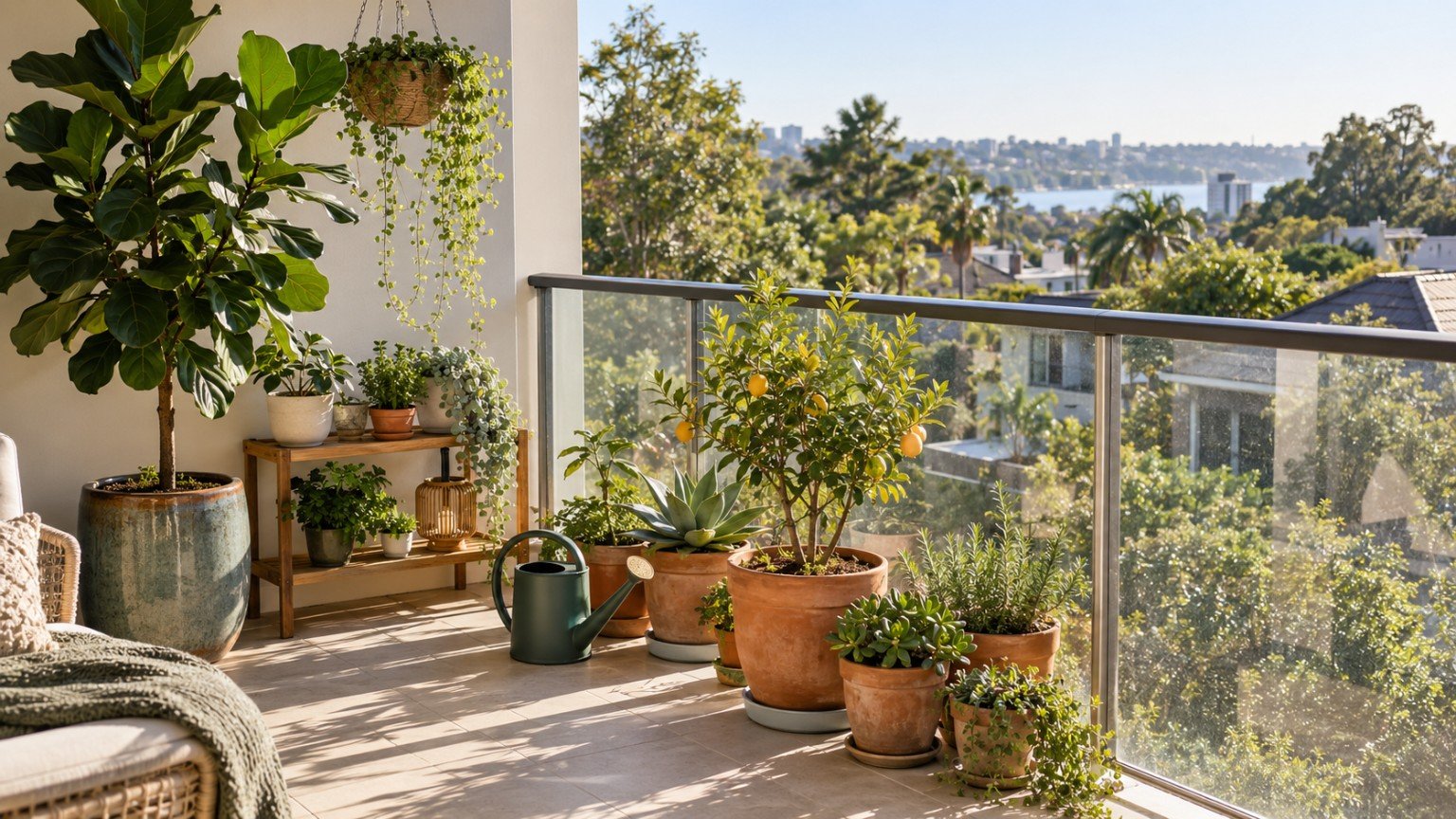
A balcony does not need to be large to support a genuinely good collection of plants. With the right pots and plant choices, even a compact apartment balcony can become a green, welcoming space. The key is choosing plants that suit the conditions on offer, container types that support healthy root growth, and a layout that works within the practical limits of a balcony.
Understand your balcony’s conditions first
Before choosing plants, it is worth spending a few days observing how much sun your balcony actually gets, since this varies enormously depending on orientation and building height. A north-facing balcony in most of Australia will get significantly more sun than a south-facing one, while a balcony shaded by an overhang or neighbouring building may receive very little direct light at all. Wind exposure is another factor that is easy to underestimate; balconies, especially on higher floors, are often windier than a ground-level garden, which can dry out pots faster and stress more delicate plants.
Matching plant choices to these real conditions, rather than to what looks appealing in a nursery, makes a significant difference to how well a balcony garden performs over time.
Choosing the right pots
Weight is an important practical consideration for balcony gardening, particularly in an apartment where there may be load limits or body corporate rules to consider. Lightweight materials such as fibreglass, resin or foam-composite pots offer the look of heavier stone or ceramic without the weight, and are generally a safer choice for an upper-floor balcony.
Good drainage is essential in any container, but especially so on a balcony, where excess water can run onto neighbours below or damage flooring. Pots with drainage holes, paired with a saucer to catch runoff, are the safest option, and it is worth checking whether your building has any specific rules around water drainage from balconies before setting up a larger collection of pots.
Best plants for sunny balconies
For balconies that get plenty of direct sun, a wide range of plants will thrive. Herbs such as rosemary, thyme and oregano cope well with heat and irregular watering, making them forgiving choices for a sunny spot. Succulents and many native grasses handle exposed, sunny conditions comfortably and need relatively little maintenance. Flowering options like geraniums, petunias and lantana bring colour to a sunny balcony and generally tolerate the drying effect of wind and reflected heat from nearby surfaces.
Best plants for shaded or low-light balconies
A shadier balcony still has plenty of good options. Ferns, particularly hardier varieties, generally do well in filtered or indirect light. Peace lilies and many foliage plants that are also popular as indoor plants can thrive on a shaded balcony, since the conditions are often quite similar. Mint and parsley are two herbs that tolerate lower light better than most, making them a reasonable choice for a balcony herb garden that does not get much direct sun.
Practical layout tips for small spaces
Vertical space is one of the most underused resources on a typical balcony. Wall-mounted planters, hanging pots and tiered plant stands all make use of height rather than floor space, which is usually the most limited resource on a balcony. Grouping pots of varying heights together, rather than lining them all up at the same level, also tends to create a fuller, more established look even with a relatively small number of plants.
Leaving clear space for movement, particularly around doors and any seating, keeps a small balcony functional as well as green. It is easy to overcrowd a compact space with pots, so it is worth planning the layout before buying more plants than the space can comfortably hold.
Watering and maintenance realities
Potted plants generally need more frequent watering than the same plants would in open ground, since containers hold a limited volume of soil and dry out faster, particularly in wind or full sun. Checking soil moisture regularly, rather than watering to a fixed schedule, is the most reliable way to avoid both under and overwatering. A slow-release fertiliser or occasional liquid feed helps container plants stay healthy, since nutrients in a pot get used up and washed out faster than they would in garden soil.
Repotting into a slightly larger container every year or two, as plants outgrow their current pot, keeps root systems healthy and supports ongoing growth, particularly for anything that has been in the same pot for an extended period.
Building a balcony garden that lasts
Starting with a handful of well-matched plants and pots, rather than filling the whole balcony at once, makes it easier to learn what actually thrives in your specific conditions before committing to a larger collection. A balcony garden built around plants genuinely suited to the available light and wind exposure, in appropriately sized and well-draining pots, tends to be far more rewarding, and far less maintenance-heavy, than one assembled purely on appearance.



Join The Discussion