
 by
by 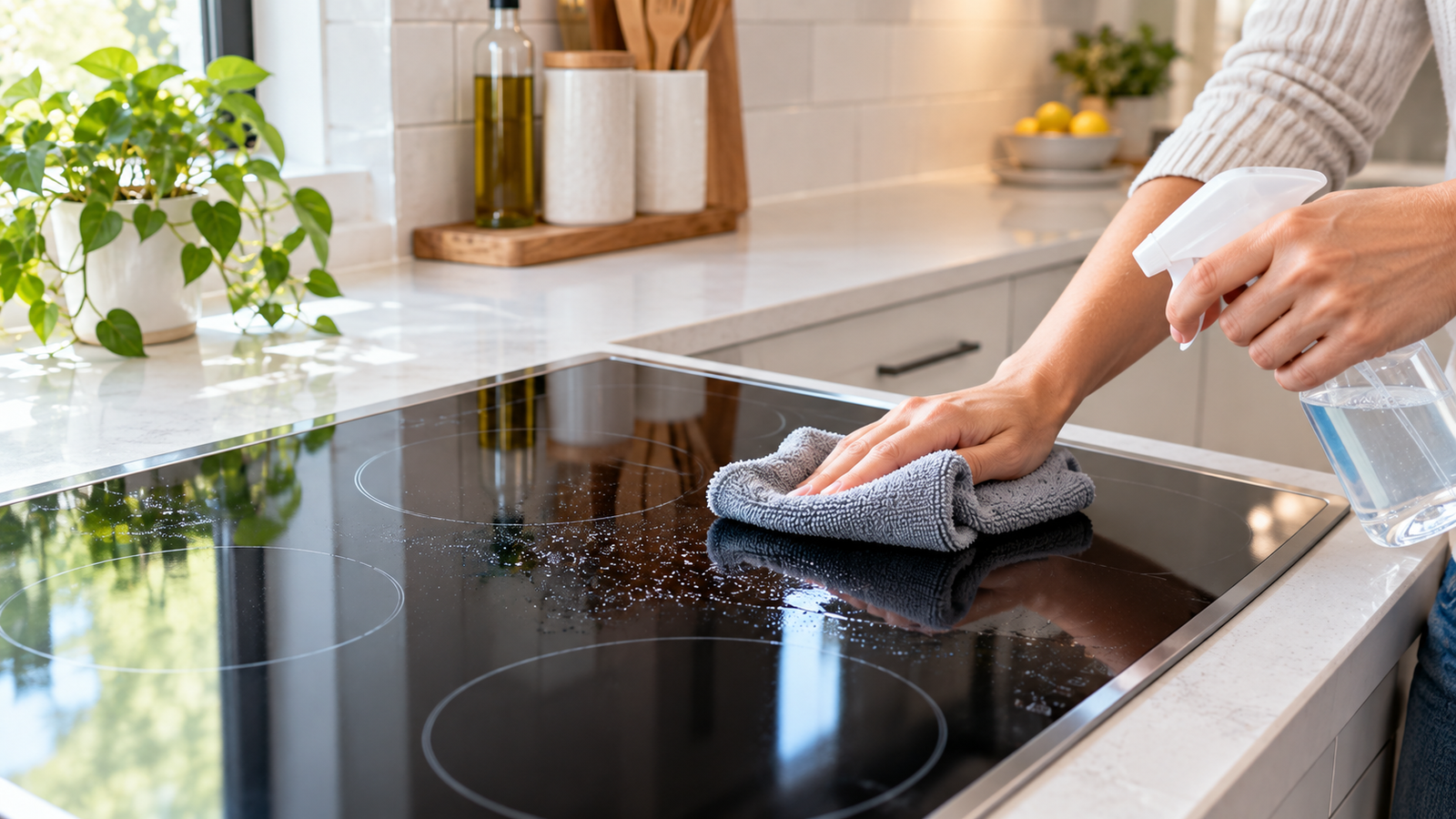
Glass cooktops require regular care to keep their smooth surfaces free from grease, splatters, and burnt-on food. Because ceramic and glass cooktops rely on a perfectly smooth, polished finish, using improper techniques or rough materials can result in lasting damage. Following expert-recommended, non-damaging cleaning techniques ensures your appliance stays clean while maintaining the structural integrity of the glass surface.
Prioritise Safety by Cooling the Cooktop Completely
Before applying any cleaning product or tool, safety must be prioritized. Glass cooktops must be allowed to cool completely before cleaning to prevent thermal shock and skin burns. Cleaning a hot cooktop is never safe under any circumstances. When cool liquids or room-temperature cleaners meet a heated cooktop surface, the sudden change in temperature induces thermal shock, which can cause structural damage or cracking in the glass. Additionally, working around a hot cooktop puts you at immediate risk of painful skin burns. Always confirm that the surface is entirely cold to the touch before beginning any maintenance routine.
Safe Tools and Mild Cleaning Solutions
To preserve the pristine glass finish, routine cleaning should always be performed using soft microfibre cloths paired with mild dishwashing liquid or specialized non-abrasive cream cleaners. Soft microfibre cloths are non-abrasive, making them ideal for lifting grease and dust without marking the cooktop.
For standard everyday spills, a small amount of mild dishwashing liquid combined with water on a soft microfibre cloth is effective. For heavier grime or residue build-up, use specialized non-abrasive cream cleaners formulated specifically for glass and ceramic cooktops. These specialized cream cleaners help dissolve grease and baked-on film without abrading the delicate cooktop surface.
Scraping Burnt-On Residues at a 45-Degree Angle
When food spills burn onto the cooktop surface during cooking, standard wiping with a cloth or sponge will often fail to dislodge the hardened material. Pushing harder with a soft cloth will not remove baked-on debris, but using the correct technique with the right tool will resolve the issue safely.
Burnt-on residues on a glass cooktop should be removed using a dedicated glass or ceramic scraper held at a 45-degree angle. The design of a dedicated scraper features a sharp, flat edge intended for smooth glass surfaces. By holding the scraper precisely at a 45-degree angle, you allow the blade to glide directly beneath the edge of the burnt food splatter. This angle provides the leverage required to lift away burnt-on crusts without gouging or scratching the underlying glass. Never use tools that are not specifically designed for glass cooktops, as doing so can score the surface.
Materials and Chemicals That Cause Permanent Surface Damage
Maintaining a glass cooktop involves avoiding severe chemical and physical threats. The use of abrasive steel wool, scouring pads, bleach, or harsh chemical sprays on glass cooktops can cause micro-scratches and permanent glass pitting.
Abrasive tools such as steel wool or scouring pads are never safe for glass cooktops. Even light scrubbing with steel wool or scouring pads leaves fine micro-scratches across the smooth exterior. Over time, these micro-scratches ruin the clarity of the surface and create rough areas where grease accumulates. Chemical selection is equally critical. Bleach and harsh chemical sprays are not appropriate for glass cooktop care. Their aggressive chemical formulations can cause permanent glass pitting, eating into the smooth surface layer and permanently altering its texture.
Chemical Safety Precautions
In addition to avoiding harsh chemicals like bleach, users must never mix chemical cleaning products. Combining different household cleaners or chemical sprays can cause chemical reactions that release dangerous fumes or cause surface degradation. To maintain safety and prevent damage, stick strictly to soft microfibre cloths paired with mild dishwashing liquid or specialized non-abrasive cream cleaners.
General Maintenance Disclosures
The cleaning techniques provided are for general household maintenance. Users should always ensure the surface has cooled completely before cleaning to avoid burns and thermal shock. Refer to specific appliance manufacturer manuals for warranty-specific care instructions.


Join The Discussion