
 by
by 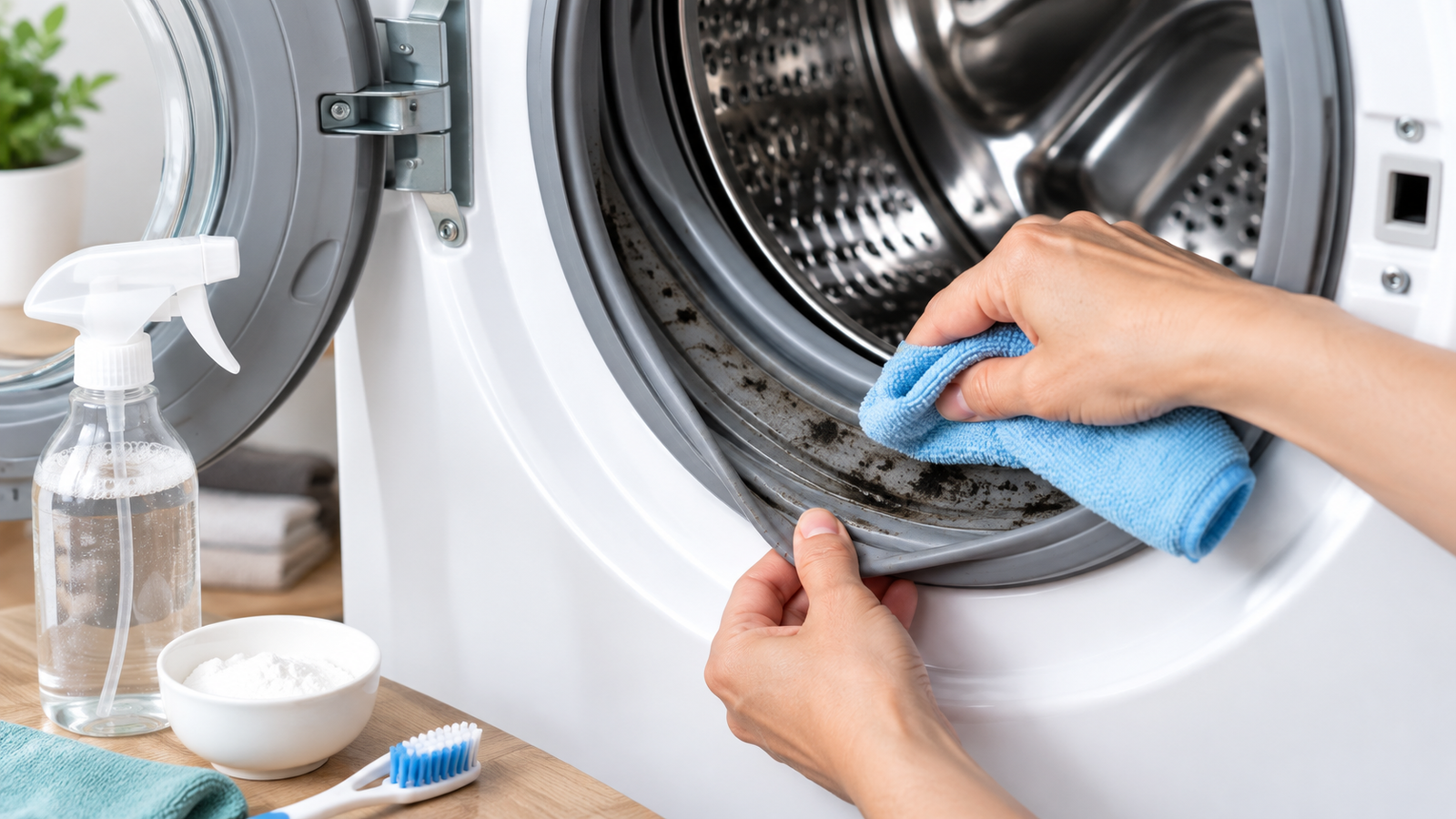
The rubber seal around the door of a washing machine can turn a bright white ring into a stubborn black patch over time. This change is usually caused by a mix of detergent residue, dampness and mould spores that thrive in the warm, dark environment of the machine. Regular cleaning of the seal keeps the appliance running efficiently and prevents unpleasant odours from spreading throughout the home. A simple routine can restore the seal’s appearance and extend the life of the machine. By following a few practical steps, you can avoid the need for costly repairs or replacements. This guide explains how to tackle the blackening problem safely and effectively, using only items you likely already have at home. By addressing the issue early, you maintain a cleaner laundry area and keep the machine’s performance at its best.
Understand the Problem
The seal is designed to stay flexible and allow water to escape while keeping the drum sealed. Over time, detergent, fabric softener and body wash can leave a film that, when trapped with moisture, creates a breeding ground for mould. The black colour is often a sign of mould rather than simple grime. Recognising this distinction helps you choose the right cleaning method.
Mould thrives where there is moisture, warmth and a food source. In a washing machine, the door seal provides all three. If you notice a dark patch or a musty smell, it is a clear sign that the seal needs attention before the problem spreads.
- Check for dark patches.
- Smell for musty odour.
- Look for dampness after a wash.
Gather Your Supplies
You do not need specialised cleaners. A mild dish soap, a soft brush or a toothbrush, a clean cloth, and a small bowl of warm water will suffice. Some households prefer a vinegar solution, but a gentle soap is less likely to leave a residue that could feed mould. The key is to use items that are safe for rubber and will not damage the seal.
If you prefer a natural approach, a diluted vinegar solution can be used, but test a small area first to ensure it does not degrade the rubber. Always rinse thoroughly afterwards to avoid any lingering smell.
Remove Excess Detergent
Start by wiping the seal with a damp cloth to remove any loose detergent. This step reduces the amount of residue that mould can feed on. Use a gentle, circular motion to avoid tearing the rubber. Repeating this step after each wash can keep the seal cleaner for longer.
If you notice a thick film, apply a small amount of soap directly to the brush and scrub lightly. Rinse the area with a clean damp cloth to remove any soap residue. This prevents soap from becoming a food source for mould.
- Wipe with damp cloth.
- Apply soap to brush.
- Rinse with clean cloth.
Deep Clean the Seal
Once the surface is free of detergent, apply a mild soap solution to the entire seal. Use the brush to reach the crevices where dirt accumulates. Work from the inside out to ensure you cover every part of the rubber.
After scrubbing, wipe the seal with a clean, damp cloth to remove all soap. Follow up with a dry towel to pat the seal dry. Leaving moisture trapped can encourage mould growth, so drying is essential.
Maintain a Dry Environment
After each wash, leave the door open for a period to allow the seal to dry completely. This simple habit reduces the moisture that mould needs to survive. If you live in a damp climate, consider placing a small towel or a paper towel inside the door to absorb excess moisture.
Regularly inspect the seal for new patches. Early detection means you can treat the area before it spreads. Keep a routine of cleaning the seal every few weeks to keep it in good condition.
- Leave door open after wash.
- Use towel to absorb moisture.
- Clean every few weeks.
When to Seek Professional Help
If the seal shows signs of cracking, hardening or severe mould that does not respond to cleaning, it may need replacement. Attempting to forcefully remove mould or replace the seal without proper knowledge can damage the machine.
In such cases, contact a qualified appliance repair service. They can assess the condition of the seal and replace it safely, ensuring the machine continues to operate efficiently.
- Check for cracks or hardening.
- Avoid forceful removal.
- Call a professional.
Keep Your Laundry Area Clean
A clean laundry area reduces the amount of dust and lint that can settle on the machine. Use a damp cloth to wipe the door frame and the surrounding surfaces regularly. This practice helps prevent dirt from mixing with detergent residue on the seal.
Ensure that the laundry area has good ventilation. A well-ventilated space dries the machine faster and keeps mould spores from settling. Even a simple fan can improve airflow and reduce dampness.
- Wipe door frame regularly.
- Maintain good ventilation.
- Use a fan if needed.
By following these straightforward steps, you can keep your washing machine seal clear and free from black mould. Regular maintenance not only improves the appearance of your appliance but also contributes to a healthier living environment. Treat the seal with care, and it will continue to perform reliably for many washes to come.

Join The Discussion