
 by
by 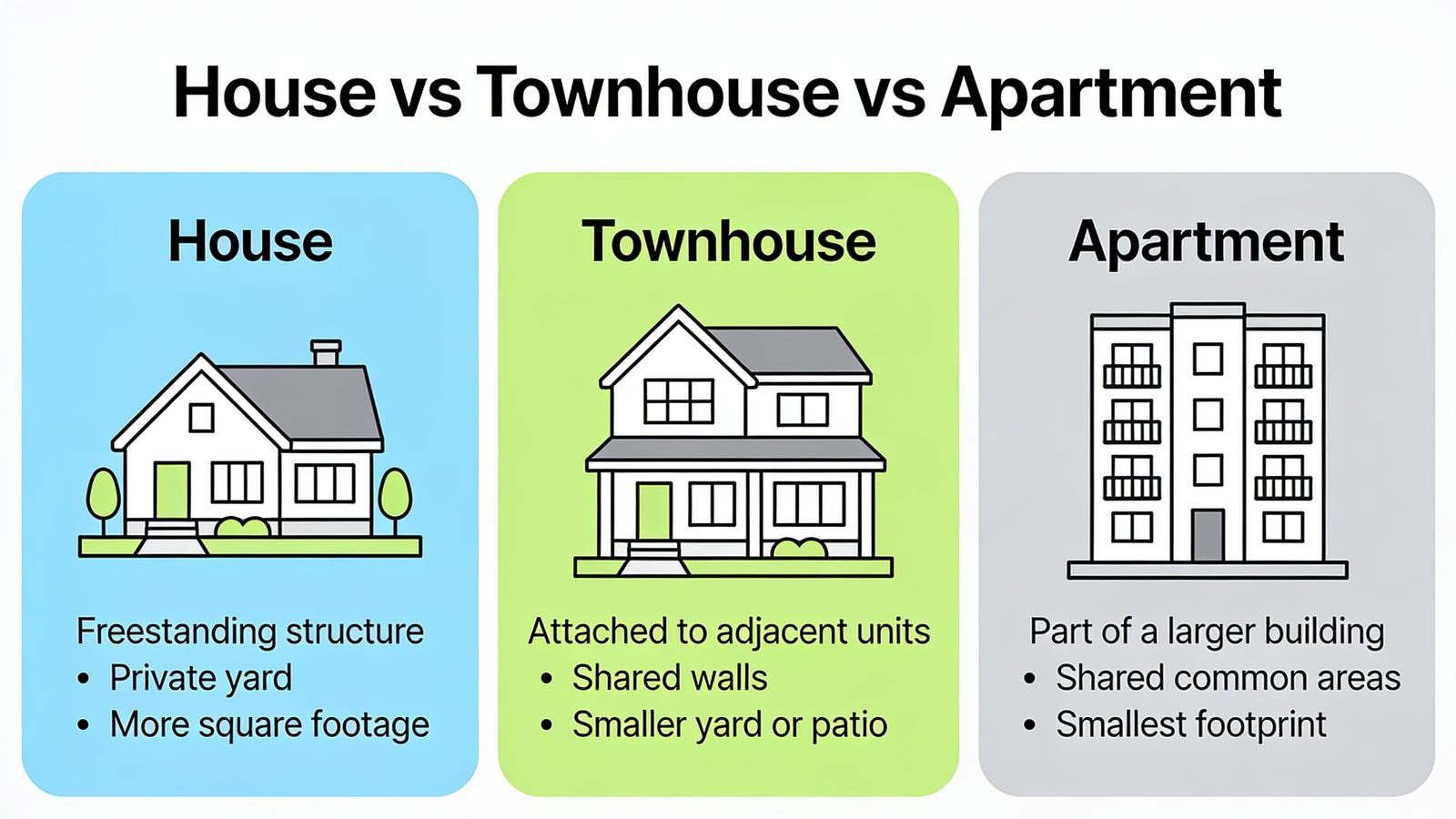
The property type you choose changes more than the layout. It affects ownership structure, ongoing costs, what you can change about the property, and how much land, if any, comes with it.
A standalone house is generally freehold, meaning you own the building and the land it sits on outright, subject to any easements or covenants on the title. You are usually responsible for the full cost and decision-making around maintenance, and you have more freedom to renovate, subject to council approval where required.
Townhouses and apartments are more often held under a strata or community titles scheme. You own your individual lot, but common areas, and sometimes the building structure itself, are managed collectively through a body corporate or owners corporation. This usually means body corporate fees on top of your other ownership costs, along with rules about what you can and cannot change, particularly to shared or external areas.
Land size is the other obvious difference. A house typically comes with more land, which matters if outdoor space, a garden or future extension potential is important to you. Townhouses and apartments trade that for lower maintenance and often a more central or convenient location for the price.
None of these options is inherently better. It depends on how much time and money you want to spend on maintenance, how much say you want over decisions affecting your home, and what stage of life you are buying for. Our Find Property For Me form lets you specify property type directly as part of your requirement, and our guide on property valuers is a useful next read if you are trying to understand how these differences affect value.
Join The Discussion