
 by
by 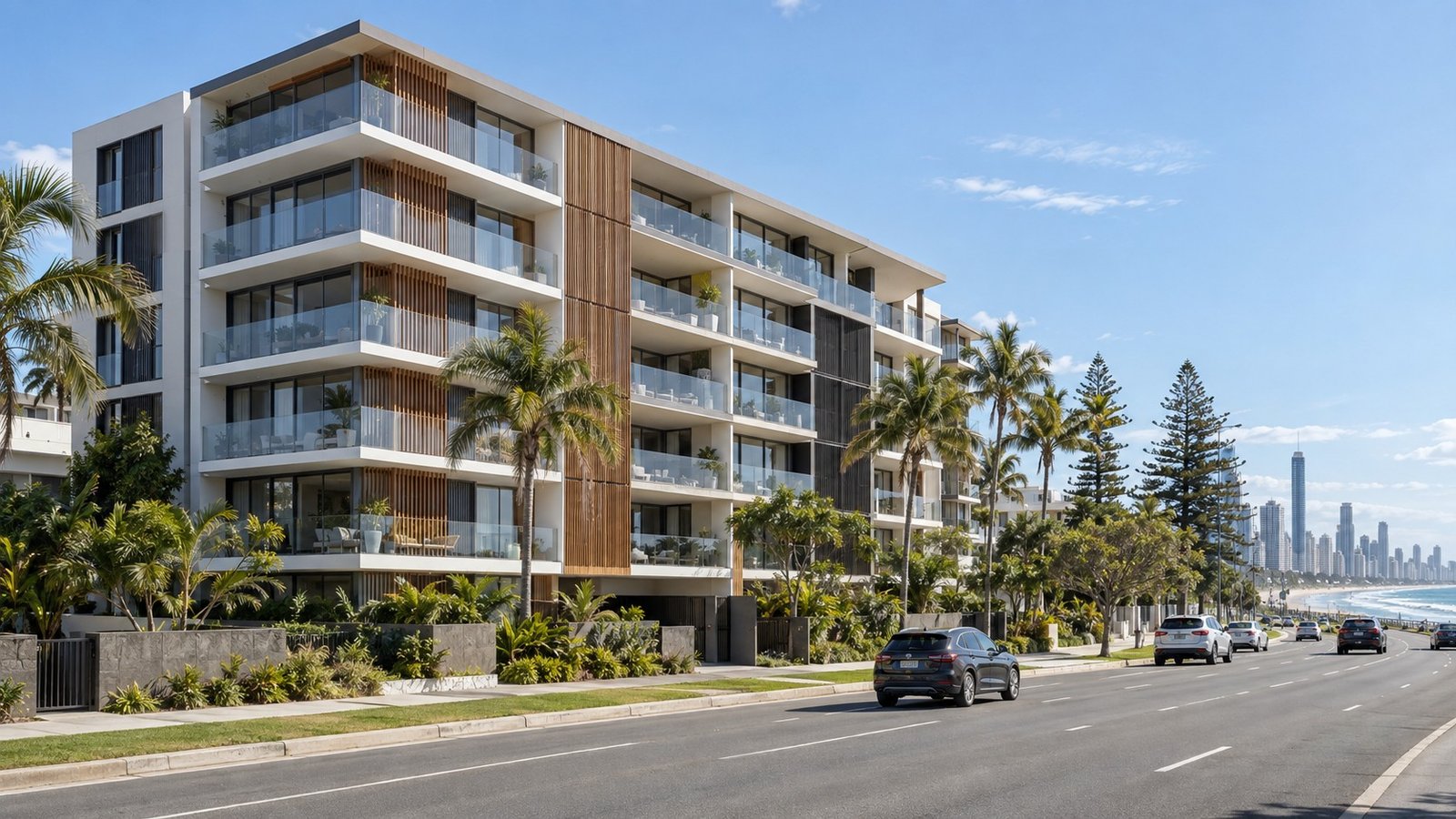
Miami, Palm Beach and Mermaid Waters all sit on or near the Gold Coast Highway corridor, and all three now have published Narevella suburb guides. Unlike the large, modern high-rise towers concentrated in Southport, Surfers Paradise and Broadbeach, which we cover in a separate article, the housing stock along this stretch of the Gold Coast Highway includes a meaningful share of older, smaller apartment and unit blocks, often two to four storeys, sometimes dating from the 1970s or 1980s, alongside newer builds. That difference in building typology changes what a buyer should actually check. This article combines a body corporate checklist for these smaller, older buildings with a reminder to check flood and coastal hazard mapping for the specific address, plus a note on Highway noise and traffic exposure.
Body Corporate Still Applies, But the Questions Differ
Every unit in a community titles scheme has a body corporate managing common property and collecting levies, regardless of whether the building is a two-storey 1970s block or a thirty-storey tower. What changes for older, smaller buildings is which questions actually matter. For a smaller, older block, it is worth asking specifically about the building’s age, and whether there is any history of structural issues, waterproofing problems or termite activity. It is also worth asking whether the sinking fund is realistically funded for a building of that age. Older, smaller schemes can sometimes have under-funded sinking funds relative to the scale of major repair costs that eventually come due, simply because a smaller pool of owners has been contributing over a long period without the same scrutiny that a large modern tower’s professional management might apply.
Flood and Coastal Hazard Checks for Highway-Frontage Units
Many buildings along this stretch of the Gold Coast Highway sit close to the coast, in some cases close enough that flood and coastal hazard overlays are directly relevant, not a theoretical concern. Before purchasing a unit in Miami, Palm Beach or Mermaid Waters, buyers should check the City of Gold Coast’s official flood mapping tools for the specific address, including any coastal erosion or storm-tide overlay, given the beachfront or near-beachfront position of many buildings in these suburbs. This is a straightforward check to make directly with the council’s own mapping tools, and it should be done for the specific address rather than assumed from a suburb’s general reputation.
Noise and Traffic From the Highway Itself
For units that front directly onto the Gold Coast Highway, ongoing road noise and traffic exposure is a genuine, practical consideration, separate from body corporate or flood questions entirely. This is worth experiencing in person, at different times of day, rather than assessing from a listing alone. A unit set back from the Highway within the same building, or on a different side, can have a meaningfully different noise experience to a Highway-facing one.
Putting It Together
For an older or smaller apartment block along the Gold Coast Highway, a buyer’s checklist should cover body corporate financial health and the sinking fund’s adequacy for the building’s age, any known structural, waterproofing or termite history, flood and coastal hazard overlays for the specific address through the City of Gold Coast’s mapping tools, and direct assessment of Highway noise and traffic exposure for the specific unit. As with any body corporate purchase, a solicitor or conveyancer reviewing the actual disclosure statement for the building is the appropriate way to get advice specific to your purchase, and our general guide, Buying a Unit or Townhouse in Queensland: Body Corporate Checks Buyers Should Make, covers the broader Queensland body corporate basics. For a look at the different body corporate considerations that apply to large modern high-rise towers rather than the smaller, older buildings covered here, see our companion article, Body Corporate in Gold Coast High-Rise Buildings. Our suburb guides to Miami, Palm Beach and Mermaid Waters cover each suburb’s broader profile beyond apartment buying specifically.
This article is general research information only, not financial or legal advice. Flood mapping, body corporate records and by-laws vary by address and building and should always be checked directly, ideally with professional advice, before purchasing.



Join The Discussion