
 by
by 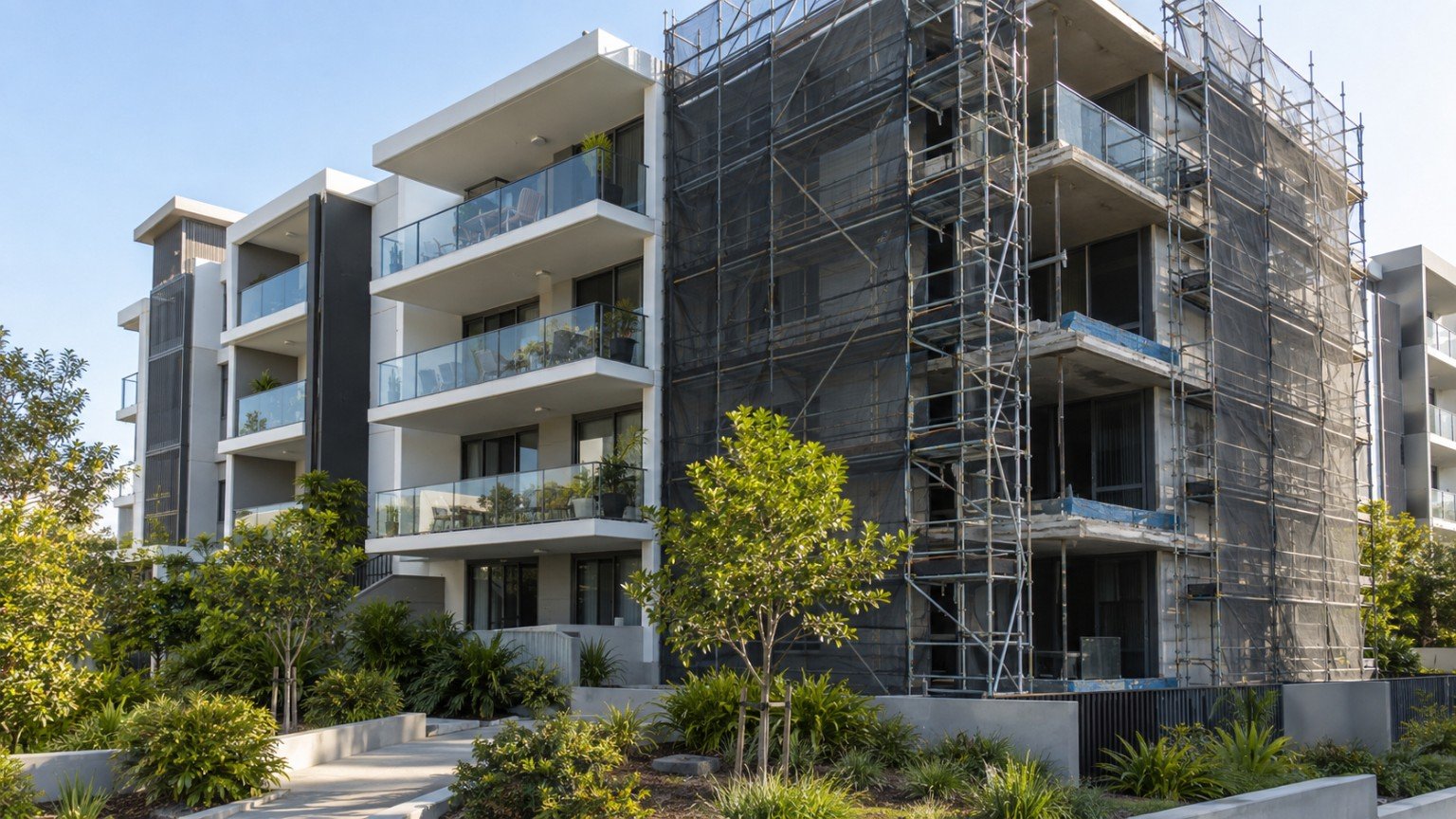
Building defects in apartments and townhouses are a genuinely distinct research question from the timber pest and general-condition focus of a standard house building and pest inspection. This article stays narrowly on defects-specific research for new and near-new multi-unit buildings. It does not restate general building and pest inspection content, and it does not restate off-the-plan contract mechanics, both of which are covered in detail elsewhere on Narevella.
What “building defects” means in this context
In a multi-unit building, defects research is generally concerned with:
- Waterproofing failures, including balconies, wet areas and basements.
- Cracking beyond what would be expected from normal settlement.
- Water ingress through facades or windows.
- Defects in common property services, such as lifts and fire systems.
This is a different focus to the timber pest and general condition questions a standard house building and pest inspection is built around, and it is why a house-focused inspection framework does not map neatly onto a multi-unit building.
The defects liability period, at a framework level
Most Queensland building contracts include a period after practical completion during which the builder remains responsible for rectifying defects that emerge. This article does not state a specific length for this period, since it varies by contract and is not verified at a specific-duration level here. Check the actual contract, or for a strata scheme, ask the body corporate whether the defects liability period is still open and whether any defects have already been notified to the builder.
Why this matters more for a near-new unit than an established one
If the defects liability period is still open, unresolved defects may still be the builder’s responsibility rather than the body corporate’s or the new owner’s. This is exactly why asking “is the defects liability period still open, and has anything been notified” is one of the highest-value questions a buyer of a near-new apartment can ask. It is not something a standard inspection surfaces on its own, and a buyer who does not ask may unknowingly inherit a defect that could otherwise have remained the builder’s responsibility to fix.
Where to look for evidence before relying on a verbal assurance
- Body corporate AGM minutes, which record ongoing maintenance items and any defect discussions. Narevella’s existing body corporate articles are the right reference for reading these records in general.
- Any building defect insurance or warranty claim referenced in scheme records.
- Visible signs on a walk-through: staining below balconies, cracking at movement joints, or doors and windows that no longer close properly in a newer building.
None of these on their own is conclusive. A single stain below a balcony could be old and already resolved, or it could be an active, unreported issue. The point of checking multiple sources, minutes, any claim record, and your own walk-through observations, is to build a fuller picture rather than rely on any single sign in isolation.
Common property versus lot responsibility
A defect in common property, such as the building envelope or shared services, is typically the body corporate’s concern once any builder liability period ends. A defect inside an individual lot is typically the owner’s. Rather than re-explain that split in detail here, Narevella’s buying a unit or townhouse body corporate checks and body corporate in Gold Coast high-rise buildings articles cover it directly.
Off-the-plan buyers specifically
Narevella’s existing off-the-plan guide covers contract-stage risk before you sign. This article’s job is the parallel, post-completion question of what happens if defects emerge after you have already moved in, which is a different stage of the same journey and needs its own set of questions.
How this differs from a house building and pest inspection
Narevella’s building and pest inspections guide and second property inspection checklist both remain the right reference for general pre-purchase inspection content. Neither is built around multi-unit defect risk specifically, which is why this article exists as a separate, narrower piece rather than an addition to either.
What this article does not attempt
This article does not name any builder, development or cladding product, and it does not state any statistic about defect rates in Queensland strata buildings. None of that detail is necessary or verified at that level here, and none of it changes the practical questions a buyer actually needs answered.
The practical close
Ask directly, in writing, whether the defects liability period is still open and whether any defect has been notified. A “no” answered verbally on an inspection walk-through is not the same as a documented answer, and the difference between the two can matter a great deal if something surfaces after settlement.
This article is general research information only and does not constitute legal, building or financial advice. Always engage a qualified conveyancer, solicitor or building professional to review defects liability status for a specific scheme before you buy.



Join The Discussion