
 by
by 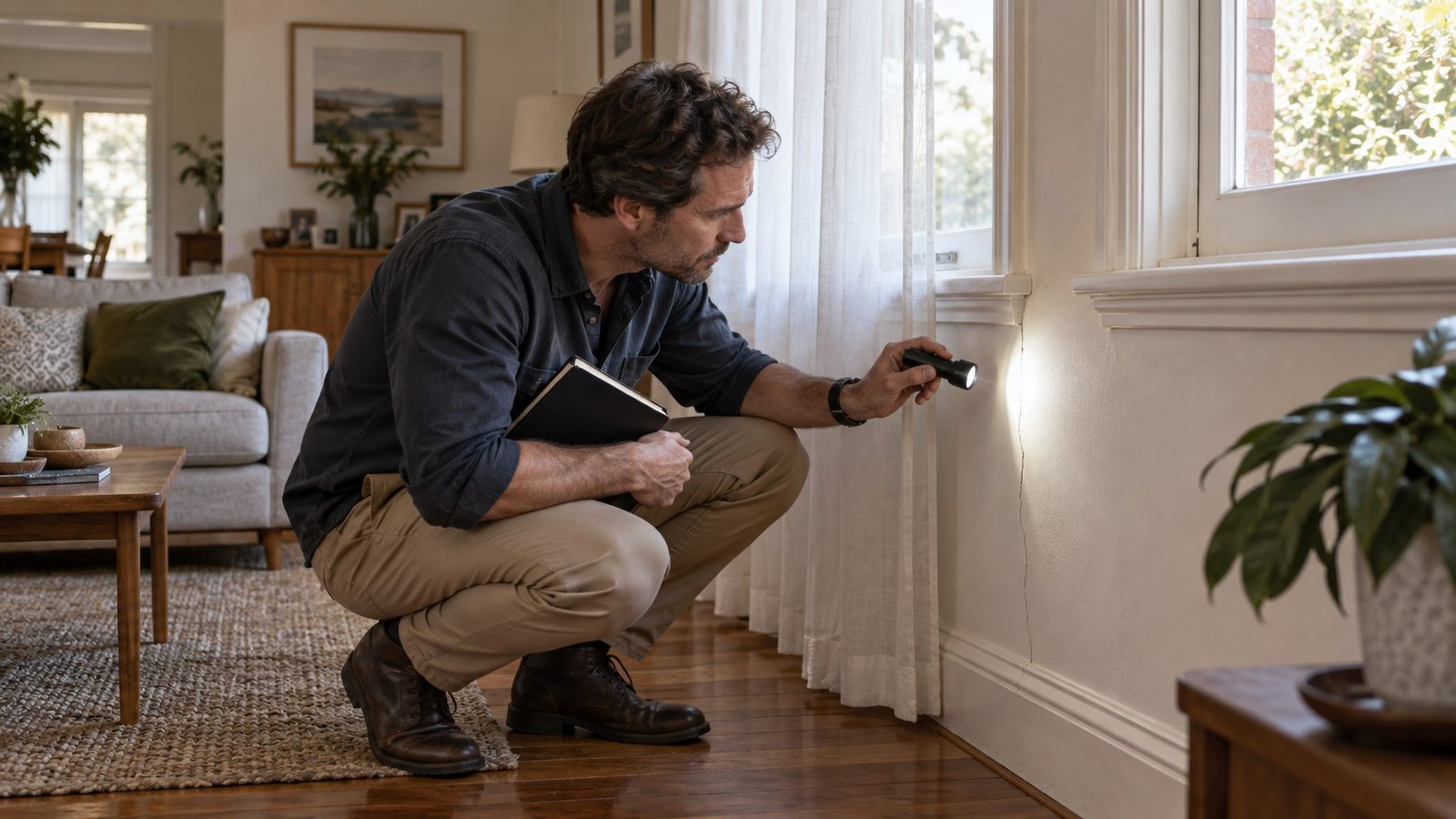
A first inspection is often about first impressions. A second visit, ideally at a different time of day, is where you can look past the staging and check the practical details that actually affect day-to-day living. This guide is a walkthrough checklist for that second visit, before you make an offer.
Water and Drainage
Look again for staining, pooling, or musty smells, particularly in corners, under sinks, and around the base of external walls. Note where water would flow across the block during heavy rain. See our guide to drainage, stormwater and overland flow for what to look for in more detail.
Cracks and Movement
Check internal cornices, external walls, and around door and window frames for cracking or misalignment. A small hairline crack in old paint is usually cosmetic, but stepped cracking, or a door that has started sticking, is worth noting and asking about.
Doors and Windows
Open, close, and lock every door and window you reasonably can. Sticking, misalignment, or difficulty locking can be a sign of movement in the structure, not just wear and tear.
Moisture and Mould Signs
Check bathrooms, laundries, and under-sink cabinets closely, since these are the most common spots for hidden moisture and early mould growth. A strong smell of cleaning product or air freshener in one specific area is sometimes worth a second look.
Roof and Gutters, Observed Safely
From ground level, look for sagging rooflines, rusted or damaged roof sheeting, and gutters that look overloaded, disconnected, or overflowing. Do not climb onto the roof yourself. Our guide to building and pest inspections covers what a licensed inspector checks in more detail.
Retaining Walls and Fences
Check for leaning, cracking, or bulging on any retaining walls, and note the general condition of boundary fencing. See our guide to retaining walls in Queensland for specific warning signs.
Neighbouring Properties, Noise and Access
If possible, visit at a different time, such as a weekday evening or weekend morning, to get a sense of traffic noise, street parking pressure, and general neighbourhood activity that a daytime inspection may not reveal.
Parking and Storage
Check that parking and storage genuinely suit your everyday needs, not just how they appear in listing photos. Garage width, driveway length, and general storage space are easy to overestimate from photos alone.
Orientation and Natural Light
Note which direction the home faces and how light moves through the main living areas across the day. A property that looks bright at a midday inspection may feel very different in the early morning or evening.
Utilities and Features
Test taps for water pressure, check power points work, and note the type, age, and location of the hot water system and any air conditioning included in the sale.
Questions Worth Asking
Ask the agent why the owner is selling, how long the property has been on the market, and whether there have been any other offers. These answers will not replace formal research, but they can add useful context.
This Does Not Replace a Professional Inspection
Everything in this checklist is a visual, non-technical check you can reasonably do yourself. It does not replace a licensed building and pest inspection, which is the appropriate way to identify structural issues, pest activity, and defects that are not visible to an untrained eye. See our guide to building and pest inspections in Queensland.
Where Narevella Can Help
Our free Property Inspection Notes tool gives you a structured way to record what you observe at an inspection, room by room. Our broader guide on what to check before making an offer covers the wider research process.
Disclaimer
This guide provides general research information only and is a personal note-taking aid, not a professional inspection. It is not a substitute for a licensed building and pest inspection or other professional advice.



Join The Discussion