
 by
by 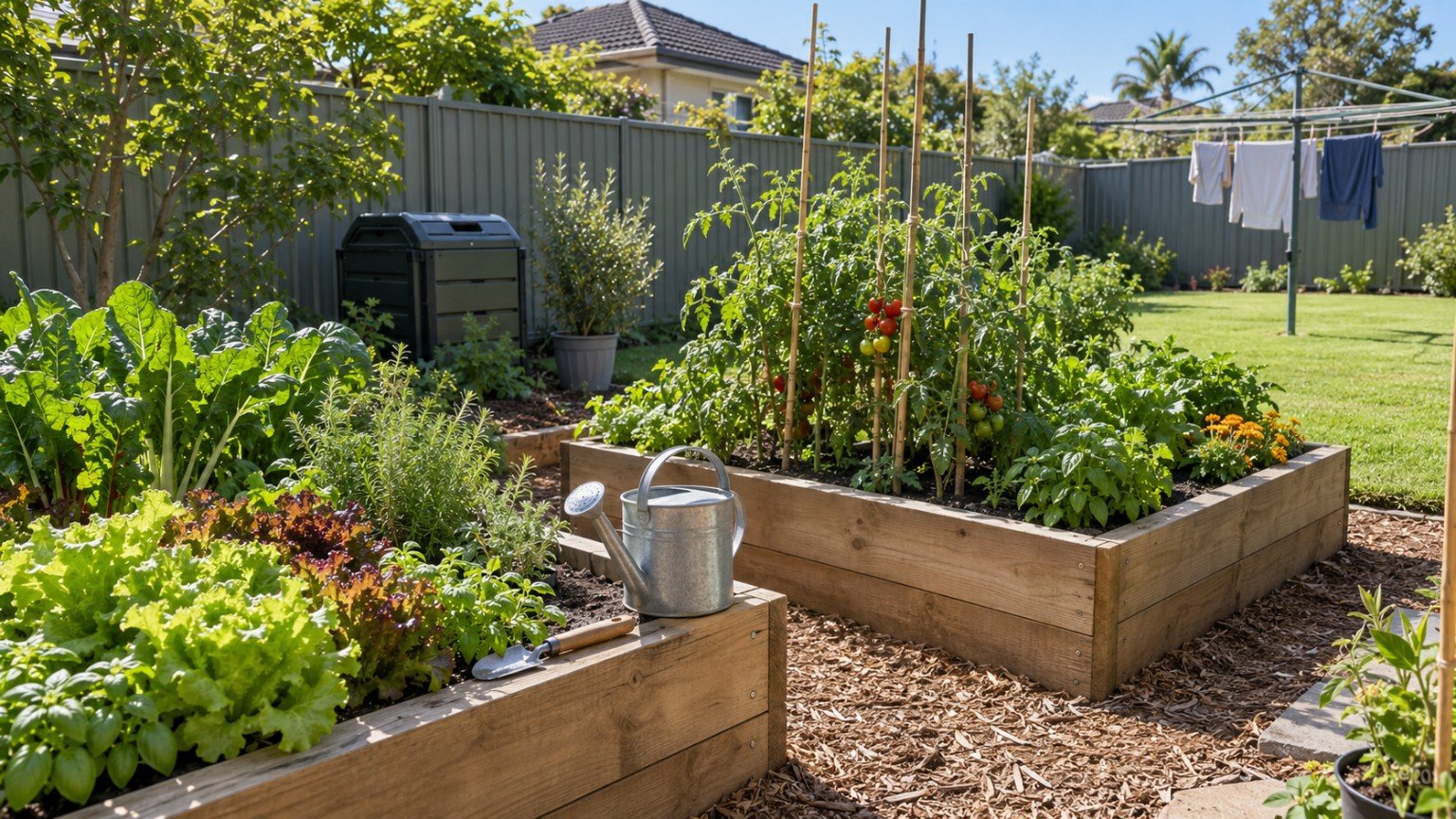
You do not need a sprawling backyard to grow a genuinely useful amount of your own food. A small, well-planned vegetable garden, even just a few square metres or a cluster of raised beds and pots, can produce herbs, leafy greens and seasonal vegetables for a household right through the year. Here is a practical starting point for any Australian backyard, regardless of climate zone.
Start by understanding your space
Before buying anything, spend a few days observing your intended garden spot. Most vegetables need at least six hours of direct sun a day, so watch how sunlight moves across your yard, particularly if you have fences, trees or a neighbouring building casting shade at different times. Check the drainage too. If water pools after rain rather than soaking in, you will likely want raised beds rather than planting directly into the ground.
Australia spans a wide range of climate zones, from tropical to temperate to arid, so the exact planting calendar for your area will differ. Rather than following a generic seasonal guide, it is worth checking planting times for your specific region through a state department of agriculture resource or a reputable local nursery, since sowing at the right time makes a bigger difference to success than almost any other factor.
Choosing between garden beds, raised beds and pots
In-ground beds
The cheapest option if your existing soil is reasonably good and well-draining. You will still likely need to dig in compost or aged manure to improve structure and nutrients before planting.
Raised beds
A good choice if your soil is poor, compacted, sandy or prone to waterlogging, or if you want a defined, tidy growing area. Raised beds warm up faster in spring and give you more control over soil quality from day one. A simple timber-framed raised bed is also a manageable weekend DIY project for most homeowners.
Pots and containers
Ideal for renters, small courtyards, balconies or anyone wanting to test the water before committing to a full garden bed. Herbs, dwarf tomato varieties, chillies, lettuce and many leafy greens all do well in large pots, provided there is good drainage and regular watering.
Preparing the soil
Good soil is the single biggest factor in a productive vegetable garden. Whatever growing method you choose, aim to work in a generous layer of compost or well-rotted manure before your first planting. This improves both nutrient content and the soil’s ability to hold moisture without becoming waterlogged. If you are keen to reduce ongoing costs, setting up a simple home compost system alongside your vegetable patch is a natural next step and gives you an ongoing supply of free, nutrient-rich material.
What to plant first
For beginners, it is worth starting with vegetables that are genuinely forgiving and quick to show results, which helps build confidence before tackling anything more finicky. Good starter choices for most Australian climates include:
- Leafy greens such as lettuce, silverbeet and spinach
- Herbs including basil, parsley, mint and chives
- Cherry tomatoes, which tend to be more forgiving than large slicing varieties
- Zucchini, which is famously productive once established
- Radishes, which mature quickly and are satisfying for beginners and kids alike
Check the specific sowing window for your climate zone before planting, since timing genuinely matters more than enthusiasm here.
Watering and ongoing care
Consistency matters more than volume. Most vegetable gardens do better with regular, deep watering a few times a week rather than a light sprinkle daily, which encourages roots to grow deeper and makes plants more resilient in hot weather. Mulching around your plants with straw, sugar cane mulch or a similar material helps retain moisture, suppress weeds and moderate soil temperature, and is one of the simplest ways to reduce how often you need to water.
Keep an eye out for common pests such as aphids or snails early, since catching an infestation in its first days is far easier to manage than dealing with a widespread problem later. Natural, low-intervention approaches such as hand-picking, a strong jet of water, or companion planting are usually enough for a small home garden and avoid introducing harsh chemicals near food you plan to eat.
A realistic first-season plan
- Choose your site and confirm it gets enough sun
- Decide on in-ground, raised bed or pots based on your soil and space
- Prepare the soil with compost or aged manure
- Start with three or four forgiving vegetables suited to your current season
- Set up a simple watering routine and mulch well
- Monitor weekly for pests and adjust as you learn what thrives in your specific spot
A small backyard vegetable garden rewards patience more than any special skill. Most of the learning happens through a full growing season of trial, observation and small adjustments, so treat the first attempt as a starting point rather than something that needs to be perfect straight away.



Join The Discussion