
 by
by 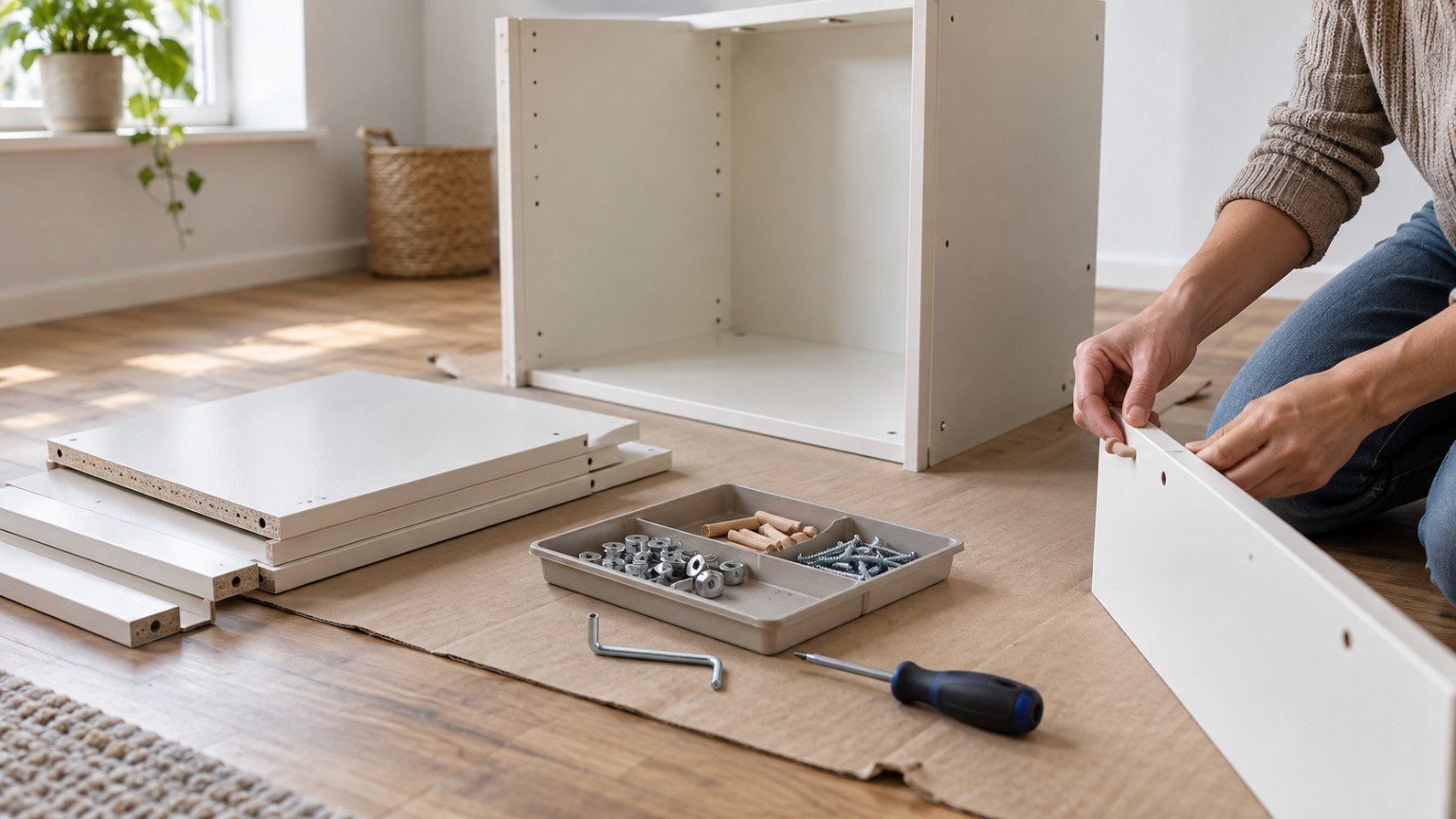
Flat-pack furniture is affordable, convenient and, if you have ever fought a wardrobe that wobbles or a drawer front that will not sit flush, occasionally infuriating. Most of the frustration comes down to a handful of avoidable mistakes made early in the build, not a lack of skill. A bit of preparation and a slower pace through the first few steps makes the difference between a solid, square piece of furniture and one that never quite feels right.
Before you open a single bag of screws
Rushing to start is the single biggest cause of stripped screws and wonky joins later on. A short setup routine avoids most problems before they happen.
- Clear a large, flat, well-lit space. A cramped or cluttered work area makes it easy to lose small parts or assemble panels at a slight angle without noticing.
- Lay out every part and count them against the parts list. Missing or duplicate pieces are far easier to sort out before you start than halfway through.
- Group hardware by type. Small trays, muffin tins or even labelled cups for screws, dowels, cam locks and Allen keys save a lot of time and frustration.
- Read the full instructions once before starting, rather than following one step at a time. Seeing the whole sequence helps you spot which panel needs to go on first and where extra hands might be needed.
- Use a soft surface, like the cardboard packaging or an old blanket, to protect panels from scratches while you work.
Why screws strip and joins end up wonky
Almost every stripped screw comes down to one of three things: using the wrong size or type of screwdriver head, driving a screw in at a slight angle, or forcing a screw that has hit resistance instead of stopping to check why. Flat-pack hardware is usually made from softer metal than trade-grade screws, so it strips more easily under force or an ill-fitting driver. A wonky join is almost always the result of a panel going in slightly out of square early in the build, which then throws off every joint that attaches to it afterward.
Getting screws in straight, every time
- Use the right tool, not just any tool. A screwdriver bit that is slightly the wrong size, or a cheap Allen key that flexes, is a common cause of stripping. A cordless drill with an adjustable clutch, set to a low torque setting, gives you far more control than hand tools alone and lets you stop the moment resistance increases.
- Start every screw by hand. A few turns by hand before switching to a drill keeps the screw going in straight and stops it wandering off at an angle into softer particleboard.
- Do not fully tighten anything until the whole section is loosely assembled. Leaving screws slightly loose lets you square up a panel or frame before locking everything down. Tightening one join fully before the next piece is in place is one of the most common causes of a frame that will not sit flat.
- Stop if you feel the screw spinning without biting. That is the sign of a stripped hole, not a reason to push harder. Removing the screw, adding a wooden toothpick or two with a dab of wood glue into the hole, and letting it dry before reinserting the screw is a widely used, effective fix for particleboard.
Keeping the whole piece square
Once the main frame is loosely together, check it is square before tightening anything fully. A simple way to do this without a tool is to measure both diagonal corners of the frame; if the two diagonal measurements match, the frame is square. If they do not, gently adjust the frame until they do, then tighten fasteners from one end to the other rather than jumping around at random. Working methodically in this order, rather than tightening whatever is closest, is what keeps drawers running smoothly and doors closing evenly once the piece is finished.
A few extra habits worth building in
- Attach any back panel last, after the main frame is square, since it is often used to lock the final shape in place rather than to build the shape itself.
- If a step calls for a second person to hold a panel steady, wait for them rather than improvising alone. Trying to hold a large panel and drive a screw at the same time is a common cause of a crooked join.
- Keep spare screws and cam locks in a labelled bag rather than throwing them out. Flat-pack furniture occasionally needs re-tightening after a few months of use, and having the original spare hardware on hand makes that a five-minute job.
- If a hole genuinely will not hold a screw even after the toothpick-and-glue fix, a slightly larger diameter screw (checked for fit first) is a reasonable next step rather than continuing to force the original one.
When it is worth slowing right down
Heavier pieces, such as wardrobes, bookcases or anything that will be wall-anchored, are worth building slower and, if possible, with a second person from the start. A wobbly bookcase is an inconvenience; a tall, top-heavy piece that has not been assembled square, or that has not been anchored to the wall once built, can be a genuine tip-over risk, particularly in homes with young children. Following the manufacturer’s anchoring instructions once assembly is complete is a small step that matters more than it might seem.


Join The Discussion