
 by
by 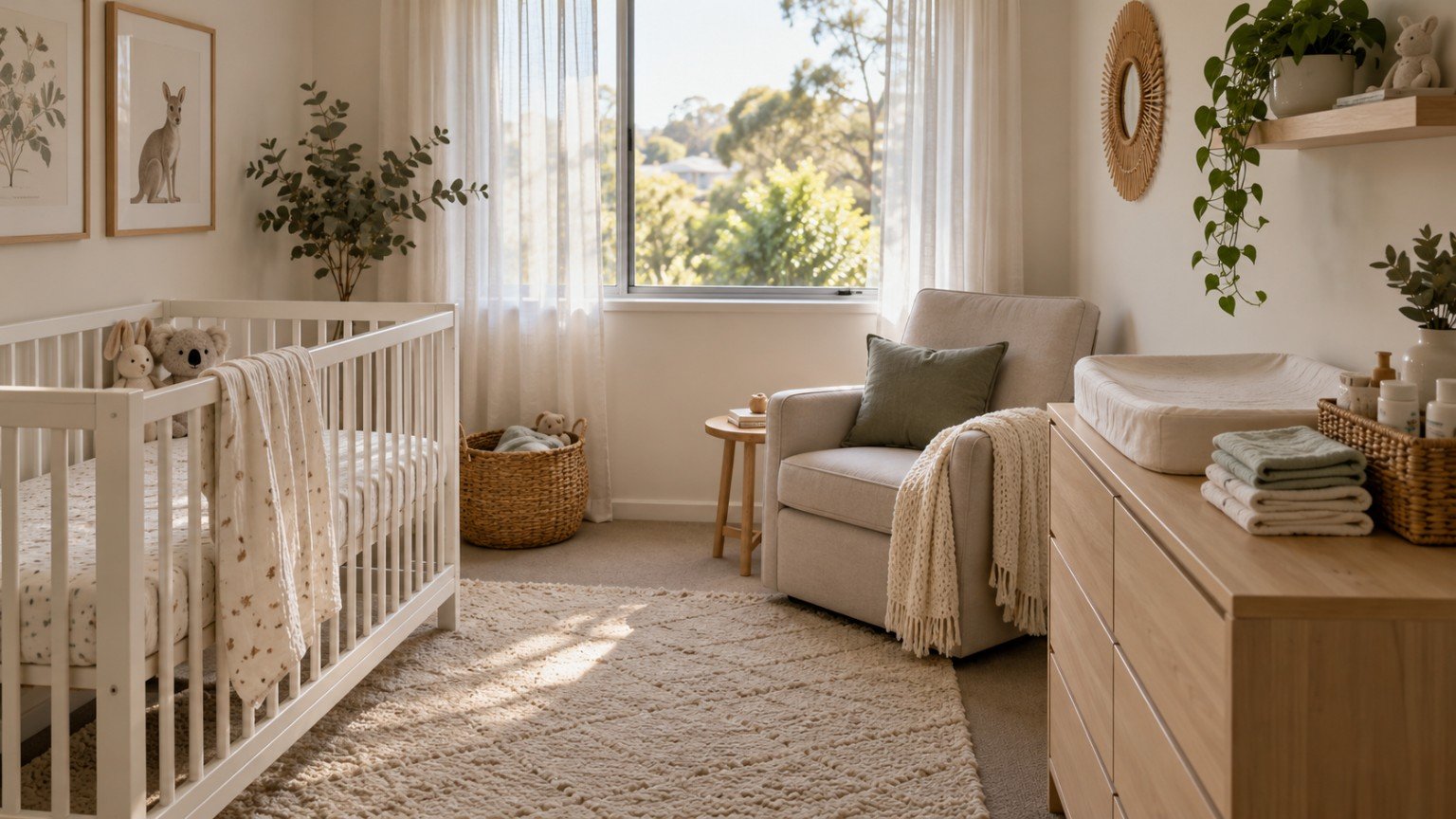
Preparing a home for a new baby can quickly turn into an overwhelming list of nursery inspiration and must-have gear. In practice, the things that actually matter most in the early weeks are simpler than the checklists suggest: a safe place to sleep, a manageable feeding and changing setup, and a home that’s reasonably safe to move a newborn, and eventually a mobile baby, through. This is a practical, no-fuss guide to getting the essentials sorted first.
Start with safety basics, not decor
It’s easy to spend early preparation time on colour schemes and furniture styling, but the things that matter for safety are far less photogenic: a firm, well-fitted mattress, a smoke alarm that works, and clear pathways through the rooms you’ll use most at 3am. Get these sorted before anything decorative.
Setting up a safe sleep space
Current safe sleeping guidance for Australian families is worth checking directly with Red Nose Australia or your maternal health provider, since specific recommendations are updated periodically. As general preparation points:
- Choose a cot or bassinet that meets the Australian safety standard, whether new or carefully checked second-hand
- Use a firm, flat mattress that fits the cot or bassinet snugly, with no gaps around the edges
- Keep the sleep space itself free of pillows, soft toys, loose bedding and bumpers
- Decide where the baby will sleep for the first weeks, many families keep a bassinet in their own room initially, which also simplifies set-up
Babyproofing the rest of the home
A newborn doesn’t need a fully babyproofed house on day one, but it’s genuinely easier to handle the bigger physical jobs before you’re also managing a newborn’s routine. Reasonable priorities before or shortly after arrival include securing any furniture that could tip (like bookshelves or a chest of drawers), checking that blind and curtain cords are out of reach or use a cordless design, and fitting safety switches on power points in main living areas if they aren’t already there. Full crawling and toddler-proofing, cupboard locks, corner guards, gates, is worth revisiting closer to when the baby starts moving, rather than doing it all upfront.
For renters, most babyproofing measures like furniture anchors, cordless blind clips and door stoppers can be done without permanent changes to the property, but it’s worth checking your lease before drilling into walls for anything more permanent.
Practical systems that make the first weeks easier
Beyond the nursery itself, a few practical set-ups make a genuine difference in the newborn stage:
- A changing station stocked with everything you need within arm’s reach, so you’re never caught without nappies or wipes mid-change
- A simple system for washing and storing baby clothes and linen separately, since newborns go through more laundry than expected
- A stocked, easily accessible first aid kit, including a working thermometer
- Meals prepared and frozen in advance, or a plan for easy meals in the first fortnight
A simple room-by-room checklist
Nursery or sleep space: safe cot or bassinet, firm mattress, working smoke alarm nearby, blackout or curtain option for daytime naps.
Living areas: secured furniture, cordless or clipped-back blinds, a comfortable, well-lit spot for feeding.
Bathroom: a safe, stable spot for bathing, a non-slip mat, and bath thermometer if you’d like one.
Kitchen: a clear space for sterilising equipment if you’re using bottles, and easy access to snacks and water for exhausted middle-of-the-night feeds.
Car: a correctly fitted, compliant car seat, ideally checked or fitted by an authorised restraint fitter before the birth.
What can genuinely wait
Full nursery styling, elaborate storage systems, and most baby gear marketed as essential can wait until after the baby arrives, when you’ll have a much clearer sense of what your household actually needs day to day. Newborns need very little space of their own in the first months, so there’s no need to have every drawer organised before the due date.
Getting the safety essentials sorted early, and leaving the rest flexible, tends to make the lead-up to a new baby feel far more manageable than trying to complete every item on a generic checklist.
Join The Discussion