
 by
by 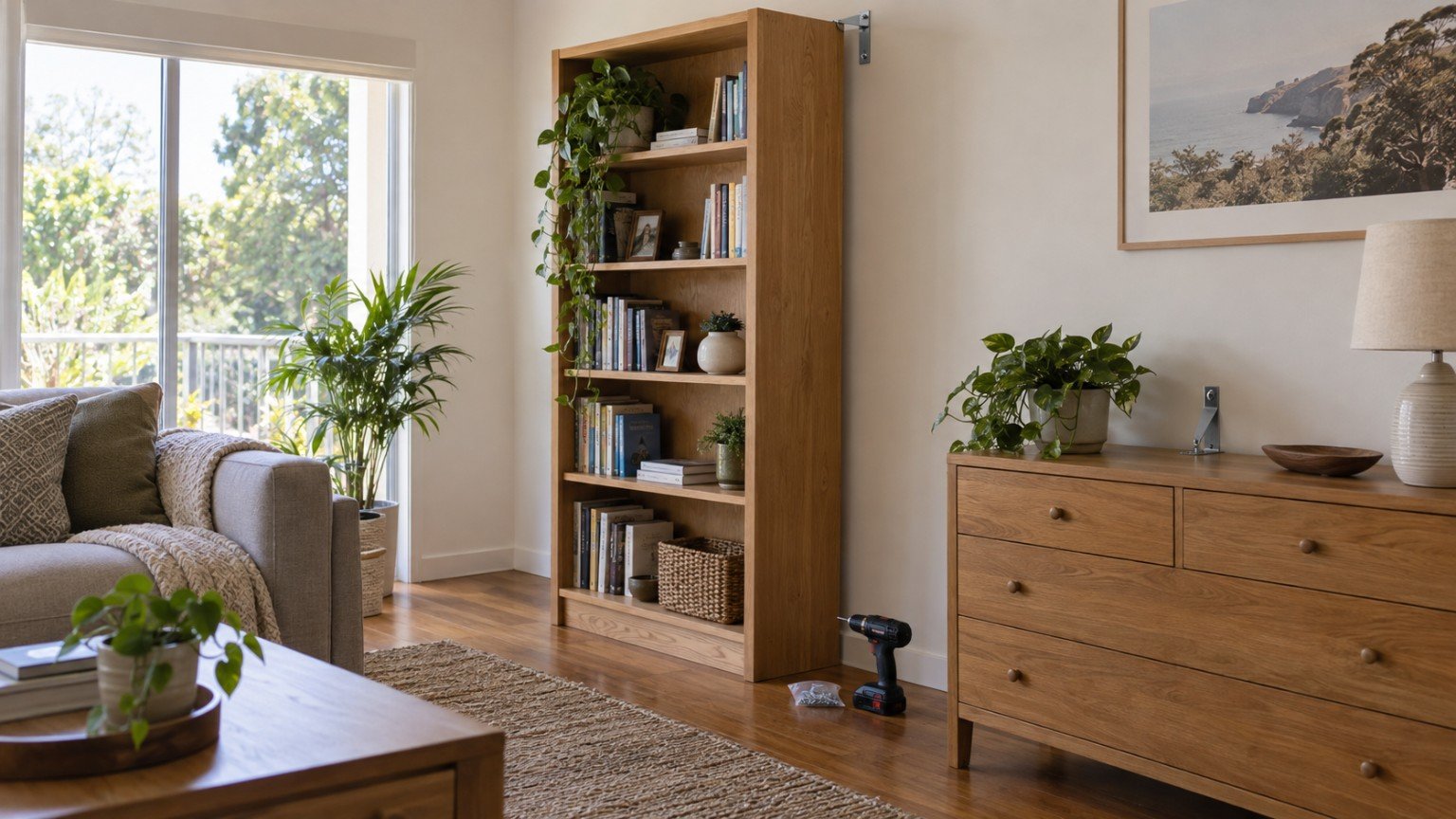
Furniture and shelving tip-overs are one of the more overlooked household risks with young children in the home, since a piece that seems perfectly stable to an adult can become unbalanced when a toddler climbs, pulls open a drawer, or uses it to pull themselves up. The good news is that securing furniture against tipping is a simple, low-cost job that does not require any structural changes to a home.
Why furniture and shelving anchoring matters
Tall, top-heavy furniture such as bookshelves, chests of drawers and freestanding wardrobes carry most of their weight above waist height, which makes them prone to tipping forward if a child climbs on an open drawer or pulls on the top. Anchoring a piece to the wall keeps it upright even under that kind of load, and it is one of the simplest, most effective safety steps a household can take.
Which items need anchoring
As a general rule, any freestanding furniture that is tall relative to its base, or that a child could realistically climb, is worth anchoring. This typically includes bookshelves, tallboys and chests of drawers, freestanding wardrobes, TV units, and any shelving unit within reach of young children. A wide, low piece such as a squat sideboard is inherently more stable and lower risk, but it is still worth checking that it cannot be pulled forward if every drawer is opened at once.
How anti-tip straps work
An anti-tip strap is a short strip of webbing or a metal bracket with a screw fitting at each end. One end attaches to the back or top of the furniture piece, and the other attaches to the wall, so that the furniture cannot tip forward past a small, controlled distance even under weight. Most furniture retailers include a basic anti-tip kit with tall items such as bookshelves and drawer units, and standalone kits are widely available and inexpensive if yours did not come with one.
Installing an anti-tip strap safely
The safest and most reliable anchor point is a wall stud, the timber or metal framing behind the plasterboard, rather than the plasterboard itself, which will not hold weight securely on its own. A simple stud finder can locate this before you drill. Follow the strap manufacturer’s instructions for screw type and placement, and check the fitting is snug and cannot be pulled loose by hand once installed. This is routine, low-risk work using the fittings supplied for exactly this purpose, not a structural change to the home.
If you are not confident locating a stud or using a drill, it is entirely reasonable to ask a handy family member or a local handyman to fit anti-tip straps for you. It is a quick job for someone experienced, and getting it done properly matters more than doing it yourself.
Renter-friendly childproofing options
For rentals where drilling into a wall needs approval, there are anchor options that avoid the wall altogether. Furniture-to-furniture straps can secure a lighter unit to a heavier one standing beside it, and some anti-tip kits use a floor-mounted bracket or a wide, weighted base plate rather than a wall fixing. Where a wall anchor genuinely is the safest option for a particular piece, it is worth raising it with the landlord or property manager directly. Most reasonable requests around child safety are approved, and it is a legitimate, low-impact repair to ask for.
Other shelving and furniture safety checks
- Keep heavier items on lower shelves and lighter items up high, rather than the reverse
- Fit corner guards to sharp furniture edges at a child’s head height
- Use drawer stops so a chest of drawers cannot have every drawer pulled fully open at once
- Secure a freestanding TV to its unit with a strap or bracket, in addition to anchoring the unit itself
- Check anti-tip straps periodically, since they can loosen over time with regular use
When to call a professional
Very heavy wall units, floor-to-ceiling shelving, or anchoring into masonry, tile or a wall type you are unsure about are all situations where it is worth calling in a professional rather than guessing. The same applies if you cannot confidently locate a stud or are unsure whether a wall can safely bear the load. A tradesperson can fit a secure anchor quickly, and it is worth the small cost for genuine peace of mind.
A simple room-by-room safety check
Walk through each room a child has access to and ask whether any furniture could tip if climbed on, pulled, or leaned against. Bedrooms, living rooms and any home office or study are the most common areas with tall, unanchored furniture. Fixing even two or three of the highest-risk pieces first, rather than trying to do everything at once, is a sensible way to make real progress on this quickly.
Join The Discussion