
 by
by 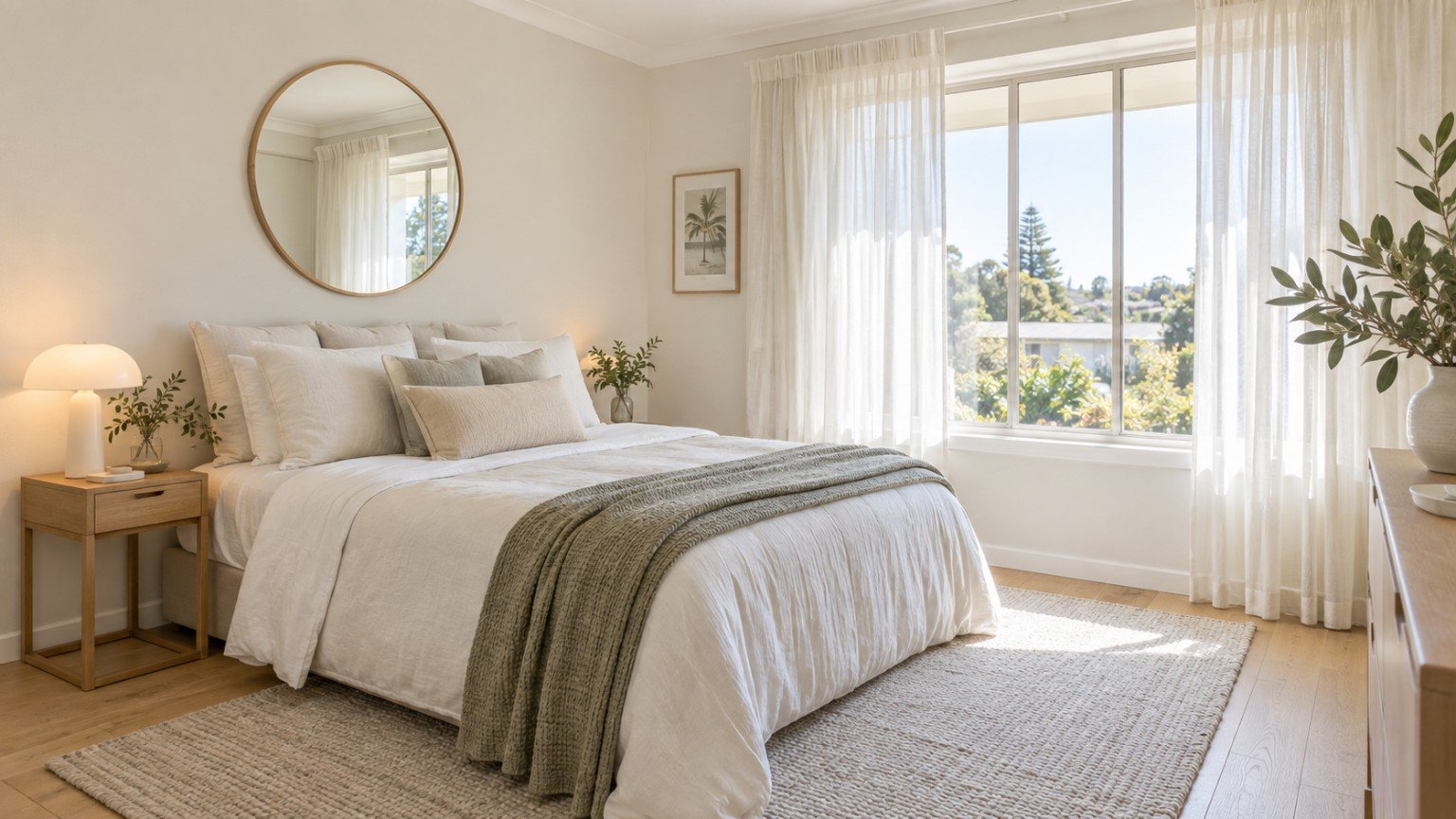
Paint colour will not physically change the size of a room, but the right choice can genuinely change how open and airy a small space feels, while the wrong choice can make an already tight room feel boxed in. The good news is that the principles behind this are fairly simple and do not require a professional colour consultant to get right.
Why colour affects how big a room feels
A room feels bigger when the eye is not stopped by hard visual breaks, such as a strong contrast between wall and ceiling, or dark colour in a room with limited natural light. Light, reflective colours bounce more available light around a room, while very dark or heavily saturated colours absorb it, which can make walls feel like they are closing in, particularly in a room that already gets limited sun.
Stick to a light, cohesive palette
Soft whites, light greys, pale warm neutrals and gentle off-whites are the most reliable choices for making a small room feel bigger, because they reflect light well and do not create strong visual boundaries. Within that, warmer whites tend to suit rooms with limited natural light, since a very cool white can look flat or grey without much sun to bring it to life, while a room with good natural light has more flexibility to handle a cooler tone.
Consider the room’s natural light
Before choosing a colour, it is worth watching how light moves through the room across a day, since the same paint colour can look noticeably different in morning light compared to late afternoon. South-facing rooms in Australia generally get cooler, more consistent light and can suit either warm or cool whites, while north-facing rooms get warmer light for longer and often look best with a paint that has a slightly cooler undertone to balance it.
Match walls, trim and ceiling carefully
One of the more effective tricks for a small room is reducing contrast between the walls, ceiling and trim. Painting the ceiling the same colour as the walls, or a very close shade, removes a visual line where the two meet and makes the room feel taller and less boxed in. This works particularly well in rooms with lower ceilings, where a stark white ceiling against a coloured wall can actually emphasise how low the ceiling sits.
Use one colour to blur boundaries
Painting a small room in a single, consistent colour rather than breaking it up with an accent wall tends to make it feel more expansive, since there is no hard stop where the eye registers the edge of the room. An accent wall can work well in a larger space, but in a small room it often has the opposite effect, visually shrinking the wall it sits on and drawing attention to the room’s actual boundaries.
Test before you commit
Paint always looks different on a sample card than it does across four walls, so it is worth buying a small test pot and painting a reasonably large patch, at least a square metre, on more than one wall. Look at it at different times of day, including at night under your usual lighting, before making a final decision. This step catches most colour regrets before they turn into a full repaint.
When a bolder colour still works
None of this means a small room has to be pale. A room with excellent natural light, or one you are deliberately styling as a cosy, enclosed space such as a reading nook or a snug, can carry a deeper colour well. The key is intention: a considered dark colour with good lighting to match can feel rich and deliberate, while an unplanned dark colour in a dim, low-light room is more likely to feel cramped.
A few practical reminders
- Favour light, warm-neutral tones in rooms with limited natural light
- Reduce wall-to-ceiling contrast rather than increasing it
- Keep the palette consistent rather than adding a contrasting accent wall
- Always test a sample patch in the actual room before buying full tins
- Match your undertone (warm or cool) to the room’s natural light for the best result
Getting paint colour right in a small room is less about finding one perfect shade and more about reducing contrast and working with the light you already have.
Join The Discussion