
 by
by 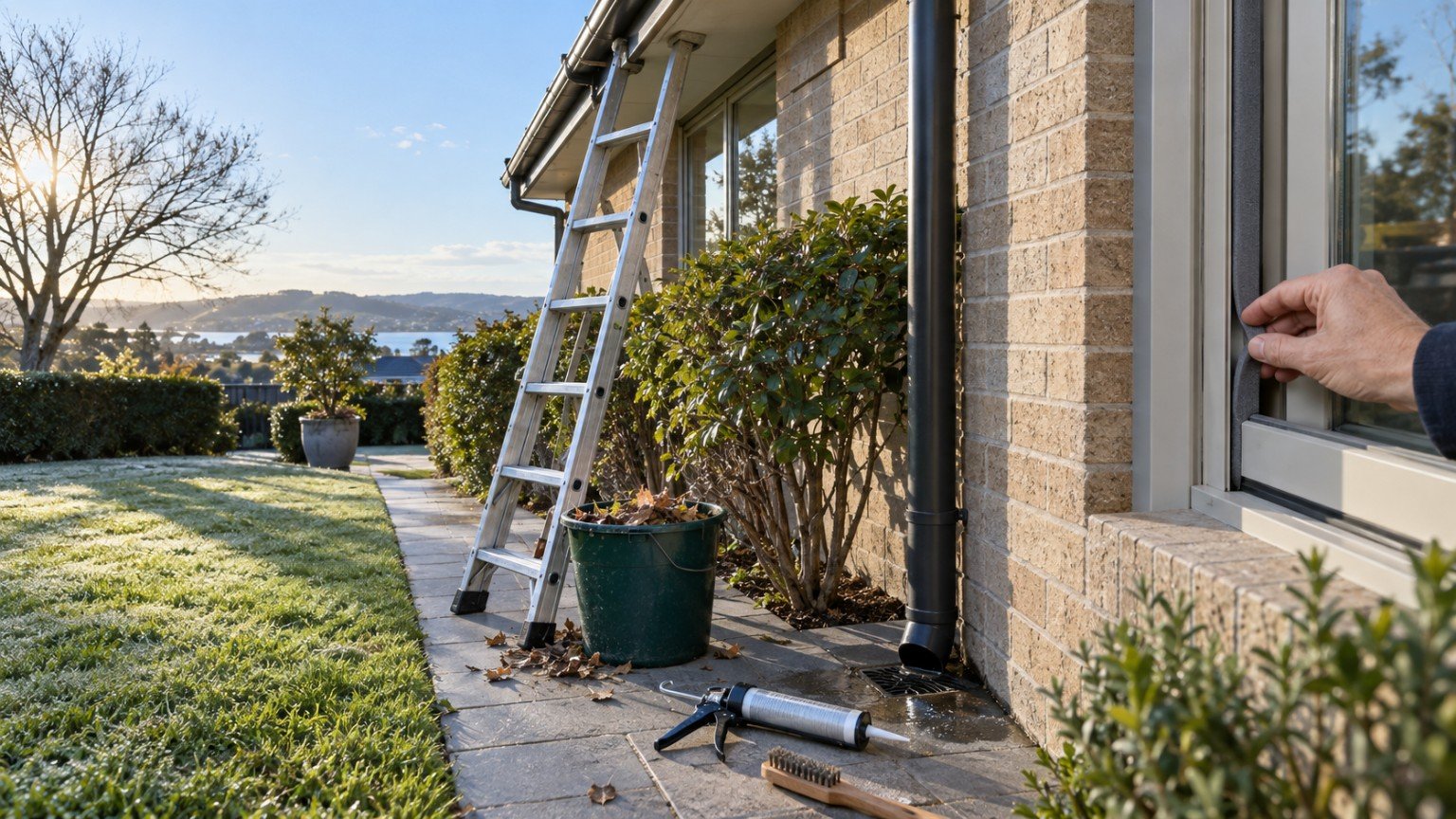
Winter is the season that shows up problems a home has been quietly hiding all year. A draught you never noticed in summer becomes obvious the first cold snap. A gutter that has been slowly clogging becomes a leak the moment steady rain sets in. Because Australia’s winter varies enormously between a Tasmanian frost and a mild Queensland dry season, this checklist focuses on the maintenance tasks that matter almost everywhere a house cools down, rather than assuming one climate for the whole country.
Why a winter pass is worth doing properly
Most winter home maintenance is about catching small, cheap problems before they become large, expensive ones. A loose roof tile, a cracked seal around a window, or a gutter full of autumn leaves rarely cause damage on the day you notice them. Left through a wet winter, each one can lead to water getting into a ceiling cavity, a wall cavity, or a subfloor, and that is a genuinely different scale of repair. Doing a deliberate check each year, rather than waiting for something to go wrong, is the cheaper approach in the long run.
Check your heating system, safely
Whatever you use to heat your home, whether that is ducted gas, a reverse cycle split system, a wood heater, or portable heaters, the safe approach is the same: look for the warning signs you can see and hear, and leave the technical work to a licensed professional.
- Listen for unusual rattling, banging or burning smells when a heater first switches on for the season.
- Check that vents, filters and outdoor units are not blocked by leaves, dust or stored items.
- If you use a wood heater or fireplace, have the flue checked and swept before the first real use of the season, and keep the area around it clear.
- Never attempt to open, wire or service a gas appliance or the internal components of a heating system yourself. If something looks or smells wrong, turn it off and call a licensed technician.
Look after your roof, gutters and drainage
Winter rain tests every roof and gutter in the country, and most roof problems are cheaper to fix before the rain arrives than after. From the ground, look for gutters visibly sagging, overflowing, or packed with leaf litter, and for any roof tiles or sheeting that look obviously out of place. If you can see a problem from the ground, that is usually enough reason to arrange a proper inspection, since checking a roof up close is not a safe do-it-yourself task. Around the house, make sure downpipes are clear and that stormwater has somewhere to go that is not back towards your foundations.
Seal draughts and manage condensation
A cold, damp house is often a sealing problem more than a heating problem. Run a hand around door and window frames on a cold day to feel for draughts, and check door seals, weather strips and gaps under external doors. Condensation on the inside of windows on cold mornings is common and usually manageable with ventilation, wiping down surfaces, and avoiding drying wet clothes indoors without airflow. If condensation is heavy and persistent, it is worth understanding the difference between simple condensation and a genuine moisture or ventilation problem, since the fixes are quite different.
Outdoor and garden winter tasks
Winter is a reasonable time to deal with the trees and garden features that summer storms will later test. Dead or overhanging branches near the house, power lines or fences are worth having assessed, and any pruning at height or near power lines should go to a professional rather than being tackled with a ladder and a handsaw. It is also a sensible time to check outdoor taps, hoses and irrigation for any winter damage, and to give garden beds and drainage a general tidy before growth picks up again in spring.
A simple room-by-room checklist
- Living areas: heater vents clear, no draughts around windows and doors, smoke alarms tested.
- Bathroom and laundry: exhaust fans working, no signs of new mould, seals around showers and baths intact.
- Roof and gutters: checked from the ground, downpipes clear, no visible sagging or damage.
- Outdoors: taps and hoses checked, overhanging branches assessed, outdoor furniture protected or stored.
- General: hot water system, heater and any gas appliances free of obvious warning signs, with a service booked if anything looks off.
When to call a professional
A good rule of thumb is that anything involving a roof, mains electrical wiring, gas appliances, or structural elements of the house is a job for a licensed tradesperson, not a weekend project. Your role in a winter maintenance check is to notice and flag problems early, not to fix everything yourself. Catching an issue in autumn or early winter, while it is still small, is what keeps the whole exercise cheap.
If you are in South East Queensland and want a full year-round version of this kind of checklist mapped to the local climate, our seasonal home maintenance calendar for South East Queensland covers what to do in every season, not just winter.


Join The Discussion