
 by
by 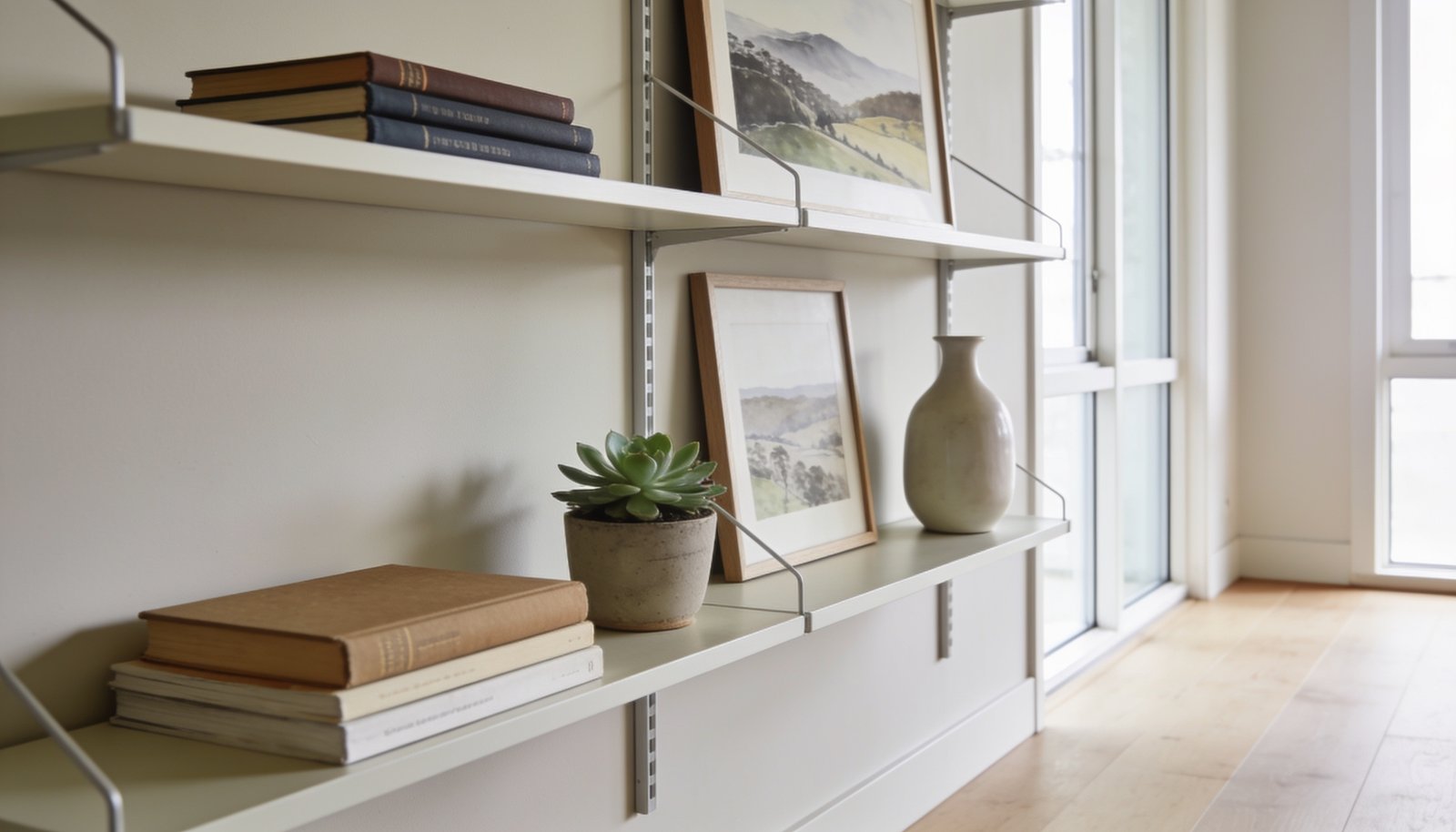
Shelves are a handy way to make the most of space in any room. They can also become a source of visual clutter if not arranged carefully. A clear plan can keep them tidy and stylish.
Choose the Right Style
Selecting a shelf design that matches the room’s aesthetic is the first step. If the walls are painted in a light tone, lighter shelves will blend smoothly. Conversely, darker shelves can add a striking contrast without feeling heavy.
Consider the material as well; natural timber gives warmth, while metal offers a modern edge. The finish should complement other furnishings, not clash. A cohesive look keeps the eye moving naturally across the space.
Plan the layout before purchasing. Measure the wall space and visualise how the shelves will sit within it. This avoids awkward gaps or overcrowding later.
When shelves are too tall, they can overwhelm the room; when too short, they feel incomplete. Finding the right proportion to the wall height creates balance.
A well-chosen style sets the tone for the entire arrangement.
It also determines how items will be displayed.
A thoughtful choice reduces the need for frequent rearranging.
It supports long-term satisfaction with the space.
A good start leads to a neat finish.
It helps maintain a calm, uncluttered atmosphere.
- Match the room’s colour palette.
- Select a material that complements existing furnishings.
- Ensure the height fits the wall space.
Group Similar Items
Grouping objects by type keeps the display organised. Books, picture frames and tools each have their own niche on a shelf.
Place items that share a theme together; this reduces visual noise.
Avoid scattering random objects across the same level.
Instead, create distinct sections for each category.
This approach makes it easier to find what you need.
It also gives the shelf a purposeful look.
Consistent grouping supports a tidy appearance.
It prevents the shelf from looking like a jumble.
It keeps the space functional and appealing.
- Books in one area.
- Frames in another.
- Tools in a separate zone.
Use Vertical Space Wisely
Vertical arrangement allows you to display more items without crowding.
Place taller items at the back and shorter ones at the front.
This creates depth and visual interest.
It also makes it easier to reach items without disturbing others.
Avoid stacking items too high; keep the top accessible.
A balanced vertical spread keeps the shelf looking neat.
It maximises storage while maintaining clarity.
It supports a clean, organised feel.
It reduces the need for frequent re-sorting.
It enhances the overall aesthetic.
- Position tall items at the rear.
- Place shorter items at the front.
- Maintain a balanced vertical spread.
Add Empty Space
Empty space on a shelf acts as a visual buffer.
It prevents the arrangement from feeling cramped.
A few gaps between items can make the display easier to read.
This technique also highlights key pieces.
Avoid filling every slot; leave room for breathing.
It creates a more relaxed, uncluttered look.
It allows for future additions without a complete overhaul.
It keeps the shelf adaptable.
It supports a calm, organised environment.
- Leave gaps between items.
- Use empty space as a visual buffer.
- Highlight key pieces with spacing.
Choose the Right Height
The height of a shelf should match the wall’s proportions.
If the wall is tall, a higher shelf can be used without feeling out of place.
A lower shelf on a short wall keeps the space from feeling cramped.
Avoid placing shelves too close to the floor; a small clearance adds polish.
Ensure the top of the shelf is not too high to reach comfortably.
Proper height keeps the arrangement practical and tidy.
It supports easy access to items.
It prevents the shelf from looking disproportionate.
It keeps the room feeling balanced.
- Match shelf height to wall proportions.
- Leave clearance from the floor.
- Ensure top is reachable.
Keep the Surface Clear
The surface of a shelf should remain free of unnecessary clutter.
Place only essential items on top; the rest can be stored elsewhere.
A clear surface allows for easy cleaning and maintenance.
It also gives the shelf a neat, organised appearance.
Avoid stacking items on top of each other.
Use storage boxes or baskets for items that need to be kept out of sight.
This keeps the shelf functional and tidy.
It reduces the visual weight of the display.
It supports a calm, uncluttered look.
It makes the space feel more spacious.
- Store only essential items on top.
- Use boxes or baskets for hidden storage.
- Keep the surface clear.
Maintain Regularly
A tidy shelf requires ongoing attention.
Set a routine to review and rearrange items as needed.
Remove items that are no longer useful or relevant.
This prevents accumulation of unnecessary objects.
Regular maintenance keeps the shelf looking fresh.
It also ensures the space remains functional.
It supports a long-term organised appearance.
It reduces the need for major overhauls.
It keeps the room feeling comfortable.
It encourages mindful use of space.
- Review items regularly.
- Remove unused items.
- Maintain a tidy arrangement.
By following these simple steps, shelves can stay stylish and uncluttered. A well-planned arrangement keeps your home looking organised and inviting.



Join The Discussion