
 by
by 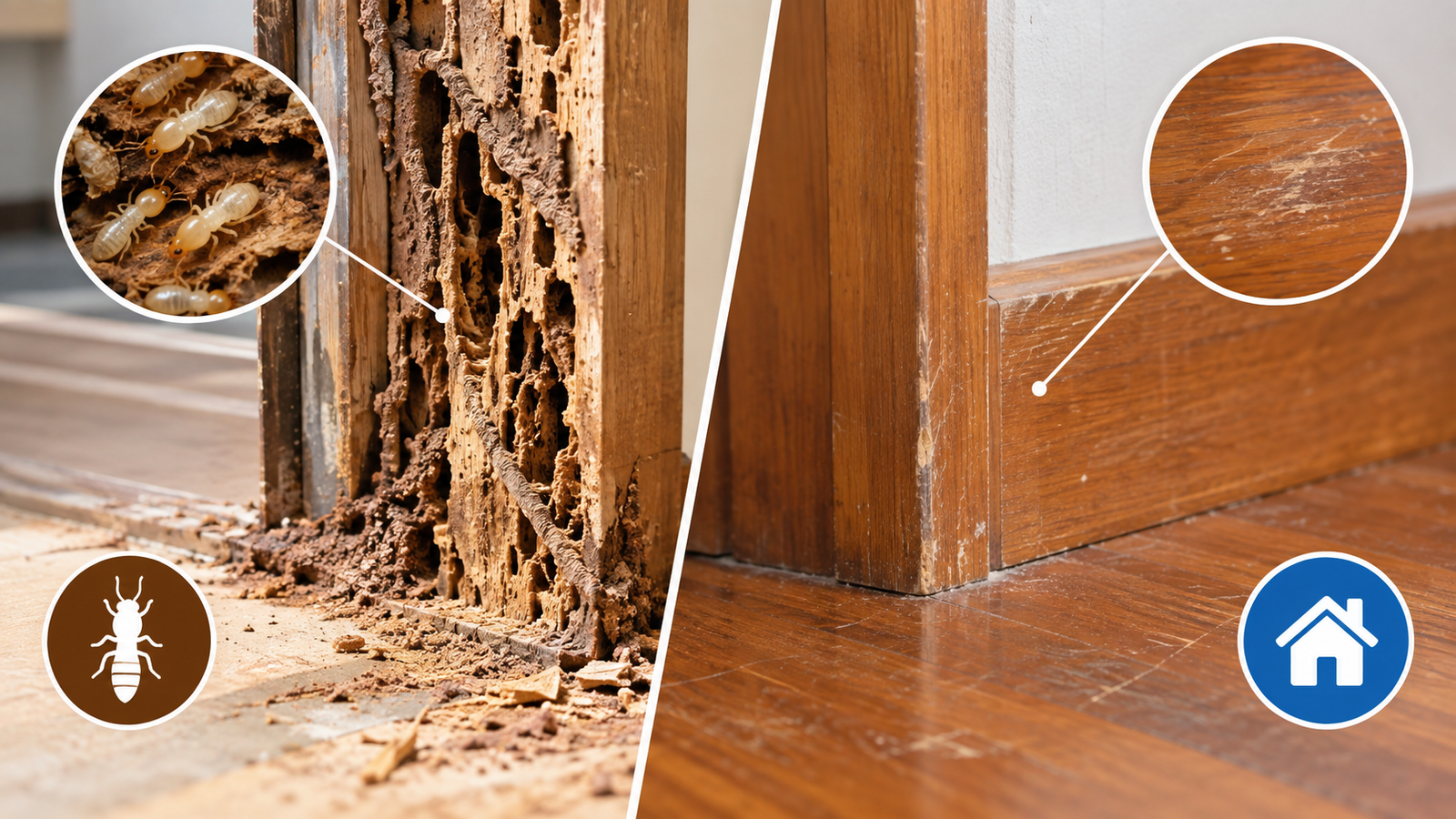
Termite damage can look similar to ordinary wear, which makes spotting the problem early a challenge. Knowing the subtle clues helps prevent hidden damage from spreading. The following guide explains how to differentiate between the two and what steps to take next.
Visual Signs of Termite Activity
Termites create almost invisible tunnels inside wood, so the surface may appear smooth at first glance. If you notice small, dark stains or faint cracks that seem to spread slowly, it could be a sign of internal damage. These cracks often appear in a pattern that follows the grain of the timber.
Another clue is the presence of tiny, pale, winged insects near windows or vents; these are the alates that start new colonies.
If you spot a small pile of fine, dry debris close to a wall or floor, it may be termite droppings, also called frass.
The debris is usually light in colour and has a paper-like texture.
Checking these areas regularly can catch problems before they become severe.
If you are unsure, a professional inspection can confirm whether termites are present.
In many cases, early detection means only minor repairs are needed.
Ignoring the signs can lead to larger structural issues later.
Take note of any changes you see and keep a record for future reference.
This helps you act quickly if the problem worsens.
- Look for dark stains on timber.
- Notice tiny winged insects.
- Check for fine, light debris.
- Observe crack patterns.
Common Wear and Tear in Australian Homes
Daily use of doors, windows and furniture leads to natural wear, such as scratches and minor dents.
Wood surfaces may develop a slight dullness or colour change after prolonged exposure to sunlight and humidity.
This is normal and does not indicate structural weakness.
Paint may fade or chips may appear where it has been knocked against a door frame.
These changes are usually isolated and do not spread across the surface.
If you see a single chip or a small scratch, it is likely just ordinary wear.
Regular cleaning and maintenance can keep these marks at bay.
Use a soft cloth and a mild cleaner to avoid further damage.
Avoid harsh chemicals that could strip protective finishes.
Keeping a routine check helps you spot any unusual changes early.
This routine is simple and can be done with common household supplies.
- Scratches on wood.
- Faded paint around frames.
- Colour changes from sunlight.
The Role of Moisture in Damage
Termites thrive in moist environments, so damp timber is a red flag.
If you notice a persistent damp patch or a musty smell near a wall or floor, investigate further.
Check for leaks around windows, pipes or in the roof area that could be contributing to moisture.
In contrast, normal wear does not usually involve moisture or a smell.
Dry timber that shows signs of wear will feel firm and free of dampness.
If a surface feels damp or has a slight sheen, it may need to be inspected for termite activity.
Moisture can also cause mould, which is separate from termite damage but still problematic.
Ensuring good ventilation and fixing leaks early helps keep timber dry.
This simple step reduces the risk of both termites and mould.
A dry environment is key to a healthy home.
Colour and Texture Changes
Termite damage often leaves a faint, darker line where the insects have travelled.
This line may be slightly raised or have a rougher texture compared to surrounding wood.
In contrast, ordinary wear usually produces a uniform change in colour or a shallow scratch.
The texture in worn areas remains smooth if the surface has not been damaged structurally.
If you feel a rough patch that matches a darker line, it could be a sign of internal damage.
Examining the area with a flashlight can reveal subtle differences in depth.
Worn surfaces may still be solid and free from gaps.
Termite tunnels, however, create weak spots that can collapse under pressure.
Feeling for any give or softness can help differentiate the two.
If you suspect a weak spot, a professional should assess it.
- Faint darker lines.
- Raised or rough texture.
- Softness under pressure.
Testing for Structural Integrity
Gently tapping a timber surface with a small hammer or a wooden stick can reveal differences.
A solid, dry timber will produce a clear, resonant sound.
If the sound is dull or the timber feels spongy, it may have internal damage.
This simple test can be done in a safe area of the wall or floor.
Avoid using excessive force, as it could worsen any existing damage.
If you hear a hollow sound, it is a strong indicator that the timber is compromised.
In such cases, stop using the affected area until a professional can assess it.
Replacing or reinforcing the timber may be required to maintain safety.
This approach helps you avoid accidental collapse or further deterioration.
Regular testing can catch problems before they become serious.
When to Call a Professional
If you notice any of the signs above, it is wise to seek expert help.
A professional can conduct a thorough inspection and confirm whether termites are present.
They also have the tools to treat the timber safely and prevent further spread.
If the damage is extensive, a specialist can recommend the best repair strategy.
This may involve replacing sections of timber or installing protective barriers.
In all cases, professional advice ensures that the work is done correctly.
Doing it yourself could lead to hidden damage or safety risks.
A qualified technician will also advise on preventing future infestations.
Staying proactive protects your home and gives peace of mind.
Timely action can save you from larger repairs later.
Preventive Measures for the Long Term
Maintaining a dry environment is the first step in keeping termites away.
Regularly check for leaks and repair them promptly.
Keep timber surfaces clean and free of debris.
Use protective finishes on exposed timber to reduce moisture absorption.
Inspect windows and doors for gaps that could allow termites to enter.
Seal any cracks or openings with a suitable sealant.
Ensure good airflow in rooms to keep humidity low.
Regularly monitor for any signs of damage or pests.
Document any changes so you can act quickly if needed.
These simple habits keep your home safe and sound.
By following these steps, you can spot termite damage before it becomes a major issue. Regular checks and simple preventive actions keep your home strong and safe.
Join The Discussion