
 by
by 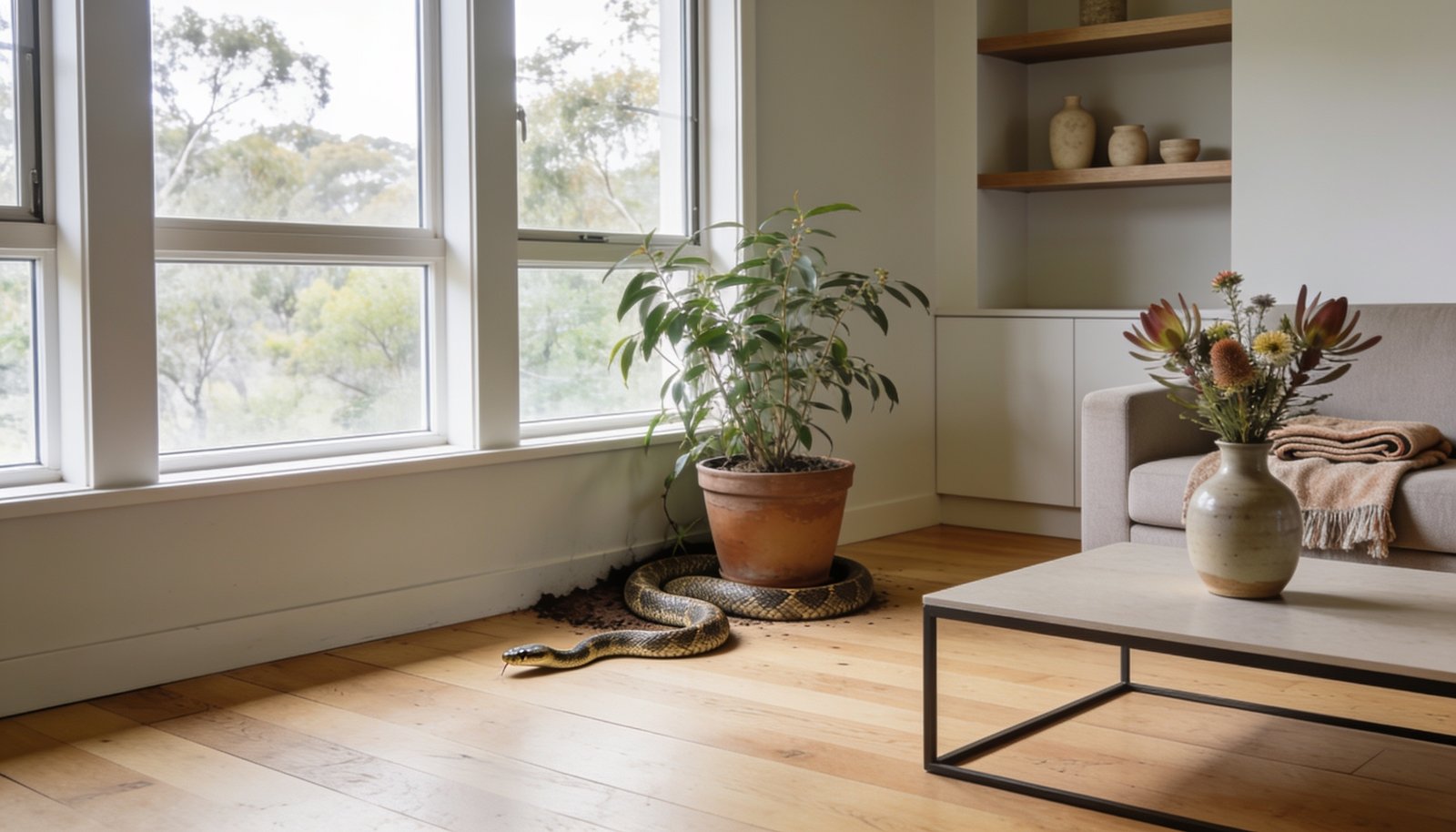
Encountering a snake on or around your property can be stressful, but taking a safe, calm approach protects both your household and local wildlife. All native Australian snakes are protected under state wildlife legislation. Understanding how to respond when you spot a snake, how to secure your property, and what steps to take in an emergency ensures you handle encounters safely.
Immediate Safety Steps Upon Spotting a Snake
When you see a snake near your home, your immediate priority must be safety. Keep a clear distance from the reptile at all times. Do not approach, touch, corner, handle, or attempt to kill the snake. Research shows that attempting to touch, corner, handle, or kill a snake significantly increases the risk of receiving a bite.
If children or pets are present, immediately move them to a safe, secure location indoors or away from the area. Keeping pets controlled prevents them from harassing the snake, which could provoke a defensive response.
Handling Outdoor vs Indoor Encounters
The correct response to a snake depends on whether it is located outside or inside your living spaces.
Outside Encounters
If you spot a snake outdoors and it is moving toward cover or natural shelter, leave it alone. Snakes generally avoid human interaction and will likely move on off your property on their own if given sufficient space and time.
Inside the House
If a snake enters your home, isolate the room where the snake was seen. Close all doors leading to other parts of the house and place rolled towels firmly at the base of the doors to prevent the snake from moving into other rooms. Once the room is isolated, contact a licensed professional for help. Always contact a licensed professional for the safe removal of a snake.
Preventative Yard Maintenance and Habitat Management
Managing the area around your residence reduces harbourage areas and attractants that draw snakes near the house. Coexistence relies heavily on proactive yard upkeep and pest control.
- Keep Lawns Short: Mowing your lawn regularly reduces cover for snakes and makes them easier to spot from a safe distance.
- Remove Timber and Debris: Clear away stacked timber, leaf litter, unused building supplies, and general debris around the yard. Eliminating these shelter points leaves fewer places for snakes to hide.
- Control Rodent Sources: Snakes are often drawn to properties in search of prey. Store animal feed, poultry grain, and household food securely to prevent rodents from establishing themselves around your home.
- Secure Bird and Poultry Enclosures: Use mesh-protection on aviaries, chicken coops, and bird enclosures to prevent snakes from entering.
If rodents or other pests persist, address the underlying infestation. For significant or repeat pest infestations, consult a licensed pest controller. Any pesticide use must be strictly in accordance with the Australian product label, kept away from food surfaces, and stored securely from children and pets.
First Aid Response for Snake Bites
Preparation is essential when living in areas where snakes may be present. Always keep a Pressure Immobilisation Technique (PIT) bandage in your household first aid kit.
If a snake bite occurs, follow these emergency protocol steps immediately:
- Call 000: Contact emergency services (000) immediately for urgent medical assistance.
- Keep Still and Calm: Keep the patient as still and calm as possible. Restricting movement helps slow the spread of venom through the lymphatic system.
- Apply PIT Bandage: Apply a Pressure Immobilisation Technique bandage directly over the bite site. Continue wrapping firmly up and down, covering the entire limb.
This guidance is for informational purposes; medical emergencies require immediate contact with emergency services (000).
Join The Discussion