
 by
by 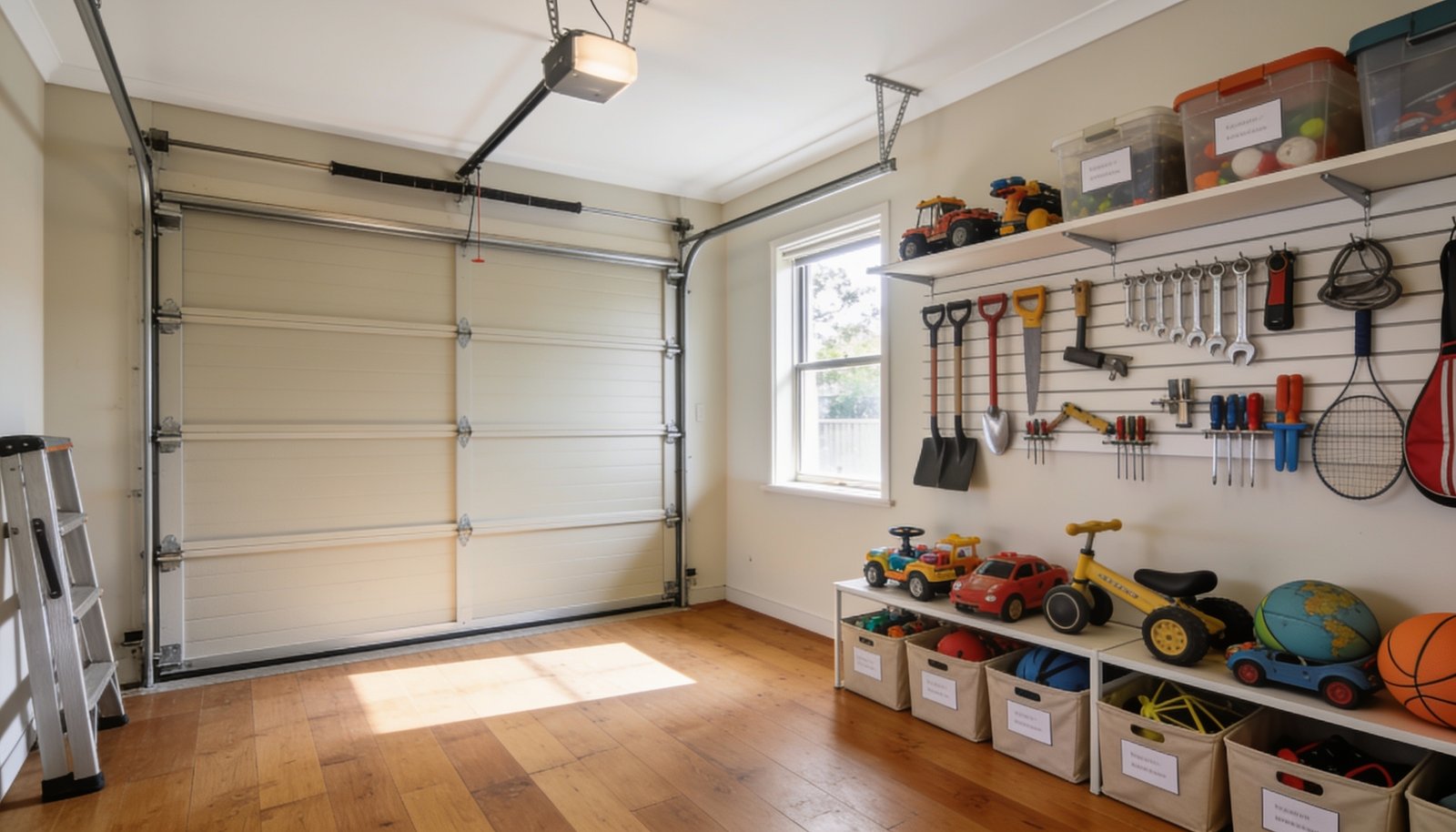
Residential garages often contain a wide variety of household utilities, maintenance tools, and stored items. For families with young children, creating a secure boundary between living spaces and the garage environment relies on a layered strategy of physical barriers and controlled access points.
Securing the Internal Connecting Door
The primary point of entry between living quarters and the garage is the internal door. Preventing young children from opening this door unsupervised forms the first line of defence in home safety.
Effective safety strategies to restrict access through this threshold include fitting appropriate locking mechanisms. Homeowners can install a key-operated lock or a high latch directly on the internal connecting door. Positioning a latch high up on the door frame puts the mechanism out of physical reach for toddlers and young children, ensuring they cannot wander into the garage unnoticed.
Managing Automatic Garage Door Controls
Automatic garage doors present operational hazards if controls are easily accessible to children. Controlling how and where these activation devices are installed and stored reduces the risk of accidental operation.
Wall-mounted switches for automatic garage doors must be installed at a height that prevents children from operating them. Specifically, automatic garage door wall-switches should be mounted at least 1.5 metres above floor level. This placement ensures the switch remains well above the reaching height of small children.
In addition to wall switches, portable controls require careful management. Garage door remotes should always be stored completely out of the reach of children. Leaving remotes on low coffee tables, kitchen counters, or inside accessible vehicles gives children easy access to door controls. Keeping remotes in high cupboards or secured storage areas eliminates this access point.
Verifying Garage Door Safety Standards
Beyond manual controls, the mechanical operation of the garage door itself requires built-in safety features. Automatic overhead doors should be equipped with functioning reversing mechanisms and safety beams.
To ensure these systems provide adequate protection, automatic garage door reversing mechanisms and safety beams should comply with standard AS/NZS 60335.2.95. This standard specifies essential safety requirements for automatic garage door openers, helping prevent entrapment or impact injuries if an object or person passes beneath an operating door.
Securing Hazardous Chemicals and Automotive Fluids
Even when access controls are established at the internal entry door, items stored within the garage must be properly secured. Garages frequently serve as storage areas for household, automotive, and garden chemicals that pose severe poisoning risks.
Hazardous items must be locked away safely in heavy-duty cabinets to prevent accidental ingestion or contact. These items include automotive fluids, pesticides, paints, and other household chemicals. Storing these substances in open shelving or on floor level leaves them accessible. Locking all chemical products inside dedicated storage cabinets ensures a vital physical barrier is maintained against accidental poisoning.
Securing Power Tools and Equipment
Mechanical equipment and sharp implements kept in the garage also represent significant pediatric injury hazards. Items such as power tools, lawnmowers, and sharp items must be secured locked away to prevent pediatric injury. Heavy-duty locked cabinets or locked storage chests provide safe containment for lawnmowers, sharp items, and power equipment. Ensuring these items are locked away whenever they are not in active use prevents children from coming into contact with sharp edges or heavy machinery.
Comprehensive Barrier Layering
Relying on a single mechanism is rarely sufficient when managing home safety. By combining access controls on internal doors, elevated wall-switch placement, secure remote storage, standardized reversing door mechanisms, and locked cabinets for tools and chemicals, homeowners establish multiple layers of physical protection.
It is important to note that physical barriers do not eliminate the need for ongoing vigilance. Physical barriers serve as structural controls to reduce risk, but maintaining safety requires constant awareness around the home environment.
Important Safety Disclosures
General household safety guidance provided. For complex modifications, electrical installations or professional safety assessments, consult a licensed tradesperson.
For advice on poison exposure, contact the Poisons Information Centre.

Join The Discussion