
 by
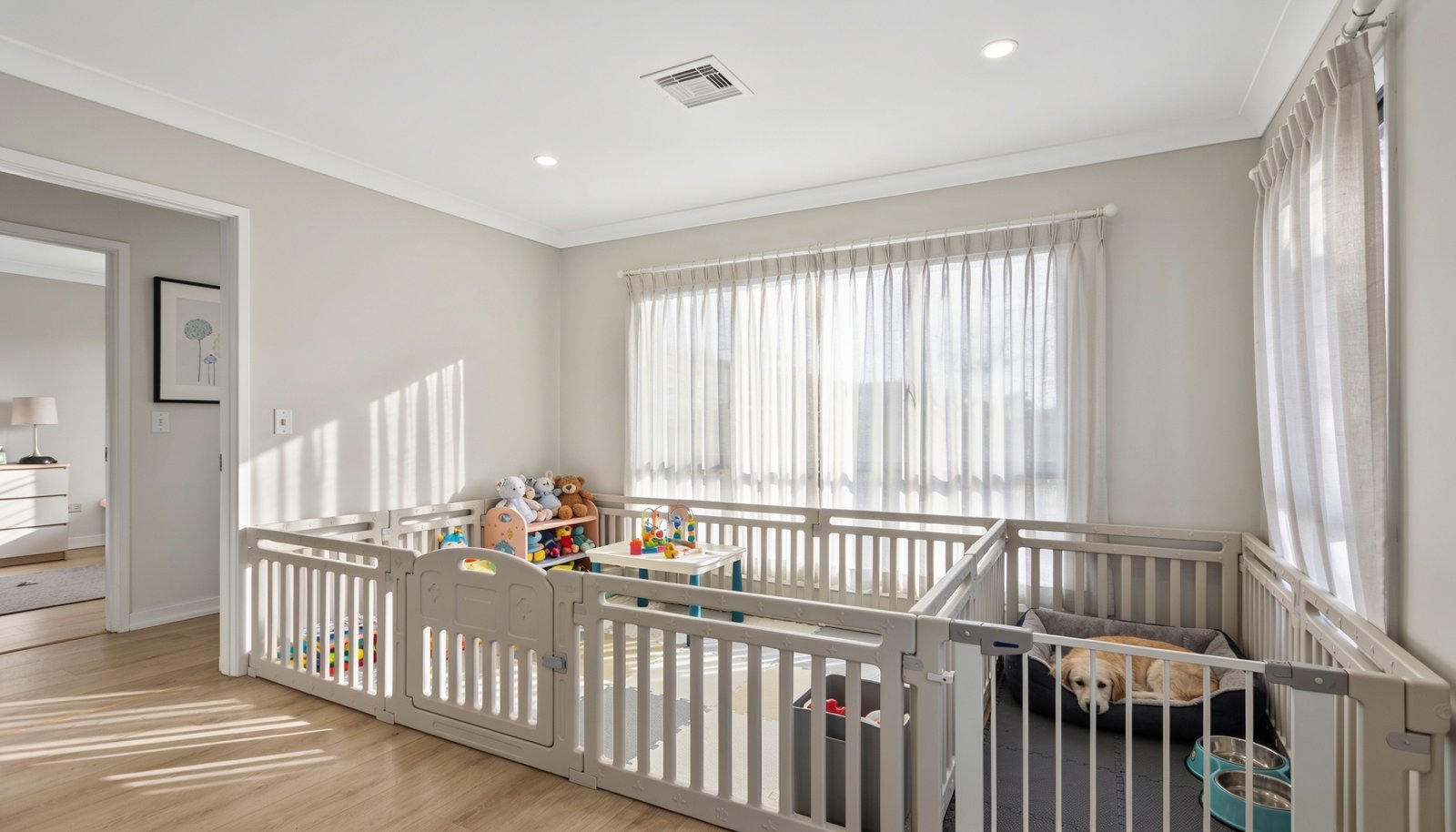
Managing shared spaces for pets and children can be challenging, especially when the room is small and the needs of each are different. Finding a balance that keeps everyone safe and comfortable requires simple, practical steps that fit into everyday life. The following guide offers clear, realistic advice for households that need to keep animals and kids separate in the same room.
Use Physical Barriers
A simple partition or a folding screen can create a clear boundary between the child’s area and the pet’s space. Choose a lightweight option that can be moved easily when playtime or pet care is required. Make sure the barrier is stable and does not pose a tipping risk for either child or animal.
Position the barrier so that it does not obstruct the child’s play area or the pet’s access to food and water. Check that the barrier does not block ventilation or light, keeping the room comfortable for everyone.
Regularly inspect the barrier for wear and tear, replacing it if it becomes loose or damaged.
If the barrier is not sufficient, consider a low wall or a stack of books to add height without cluttering the room.
- Use a folding screen.
- Choose a lightweight, stable model.
- Position to avoid blocking light or ventilation.
- Inspect regularly for safety.
Designate Separate Zones
Allocate a clear area for the child, such as a play mat or a small carpeted space. Place the child’s toys, books and bedding in this zone to give a sense of ownership.
Set up a distinct area for the pet, including a litter box, food dish and a comfortable resting spot. Keep the pet’s zone away from the child’s play area to reduce accidental interference.
Use visual cues like different coloured rugs or a small flag to remind the child where each zone begins and ends.
Encourage the child to respect the pet’s space by teaching gentle touch and quiet behaviour.
- Allocate a child zone.
- Create a pet zone.
- Use visual cues.
- Teach respectful behaviour.
Implement Routine Training
Teach the pet to stay in its designated area by rewarding calm behaviour with treats or affection.
Use a consistent cue, such as a word or hand gesture, to signal the pet to remain in its zone.
For children, establish simple rules about not chasing or teasing the pet, reinforcing these with praise.
Maintain a regular schedule for feeding, walking and cleaning to give the pet a predictable routine.
- Reward calm behaviour.
- Use a consistent cue.
- Set clear rules for children.
- Maintain a regular routine.
Control Access with Doors
If the room has a door, use a child-proof latch or a simple door chain to allow the child to enter but keep the pet inside.
Install a small pet door or a gate that the child can open but the pet cannot, ensuring the pet remains in its zone.
Check that any door or gate is secure and does not allow the pet to squeeze through or the child to slip through.
Use a door that can be opened easily for the child to access the pet’s area when needed, such as for feeding.
- Use child-proof latch.
- Install a pet door or gate.
- Ensure secure fit.
- Allow easy access for feeding.
Choose Safe Bedding and Furniture
Select pet bedding that is easy to wash and does not attract allergens or shed excessively.
Avoid soft, plush furniture that the pet may chew or the child may accidentally pull down.
Place the pet’s bedding on a low, stable surface to prevent it from being tipped over by a curious child.
Use a child-friendly rug for the child’s zone to keep feet dry and reduce slipping.
- Use washable pet bedding.
- Avoid soft plush furniture.
- Place bedding on stable surface.
- Use child-friendly rug.
Encourage Supervised Interaction
Always supervise the first few interactions between the child and the pet in the shared room.
Teach the child to approach the pet calmly, using gentle words and slow movements.
Show the child how to read the pet’s body language and recognise signs of stress or discomfort.
If the pet shows signs of agitation, calmly separate the child and the pet and give the pet a quiet space.
- Supervise initial interactions.
- Teach calm approach.
- Read body language.
- Separate if agitation occurs.
Maintain Cleanliness and Safety
Keep the pet’s food and water dishes clean and refill them regularly to avoid spills that could attract pests.
Wipe down the child’s play area after use to remove pet hair and prevent allergic reactions.
Store pet toys and child toys in separate bins to avoid mixing and confusion.
Check the room for loose cords or small objects that could be hazardous to either child or pet.
- Clean food and water dishes.
- Wipe child play area.
- Store toys separately.
- Check for hazards.
By following these straightforward steps, households can create a harmonious environment where pets and children share a room safely. Regular attention to the layout, routine and supervision ensures that both pet and child thrive together.
Join The Discussion