
 by
by 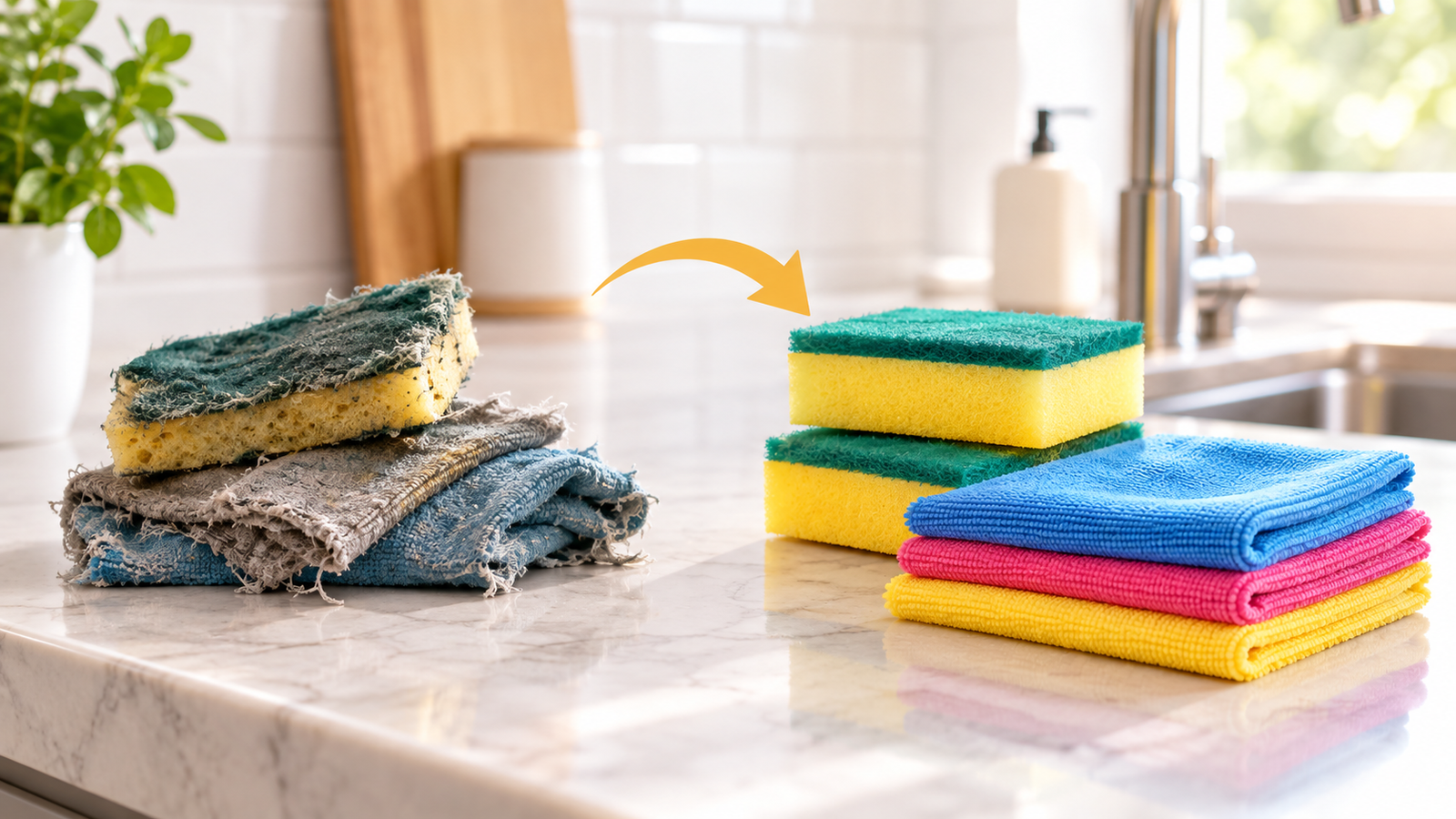
Kitchen sponges and cloths are used every day for wiping, scrubbing and drying surfaces. They can harbour bacteria and mould if left for too long. Replacing them regularly keeps the kitchen hygienic and extends the life of other cleaning tools.
Why Freshness Matters
Sponges and cloths that sit unused for days can develop a damp environment where mould spores thrive. The dampness also attracts food particles that feed bacteria. Over time this can lead to unpleasant odours and a less clean kitchen.
A fresh sponge or cloth keeps surfaces free from hidden germs that might otherwise transfer to food or utensils. It also reduces the risk of cross-contamination when washing dishes or wiping counters.
Using a clean tool each time ensures that every wipe removes dirt rather than spreading it. This simple habit supports a healthier home environment.
- Use a fresh sponge or cloth for each cleaning task.
- Check for visible mould or odour before use.
- Replace promptly if it feels damp or smells musty.
Daily Use and Replacement Timing
If a sponge or cloth is used for a single task, it is best to rinse it thoroughly and leave it to dry in the air. A damp sponge left in a closed container will quickly become a breeding ground.
After rinsing, placing the sponge on a rack or hanging it in a well-ventilated area helps it dry between uses. A dry sponge is less likely to harbour mould.
Even with daily rinsing, a sponge that is used every day should be replaced after a few days of use. The exact time depends on how often it is washed and how damp it stays.
A cloth that is used for wiping counters or surfaces should be laundered after each use if it is not washed daily.
- Rinse sponges after each use.
- Hang sponges to dry fully.
- Replace daily-used sponges after a few days.
- Wash cloths immediately after use.
Weekly Cleaning Routine
On a weekly basis, give sponges a more thorough cleaning. This can be done by placing them in a hot water bath or using a mild detergent to remove buildup.
After washing, allow sponges to dry completely before storing them in a dry place. Damp sponges left in a cupboard can develop mould.
Cloths should be laundered in a washing machine with a suitable detergent. Avoid leaving them damp for long periods.
During the week, keep a spare sponge or cloth handy for tasks that may spill or produce excess water.
- Wash sponges once a week with hot water and detergent.
- Dry sponges fully before storage.
- Launder cloths weekly.
- Keep a spare clean tool in the kitchen.
Signs It’s Time for a New Sponge
If a sponge has a persistent odour that does not lift with rinsing, it is time to discard it. A strong smell often indicates mould growth.
Visible black or dark patches on a sponge or cloth are a clear sign that it has become mouldy.
If a sponge feels sticky or has clumps that do not rinse off, it is no longer effective at cleaning.
Cloths that no longer absorb water or show visible stains that do not wash out should be replaced.
- Odour persists after rinsing.
- Dark patches appear.
- Sticking or clumping occurs.
- Stains do not wash out.
Choosing the Right Cleaning Tool
Sponges come in various materials, including cellulose, synthetic fibres and natural loofah. Each type has its own durability and cleaning effectiveness.
Synthetic sponges tend to last longer and are less prone to mould than natural ones. They also hold up better to repeated washing.
Natural loofah can be useful for gentle scrubbing but may break down faster if not cared for properly.
Cloths made from cotton or a cotton blend are comfortable for wiping and can be washed repeatedly.
- Select synthetic sponges for durability.
- Use natural loofah for gentle scrubbing.
- Choose cotton cloths for wiping.
Storage Tips for Longevity
Store sponges in a dry, ventilated area. A rack or a hanging loop allows air to circulate around each sponge.
Avoid keeping sponges in a sealed container or a damp cupboard. This creates a closed environment where mould can thrive.
Cloths should be hung or folded in a dry space. If they are left in a damp area, they will develop a musty smell.
Keeping tools in a clean, dry place extends their useful life and reduces the need for frequent replacement.
- Use a rack for sponges.
- Store in a ventilated area.
- Hang or fold cloths dry.
- Avoid damp storage.
When to Seek Professional Help
If a kitchen is affected by persistent mould that covers large surfaces or spreads beyond sponges and cloths, it may be necessary to contact a professional for thorough cleaning.
Professional services can address underlying moisture issues that cause mould to recur. They can also advise on long-term dampness solutions.
If you notice mould growth in areas that are difficult to reach or that require specialised cleaning equipment, seeking expert help is advisable.
- Contact a professional if mould covers large areas.
- Seek help for persistent dampness.
- Professional cleaning for hard-to-reach spots.
Replacing kitchen sponges and cloths regularly is a simple but effective way to keep the kitchen clean and safe. By following these practical steps, everyday cleaning becomes easier and healthier for the whole household.


Join The Discussion