
 by
by 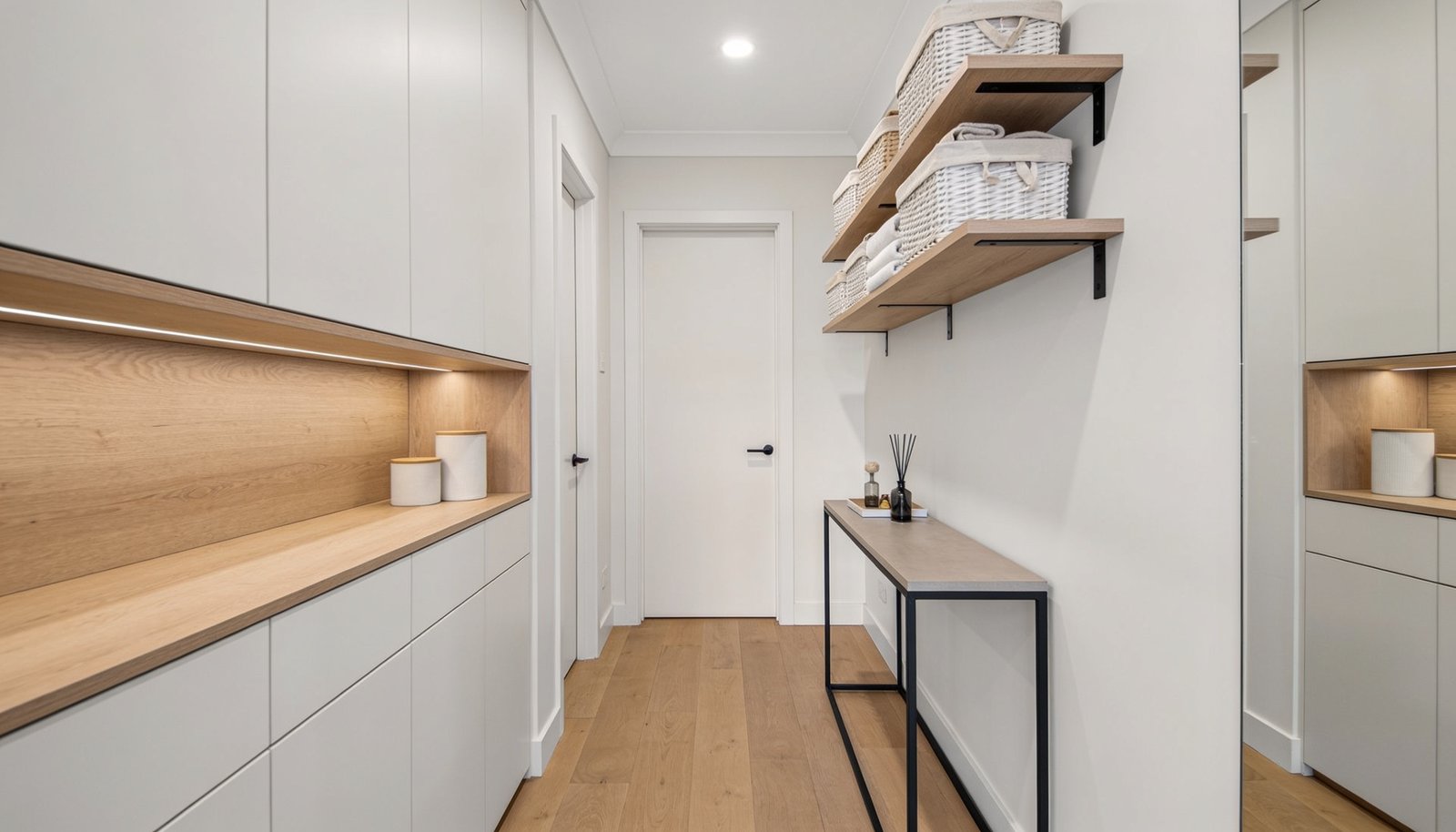
Streamlining Hallways with Slimline and Concealed Storage
Hallways serve as key transit zones within a home, but their restricted footprint often makes storage challenging. Introducing bulky furniture into narrow passages restricts movement and creates immediate visual clutter. To maintain a functional pathway while adding practical storage, spatial planning must prioritize low-profile, high-efficiency pieces.
Slimline consoles and concealed coat storage assist in integrating necessary storage without cluttering the entryway. A slimline console table provides a shallow surface for daily items while keeping walkways clear. Complementing surface space with concealed coat storage allows items like coats, bags, and everyday accessories to be stowed away behind closed doors rather than hung out in the open, reducing visual distraction and preserving clean lines along the hallway wall.
Maximizing Storage with Vertical Height and Wall Fixtures
When floor space is narrow, shifting storage upward allows you to make full use of the room’s proportions. Utilizing vertical space keeps the ground area clear while significantly expanding your practical storage options. Selecting vertical solutions reduces footprint demands while organizing everyday items into defined zones.
Wall-mounted fixtures, such as hooks and floating shelves, are effective tools for maximizing storage in narrow hallways. Floating shelves provide elevated surfaces for items without requiring legs or cabinets that sit on the floor. Wall-mounted hooks offer accessible hanging points for everyday items, keeping them off floor surfaces and preventing physical obstructions in narrow corridors. Combining floating shelves and hooks vertically along a wall setup helps maximize capacity while keeping floor pathways entirely open.
Identifying Wall Types in Australian Homes
Before installing wall-mounted fixtures or securing standing cabinets, it is necessary to identify the wall material. Different wall structures handle weight and fixings differently, meaning each wall type requires specific consideration before attempting to anchor storage units.
Common wall types found in Australian homes include:
- Plasterboard: Plasterboard is widely used for internal walls. Because plasterboard sheets are hollow behind the surface, anchoring storage units into plasterboard requires deliberate planning to ensure stable fixing.
- Timber Studs: Plasterboard walls are supported internally by a frame of timber studs. Anchoring furniture or mounting fixtures directly into timber studs provides solid structural backing.
- Brick: Solid brick walls are common in many Australian property builds. Brick walls require masonry-compatible anchoring methods to support mounted items and furniture anchors effectively.
Identifying whether your hallway wall is constructed from plasterboard, timber studs, or brick ensures you make informed decisions before drilling or attaching storage systems.
Prioritizing Safety and Furniture Anchoring
Spatial efficiency must always be paired with physical safety. Tall or narrow furniture, including hallway shoe cabinets and console tables, must be anchored to the wall to prevent tip-over accidents. Shallow hallway pieces are particularly prone to tipping due to their narrow base and vertical proportions.
Property owners and residents should follow ACCC guidance regarding furniture anchoring to prevent tip-over accidents. Securing shoe cabinets, console tables, and tall units directly into wall structures prevents accidental falls caused by impact or instability.
Because wall substrates vary significantly across Australian dwellings, installation methods must match the specific structural material present. Users should consult with a professional tradesperson if they are uncertain about how to safely secure furniture to their specific wall type.



Join The Discussion