
 by
by 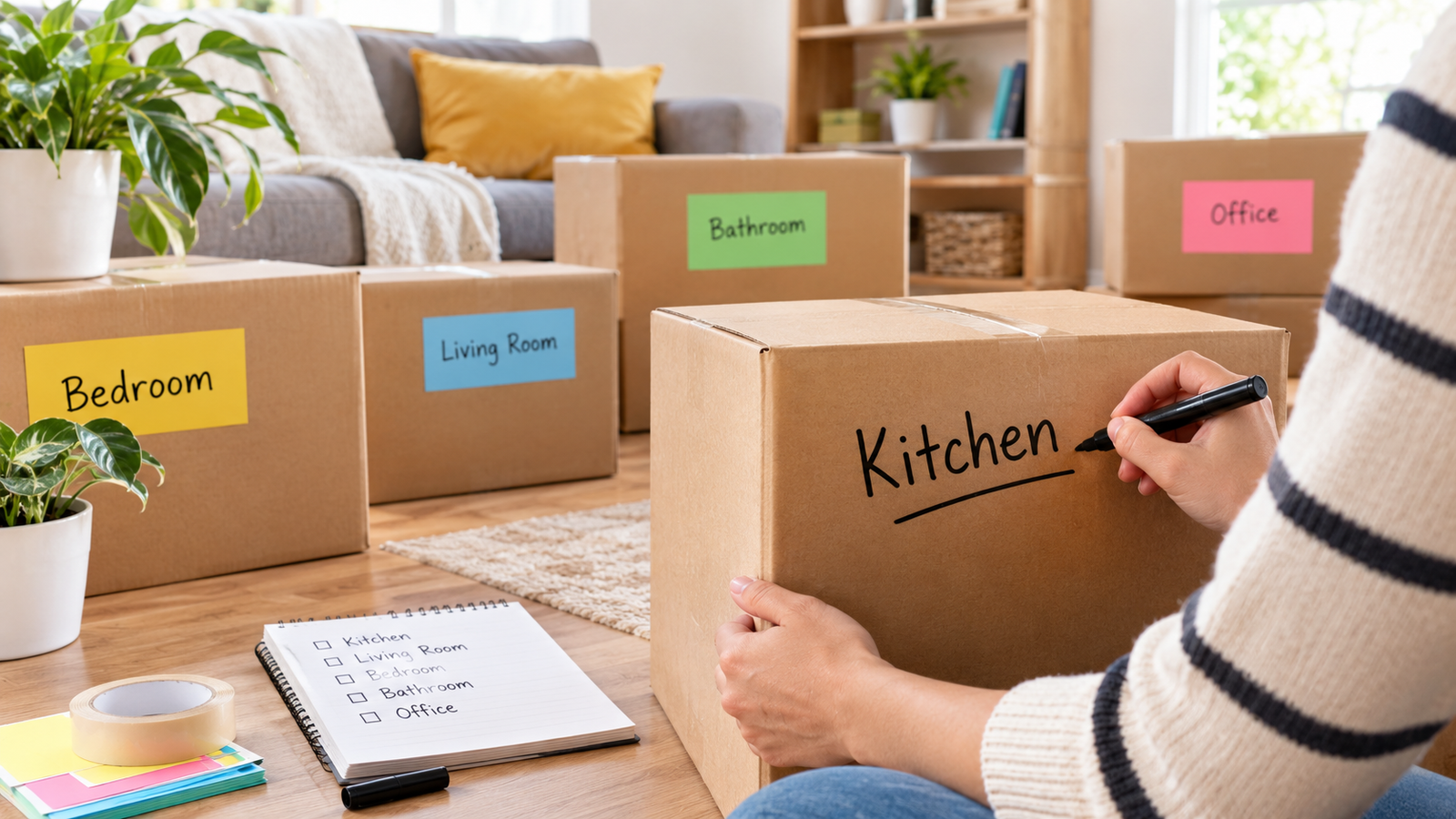
When you move, the way you label your boxes can make the whole process feel like a breeze or a battle. A clear system means you can find what you need without rummaging through piles. A little planning before you start packing pays off when you unpack. A simple, consistent approach to naming boxes keeps the chaos at bay. You can use plain labels, colour-coded stickers or a small notebook to keep track. The key is to keep the system simple enough that anyone can follow it. With the right labels, you can move in, set up, and settle without the stress of endless searching.
Use a colour code
Colour coding the boxes by room helps you spot where each box belongs at a glance. Pick a colour for each area and stick a matching label on every box in that zone. Keep a small reference card in the moving van or on the wall to remind you which colour matches which room.
The same colour can be used for similar items, such as all kitchen utensils or all bedroom linens. This reduces the chance of misplacing a box because you mixed up two different rooms. Colour codes are quick to spot and easy to remember.
When you unpack, you can simply pull all boxes of one colour together. This saves time and keeps the flow of the move smooth. It also means you don’t have to check every label individually.
If you prefer a different system, you can still use colour, but make sure the colours are distinct enough to avoid confusion.
Colour codes work well even if you have a small unit with limited space.
- Pick distinct colours for each room.
- Stick labels on every box.
- Keep a reference card handy.
Add a room name
Write the name of the room on each box in a large, clear font. Use a pen or a marker that stays on the cardboard. The room name should be the first thing you see when you pick up the box.
If you have a lot of boxes, consider adding a short description of the contents. For example, a box labelled kitchen might also say utensils or cookware. This extra detail helps you decide where to put the box when you arrive.
Place the label on the top side of the box so it is visible from all angles. This way you can see the room name without having to lift the box.
Avoid using long sentences on the label; keep it short and to the point. A simple, readable label saves time.
Make sure the handwriting is legible; this reduces the chance of misreading the label later.
- Write room name in large letters.
- Add brief content description if needed.
- Place label on top side.
Use a numbering system
Numbering boxes in the order you pack them creates a natural sequence. Start with one and go up as you finish each box. This way you can easily locate the first box in a room when you unpack.
If you prefer not to use numbers, you can still keep a running list in a notebook. Write the box number, the room name and a short note about the contents.
When you reach the end of the move, you can simply follow the numbers to place each box in the correct spot. This reduces the chance of misplacing a box.
Numbering also helps you keep track of how many boxes you have for each room. This can be useful if you need to double-check that you have everything.
Use a simple numbering system that you can remember without needing to refer to a chart.
- Number boxes sequentially.
- Write numbers on the top of each box.
- Keep a running list if desired.
Label fragile items carefully
Fragile items need extra protection and clear marking. Write the word fragile in bold letters on the box. Use a bright colour sticker if you want to make it stand out.
Place the fragile label on all sides of the box so movers know to handle it with care. This is especially important if the box will be stacked on top of others.
If the box contains glass or ceramics, add a note about the contents. This gives a quick visual cue that the box is delicate.
Use a thick marker so the label does not smudge or fade during transport.
When you unpack, handle fragile boxes first to avoid damage.
- Write fragile in bold.
- Mark all sides of the box.
- Add content note if needed.
Keep a master list
A master list is a simple paper or digital record of every box, its number, room and a brief description. Keep it in a safe place, such as a folder in the moving van.
You can use the list to double-check that you have all boxes for each room before you leave the house. This helps avoid missing items.
When you arrive at the new home, refer to the list to ensure each box is in the correct place. This keeps the move organised.
If you have a lot of boxes, the master list becomes a useful reference for anyone helping you.
Update the list as you pack to keep it current.
- Create a simple paper record.
- Keep it in the moving van.
- Use it to double-check boxes.
Store labels safely
Once you have labelled all boxes, store the labels in a small, dry bag or envelope. This prevents them from getting lost or damaged.
Keep the bag in a visible spot on the moving van or in a drawer in the new home. This way you can quickly find the labels if you need to re-label a box.
If you use stickers, keep them in a separate zip-lock bag. This keeps them clean and ready for future use.
Having a dedicated label storage keeps the moving area tidy and reduces clutter.
When you return to your old house, you can reuse the labels for future moves or storage.
- Store labels in a dry bag.
- Keep the bag visible.
- Reuse labels for future moves.
A clear, consistent labeling system turns a chaotic move into a smooth operation. By following these simple steps, you can pack, transport and unpack with confidence. With a few minutes of preparation, you can avoid the frustration of misplaced boxes and enjoy a stress-free settling into your new home.



Join The Discussion