
 by
by 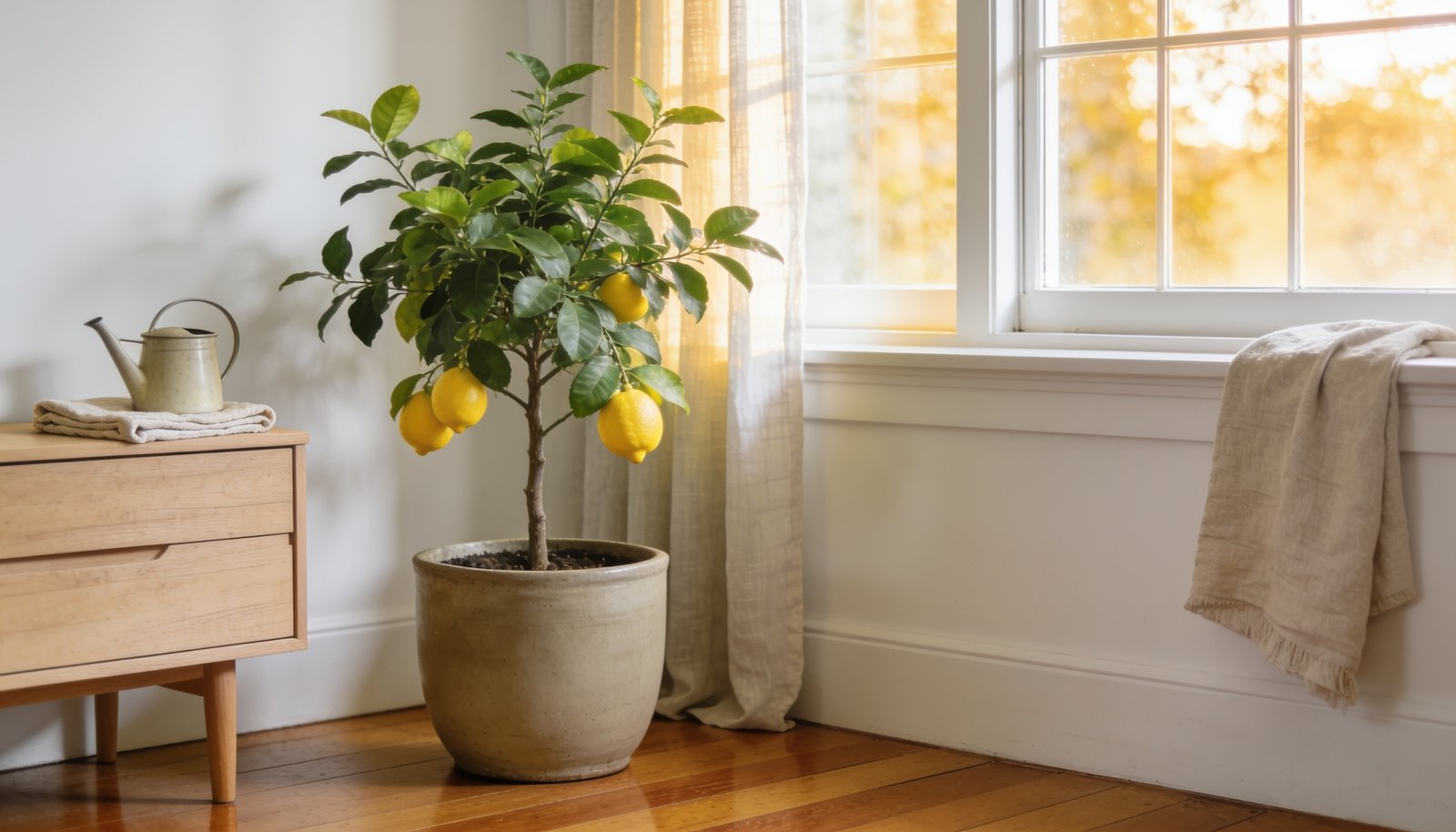
Selecting the Right Lemon Variety and Container
Growing citrus in containers allows you to produce fresh fruit even when space is limited. Selecting dwarf or grafted varieties is essential for container suitability because their compact root systems adjust well to confined growing conditions. Dwarf varieties like ‘Dwarf Eureka’, ‘Dwarf Meyer’, and ‘Lots a’ Lemons’ are specifically suitable for container growing.
Choosing the right pot ensures healthy plant growth over many years. Potted citrus should be planted in a container at least 40 to 50 cm in diameter and depth. The pot must feature multiple drainage holes at the base to allow excess water to drain away. Pots require elevation using pot feet or risers to prevent root rot. Raising the pot off the ground keeps drainage holes clear and stops water from pooling around the base.
Sunlight, Climate, and Potting Mix Standards
Positioning your container correctly is critical for fruit development. Lemon trees in pots require a minimum of 6 hours of direct sunlight daily. Keep in mind that climate and seasonal requirements differ across Australia’s diverse zones, ranging from tropical to cool temperate regions. Sunlight intensity and watering frequency vary depending on your specific local environment.
Soil quality directly influences root health. Do not use garden soil or topsoil in pots, as these materials compact quickly, restrict oxygen, and impede drainage. Always use high-quality potting mix carrying the Australian Standards ‘Red Tick’ (AS 3743) for Premium Potting Mix. This standard ensures the mix has proper structure, moisture retention, and air space required for potted citrus trees.
Watering, Feeding, and Repotting Routines
Maintaining potted citrus requires regular attention to nutrients and moisture. Because water drains frequently through containers, nutrients leach quickly from pots compared to in-ground garden beds. Regular feeding is necessary to keep the tree healthy and productive. Always follow product label instructions and do not apply unlabelled or personal application rates for fertilisers or pesticides.
Citrus trees in pots should be repotted and have their roots lightly trimmed every 3 to 4 years. Fresh premium potting mix should be added during repotting to replenish lost nutrients and improve soil structure. Pruning should be performed post-harvest or in early spring to clean up dead wood, maintain shape, and support vigorous new growth.
Pest Management and Safety Precautions
Pest management involves specific interventions for common citrus pests, including leafminer, gall wasp, and scale. Monitoring your tree regularly helps manage pest populations before they damage leaves or fruit.
Citrus gall wasp forms visible galls on young citrus stems. Citrus gall wasp galls should be pruned out before adult wasps emerge in late winter or early spring, specifically during August or September. Readers must check local state biosecurity guidelines for the disposal of infected green waste, specifically for Citrus Gall Wasp, as biosecurity protocols vary by state and territory.
Bronze orange bugs can also infest citrus plants. Readers should wear protective eyewear when hand-picking Bronze Orange Bugs as they squirt defensive liquid that can cause severe eye irritation. Never suggest or practice mixing different garden chemicals when treating citrus trees.
Consult professional horticulturalists or agricultural departments for specific pest or disease identification if unsure about any symptoms on your tree.



Join The Discussion