
 by
by 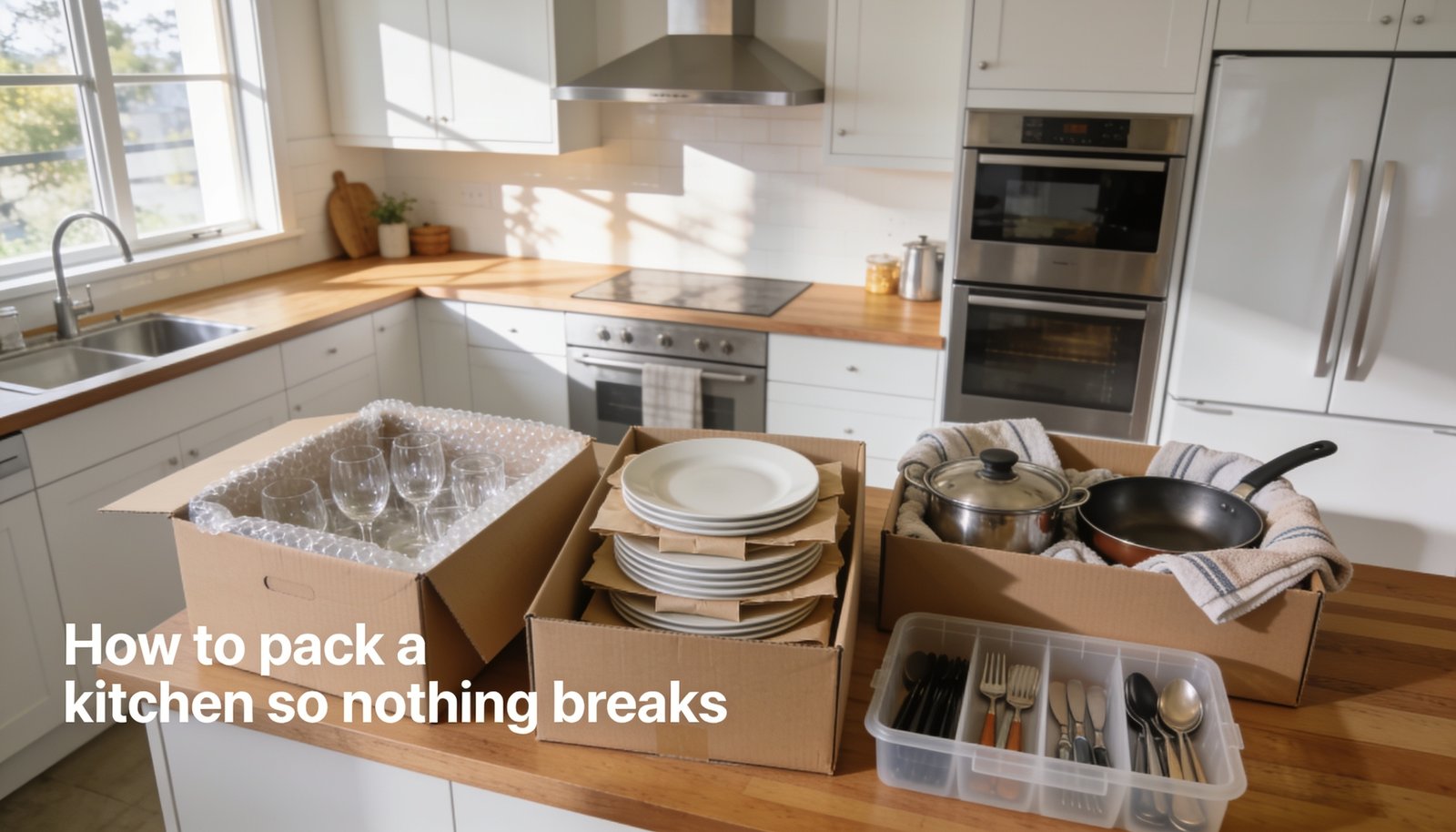
Packing a kitchen for a move can feel overwhelming, but with a systematic approach the task becomes manageable. The key is to protect fragile items and organise the space so that nothing gets lost or damaged. By following a step-by-step plan you can move your kitchen with confidence and minimal stress.
Prepare the Packing Zone
Choose a clear area in your kitchen where you can work without interrupting the flow of the rest of the house. Lay down a clean sheet of cloth or a plastic sheet to protect the floor from scratches and spills. Keep the packing materials close at hand so you can grab what you need without searching.
Use sturdy boxes that are not too heavy; they should be strong enough to hold the items without breaking. Avoid using boxes that have been used for heavy items in the past, as they may have weakened. Select boxes that are easy to close and seal to keep contents secure during transport.
- Clean and clear the packing area.
- Protect the floor surface.
- Keep materials within reach.
Wrap Fragile Cookware
Take each pot, pan and baking tray and cover it with a soft towel to cushion against impact. Follow with a layer of bubble wrap or newspaper, ensuring the wrapping is snug but not overly tight. Secure the wrap with a rubber band or tape that does not leave residue on the cookware.
Place wrapped items in boxes that have been lined with crumpled paper to absorb shocks. Stack the boxes with the heaviest items at the bottom and lighter ones on top, keeping the load balanced. Label the boxes clearly to indicate that they contain fragile kitchenware.
- Use soft cloth for initial cushioning.
- Add bubble wrap or newspaper.
- Secure with rubber bands or tape.
- Line boxes with crumpled paper.
- Stack from heavy to light.
Pack Appliances Safely
Disconnect all appliances from the power source and let them cool before packing. Remove any detachable parts such as baskets or filters and wrap them individually. Place the main appliance in a box that is slightly larger than the appliance, filling gaps with packing material.
Use a protective cover or blanket over the appliance to prevent scratches during movement. Seal the box firmly and label it as containing an appliance to alert handlers to handle with care. If the appliance is large, consider hiring a professional to lift and transport it.
- Disconnect and cool appliances.
- Wrap detachable parts separately.
- Use a slightly larger box.
- Add protective cover.
- Seal and label the box.
- Hire professional for large items.
Safeguard Food Items
Store all perishable food in a cooler or insulated bag to keep it fresh during the move. Place non-perishable items in sealed containers to prevent spills and contamination. Distribute the food evenly across boxes, avoiding over-packing to reduce the risk of breakage.
Label boxes containing food clearly and keep them separate from other household items. If you have a large quantity of dry goods, consider moving them in a separate, sturdy container to keep them organised.
Dispose of any expired or unusable food before packing to reduce clutter.
- Use cooler for perishables.
- Distribute food evenly.
- Label food boxes.
- Move dry goods separately.
- Dispose of expired items.
Organise Kitchen Tools and Utensils
Gather all knives, cutting boards and other sharp tools and wrap each knife with a protective sleeve or towel. Place wrapped knives in a dedicated box that is clearly marked as containing sharp items. Use a separate box for utensils such as spoons, forks and knives, ensuring they are wrapped to prevent scratches.
Store pots, pans and other utensils in a single box, lining the bottom with soft material to avoid friction. Keep small items like measuring cups and spoons in a pouch or small box to prevent loss during transport. Label each box with its contents for easy identification at the new home.
- Wrap sharp tools individually.
- Mark boxes with sharp items.
- Use separate utensil box.
- Line utensil box with soft material.
- Store small items together.
- Label boxes clearly.
Secure the Kitchen Countertop Items
Remove any items from the countertop that are not essential for daily use. Wrap delicate items such as glassware, crystal and decorative pieces with soft cloth or newspaper. Place wrapped items in a box that is lined with cushioning material to absorb shocks.
Keep larger appliances like mixers or blenders in their original packaging if possible, or use a sturdy box with plenty of padding. Label all boxes clearly to indicate the type of items they contain. Store the boxes in a place where they are protected from accidental knocks.
- Remove non-essential items.
- Wrap delicate pieces.
- Use cushioned boxes.
- Keep original packaging when possible.
Finalise Packing and Prepare for Transport
Double-check that all boxes are sealed and labelled correctly. Place the heaviest boxes at the bottom of the moving vehicle and lighter ones on top. Secure the boxes with straps or rope to prevent shifting during the move.
If you are moving a large appliance or a set of heavy pots, consider hiring a professional to lift and place them in the vehicle. Ensure the moving vehicle is ready with a flat surface and sufficient space for the kitchen boxes. Once everything is in place, give the vehicle a final check to confirm stability before departure.
- Seal and label all boxes.
- Secure with straps.
- Hire professional for heavy items.
- Check vehicle stability.
With careful packing and organised loading, your kitchen can travel safely to its new home. Following these steps ensures that each item arrives intact, ready for a smooth transition.



Join The Discussion