
 by
by 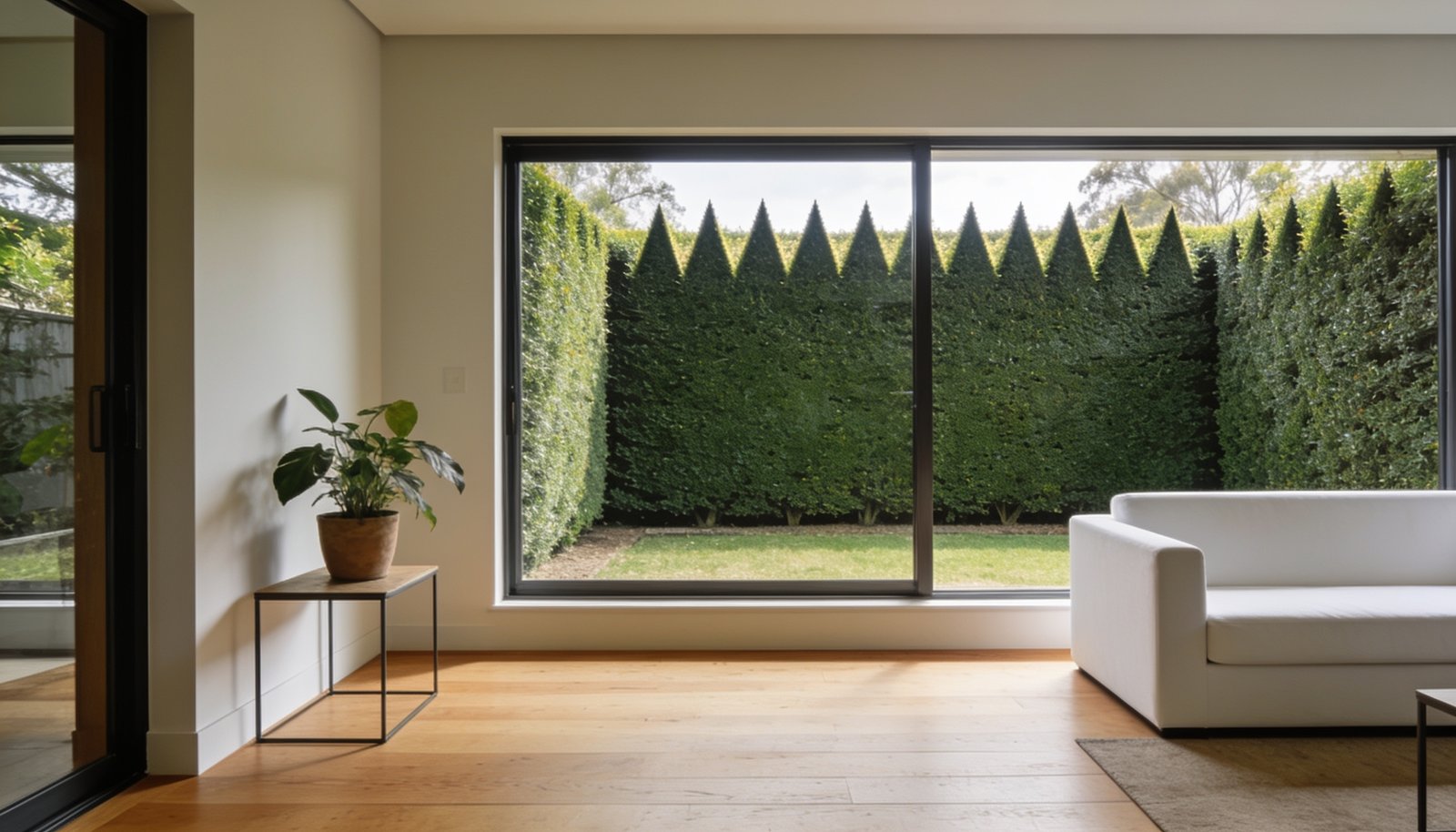
Pruning is an essential task for maintaining privacy screens, boundary plantings, and formal hedges. However, cutting back foliage incorrectly can cause severe dieback or kill an established hedge entirely. Protecting plant longevity relies on understanding structural cutting principles, seasonal weather risks, and proper tool sanitation.
The One-Third Rule and Canopy Shock
To avoid extreme physiological shock, never remove more than 33 percent of the hedge canopy in a single pruning session. Removing too much leaf material at once deprives the plant of the foliage required for photosynthesis, placing severe stress on its root system and energy reserves.
Regrowth success depends heavily on species-specific biology, as different hedge varieties react uniquely to cutting. For example, certain conifers and Buxus may not regenerate if they are cut back past green foliage into old wood. Hard pruning is not safe for all hedge varieties, and no single pruning technique guarantees 100 percent plant survival. When dealing with overgrown hedges, reduce the height and width incrementally over multiple seasons rather than attempting a single drastic cutback.
Shaping for Sunlight Distribution
The angle at which a hedge is trimmed determines how much light reaches its lower leaves. Pruning a hedge so that it is wider at the base than at the top creates a tapered shape, often referred to as a trapezoidal or A-frame profile. This shape allows direct sunlight to reach the lower foliage, preventing dieback and bare lower branches. If the top of the hedge is allowed to grow wider than the bottom, it casts shade over the base, causing the lower leaves to drop and creating empty stems near ground level.
Seasonal Timing and Regional Climates
Choosing the right time of year to prune minimizes environmental stress on newly cut branches. Across most Australian regions, spring and mid-autumn are ideal times for standard hedge pruning. However, hedge health can be impacted significantly by regional Australian climates, which range from tropical in the north to cool temperate in the south.
Weather extremes present serious hazards to freshly trimmed hedges. Heavy pruning should be avoided during hot summer heatwaves to prevent sunburn on newly exposed inner stems. Likewise, heavy pruning should be avoided during late-winter frosts in southern Australia to protect tender regrowth from cold damage. Waiting for mild weather in spring or mid-autumn allows cut surfaces to recover under moderate temperatures.
Tool Hygiene and Disease Prevention
Unsterilised cutting tools can transfer plant diseases rapidly from one hedge to another. Cleaning blades and tools with methylated spirits or an antiseptic spray helps prevent the spread of Myrtle Rust and root rot pathogens. Sanitising equipment between plants is particularly critical when trimming Myrtaceae species, which are vulnerable to rust infections. When preparing hygiene solutions, never mix chemical products together.
Aftercare for Pruned Hedges
Targeted post-pruning aftercare reduces plant stress and encourages healthy new shoots. Immediately after pruning, provide the hedge with deep watering to ensure moisture reaches the entire root zone. Follow this irrigation with an application of slow-release fertilizer to supply essential nutrients during the recovery phase, taking care not to exceed safe application guidelines as specific chemical application rates vary.
Apply organic mulch over the root area to regulate soil temperature and conserve moisture. Keep the organic mulch pulled back away from the trunk base to prevent moisture buildup against the main stems, which can encourage fungal decay.
Food Safety and Professional Advice
If a hedge plant is intended to be eaten, accurate plant identification and basic food-safety handling are essential before harvesting any foliage, flowers, or fruit. For complex hedge restoration, severe disease outbreaks, or significant horticultural concerns, property owners should seek professional, licensed advice.



Join The Discussion