
 by
by 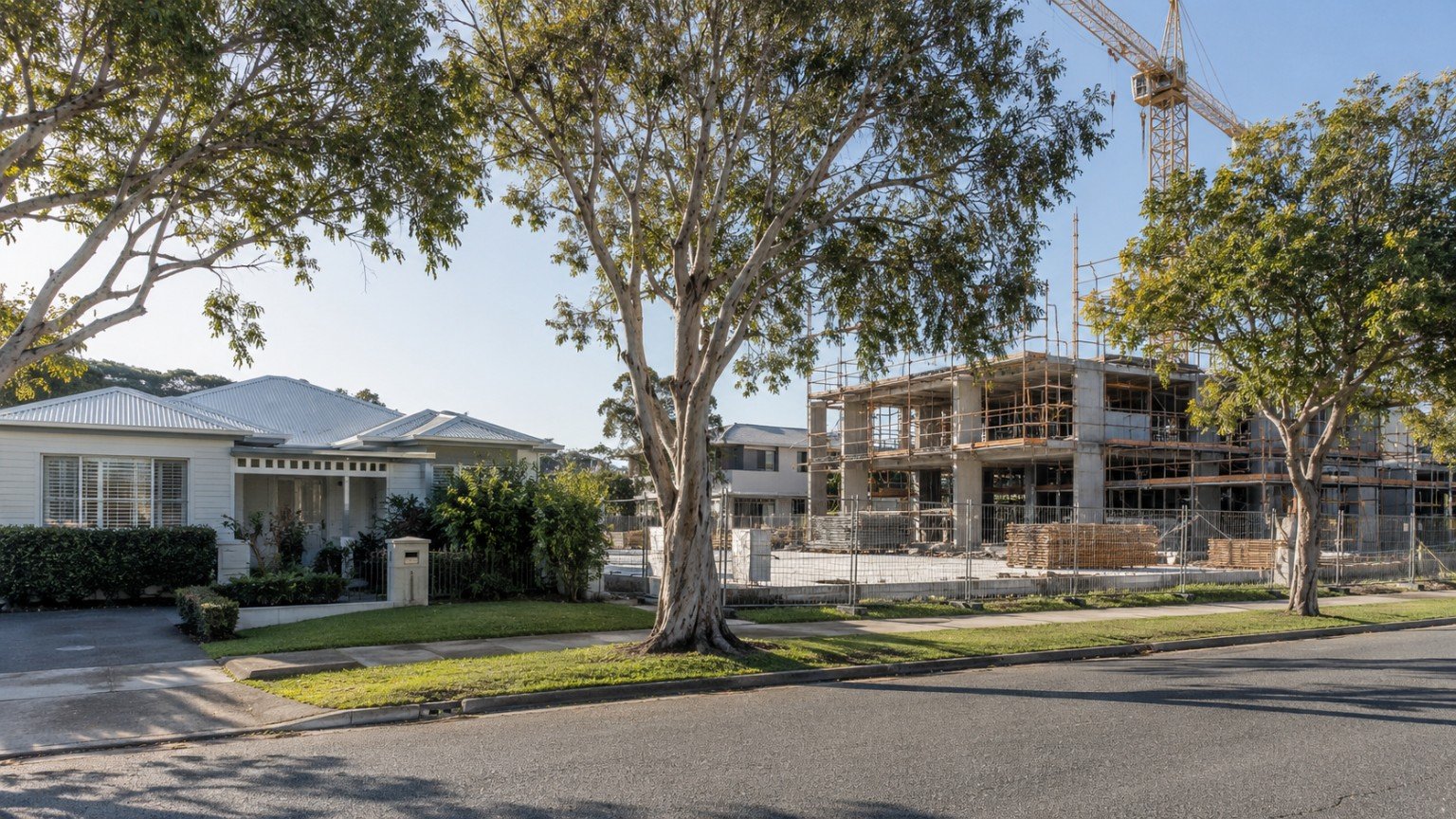
Many owners only think to check nearby development applications once, before buying, and then never again. A development application can be lodged on a neighbouring or nearby lot years after settlement, often with no reason for an existing owner to notice unless they are actively watching for it. This article is deliberately not about how to run a one-off pre-purchase development application search. Narevella’s nearby development and planning applications guide covers that pre-purchase check in detail. This article’s whole reason to exist is the ongoing question an existing owner faces after settlement.
Why owners tend to stop watching after they buy
It is an entirely understandable pattern. Buying a property involves an intense burst of research, including checking nearby development activity as part of due diligence, and once settlement happens, attention naturally moves on to moving in, renovating, or simply living life. The problem is that a development application does not care how long ago you settled. A lot several doors away, or backing onto your own, can be quietly listed for sale, rezoned, or have an application lodged on it years later, and there is often nothing that actively prompts an existing owner to notice unless they are the kind of person who checks periodically as a habit.
How council notification generally works
At a framework level, impact-assessable development applications generally trigger a public notification period, during which submissions can be made. Code-assessable applications generally do not require public notification. This distinction is the single most useful thing an owner can understand, because it explains why some nearby developments arrive with a letterbox notice and others simply do not.
This article does not state a specific notification radius, a specific submission period length, or which application types fall into which category for any particular council. These details vary by council and by the current planning scheme, and are not verified at that level here. Check your own council’s current notification requirements directly for anything specific to your property.
A repeatable habit, not a one-off search
The practical fix is a habit an owner can actually keep up over time:
- Periodically check your council’s public development-application register, or PD Online-style portal, for the immediate surrounding area, not just your own street.
- Subscribe to any council notification or alert service if one is offered for your area.
- Check again before any major decision of your own, such as renovating or selling, rather than relying on memory of what was nearby when you first bought.
Tying this check to something you already do periodically, such as reviewing household bills or doing an annual home maintenance pass, makes it far more likely to actually happen than treating it as a separate task to remember on its own.
Lodged is not approved, and approved is not built
A single lodged application is not a confirmed outcome. The same discipline Narevella applies elsewhere to infrastructure research applies here: a lodged application is not the same as an approved one, and an approved application is not the same as a built one. Noting a development application and continuing to monitor it is often the right response, rather than reacting to the lodgement itself as though it were a finished decision. Applications are sometimes withdrawn, amended significantly, or approved with conditions that change the original proposal, so the right posture is ongoing awareness rather than an immediate conclusion either way.
Making a submission
If a nearby application is within a public notification period and you have a genuine concern, making a formal written submission within that notification period is the correct channel. This article does not describe submission grounds or success rates, since these are highly case-specific and not verified at that level here. Your council’s own submission guidance is the right place to check the current process for your area.
The selling angle
If you are aware of a nearby development application and later decide to sell, expect that it may be a question a buyer’s own due diligence surfaces. Rather than restate seller disclosure content here, Narevella’s preparing a property for sale guide covers what sellers should have in order before listing.
How this connects to zoning and title research
Ongoing development monitoring sits alongside the same due-diligence discipline Narevella covers for zoning and title research generally. If you have not checked your property’s current zoning and overlays recently, how to check property zoning in Queensland and zoning and property overlays in Queensland are useful references, as is Narevella’s covenants and property restrictions guide if a covenant might affect what can happen on a neighbouring lot.
The practical close
This article does not name any specific development, council or suburb as an example, and it does not speculate about any effect on property value. The point of ongoing monitoring is simple: know what is happening around your property while there is still time to understand it and, where relevant, respond to it through the proper council channel, rather than discovering it after the fact.
This article is general research information only and does not constitute planning, legal or valuation advice. Always check current development application and notification requirements directly with your local council.


Join The Discussion