
 by
by 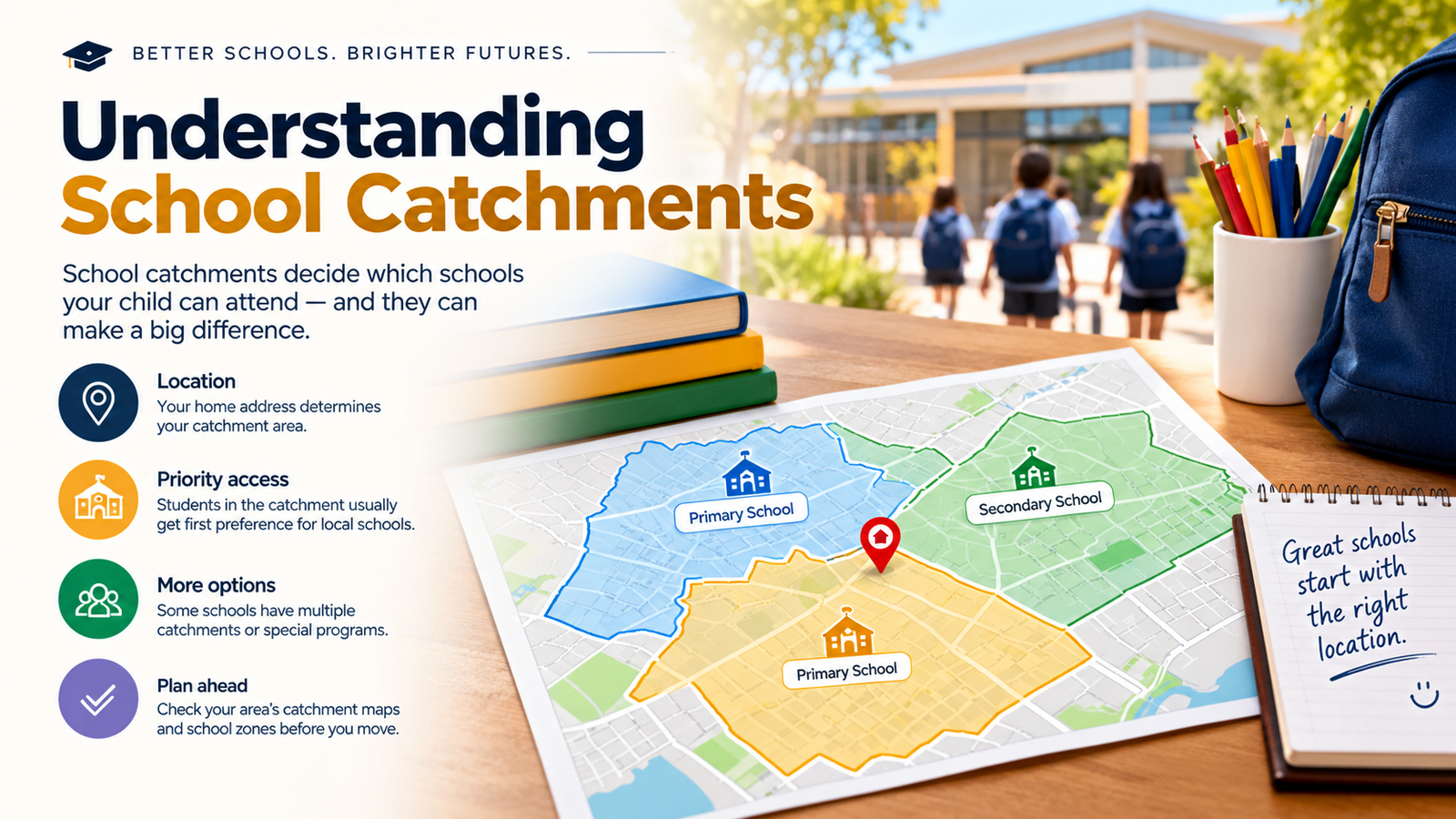
When you are looking at a house, the school catchment can be as important as the backyard size. Checking the catchment early can save you a lot of time and hassle later. It is a practical step that fits into any home buying plan.
Why Catchment Matters
School catchment areas decide which schools your children can attend without extra fees. If the catchment changes, you may need to move or pay for private education. Knowing this before you settle on a property gives you clear options.
The catchment can influence how your children grow and learn in their community. It also affects how you plan your daily routine and transport arrangements. Having this knowledge lets you choose a place that suits your family’s needs.
You can avoid surprises by checking the catchment early in the buying process.
This simple check is a key part of any house hunt.
It helps you match your lifestyle with the right school environment.
You can plan your future with confidence when you know the catchment boundaries.
This step keeps your family’s education journey smooth and predictable.
- Check the catchment map.
- Confirm the school boundaries.
- Ask about any pending changes.
Finding the Catchment Map
Most local councils publish catchment maps on their websites. You can download a copy or view it online to see the exact lines that define the area.
The map will show the borders that separate one catchment from another.
It is useful to compare the map with the address of the property you are interested in.
If the property sits near a boundary, you may need to confirm which side it falls on.
This step ensures you are not misled by vague descriptions.
You can also ask a real estate agent for a printed copy of the map.
Having a clear visual reference helps you make an informed decision.
Remember to keep the map handy for future reference.
It becomes a useful tool when you need to verify changes later.
This practice keeps your information accurate and up to date.
- Download the map.
- Print a copy.
- Mark the property location.
Confirming the School Boundaries
The catchment map may not show every detail of the school boundaries.
You should contact the school directly to confirm the exact lines that apply.
Ask the school for a copy of their latest boundary information.
This will help you avoid any confusion about whether you fall inside the area.
The school may also explain how they treat properties that sit on the edge.
Knowing this detail can prevent unexpected changes later.
It is a straightforward conversation that saves you future hassle.
Keep a record of the school’s response for reference.
This step is a quick way to double-check your understanding.
It ensures your family’s education plans are based on reliable facts.
- Call the school office.
- Request boundary details.
- Ask about edge cases.
Checking for Pending Boundary Changes
School boundaries can change over time as enrolment patterns shift.
It is wise to ask the school if there are any planned changes to the catchment.
The school can tell you if they are reviewing the lines for the next few years.
Knowing about potential changes helps you decide if the property remains a good fit.
If a change is likely, you might consider other options.
You can also ask the local council if they have any upcoming boundary reviews.
This information is useful when you weigh the long-term suitability of a property.
It gives you a clearer picture of what to expect.
Having this knowledge helps you avoid future surprises.
It supports a more stable family life.
- Ask the school about future reviews.
- Check council announcements.
- Consider long-term plans.
Understanding the Impact on Transport
School catchment can affect how you travel to and from school.
If the school is far, you may need to rely on bus services or carpooling.
Knowing the catchment boundaries helps you plan daily routes.
It also lets you assess the time you will spend on transport each day.
You can compare this with your current routine.
If the commute is long, you may want to look at other nearby schools.
This step ensures you are not caught off guard by travel times.
It helps you balance school time with other family activities.
You can plan your day with a clearer sense of the commute.
It supports a smoother daily routine for everyone.
- Map the school route.
- Check bus schedules.
- Plan carpool options.
Considering the School’s Reputation
The catchment determines which schools you can attend without extra fees.
You may want to know how well the school performs academically.
You can talk to parents who send their children there.
They can share practical observations about the school environment.
This gives you a realistic view of what to expect.
You can also ask about extra-curricular activities.
Knowing what the school offers helps you match it to your child’s interests.
It is a simple way to gauge the school’s suitability.
You can make a decision that aligns with your family’s priorities.
This step keeps your choice grounded in real experience.
- Speak to local parents.
- Ask about school activities.
- Assess overall fit.
Planning for the Future
School catchments can influence your long-term plans for the property.
If you plan to stay for many years, knowing the catchment stability is helpful.
You can discuss with the school how often boundaries change in the area.
This helps you decide if the property remains a good fit.
If you anticipate changes, you might consider other locations.
Planning ahead reduces the risk of future disruption.
It allows you to make a choice that supports your family’s long-term goals.
You can balance current needs with future possibilities.
This step gives you peace of mind about the property’s suitability.
It helps you focus on what matters most for your family’s well-being.
- Discuss long-term stability.
- Weigh future changes.
- Plan based on family goals.
Checking the school catchment is a practical step that fits into any home buying plan. It gives you clear insight into your family’s education options and daily routines.



Join The Discussion