
 by
by 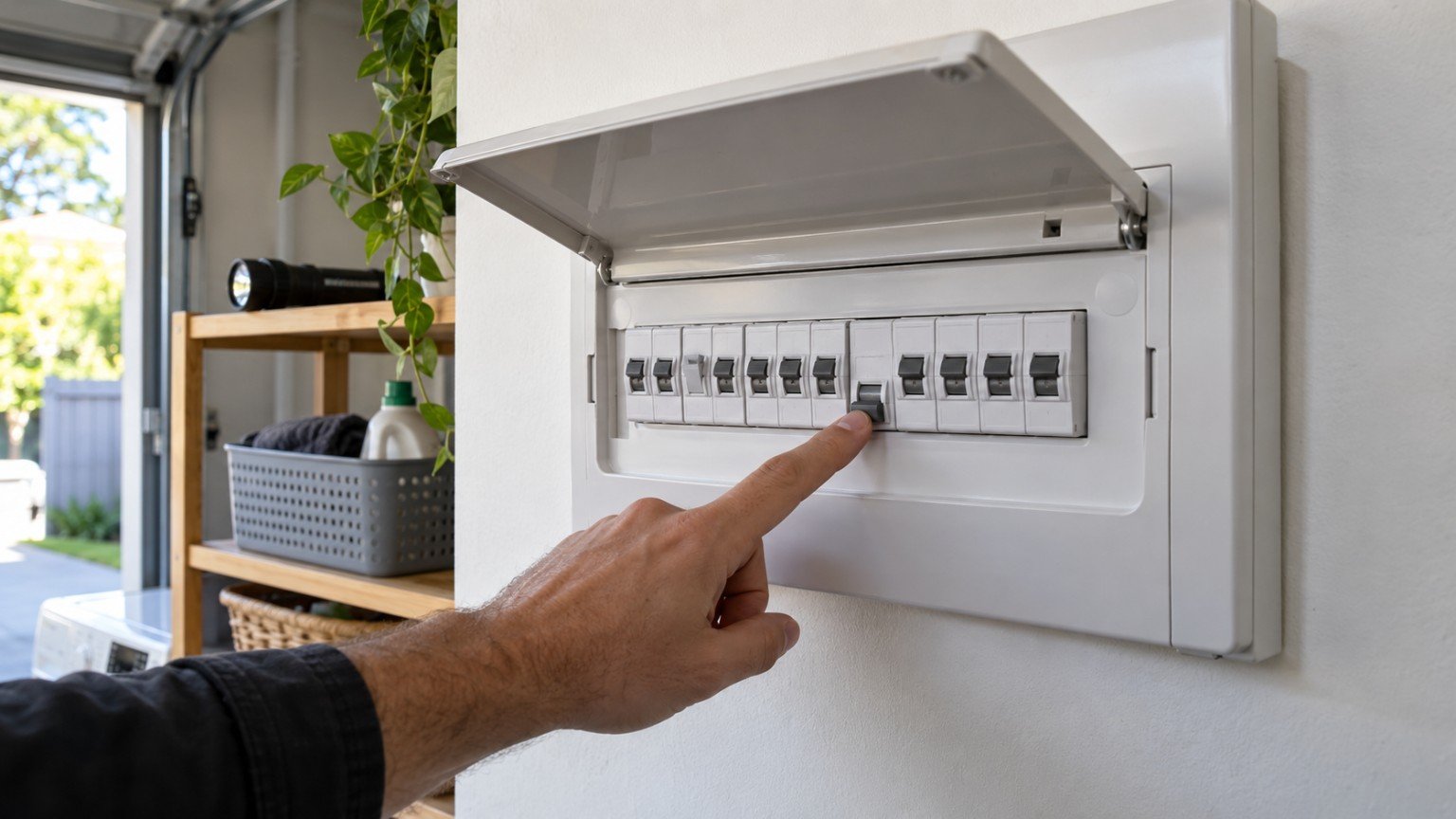
Losing power suddenly, often with several rooms going dark at once, is one of the more startling everyday home moments. In most Australian homes this is your safety switch doing exactly what it’s designed to do. Here’s how to check it and safely reset it, and just as importantly, when to stop and call a licensed electrician instead.
What a safety switch actually does
A safety switch, also called an RCD (residual current device), is a protective device at your switchboard. Its job is to cut power almost instantly if it detects electricity flowing somewhere it shouldn’t, which is exactly the situation that can cause an electric shock. When it trips, it’s protecting you and your household, not malfunctioning for no reason. This guide only covers identifying and resetting the switch itself. It doesn’t cover any work inside the switchboard, which should only ever be done by a licensed electrician.
Before you touch the switchboard
Stop and call a licensed electrician instead of attempting a reset if you notice any of the following:
- A burning smell near the switchboard
- Sparking, crackling, or buzzing sounds
- Visible scorching, melting, or damage on the switchboard
- The switchboard or nearby wall is wet or has been exposed to water
- You’re not confident identifying which switch has actually tripped
None of these are a DIY situation. If any apply, leave the power off, keep everyone away from the switchboard, and call an electrician.
How to safely reset a tripped safety switch
- Locate your switchboard, usually on an outside wall, in a garage, hallway cupboard, or meter box.
- Open the board and look for a switch sitting in the middle position, neither fully up nor fully down. This is usually the tripped safety switch, and it’s typically labelled or sits separately from the row of standard circuit breakers.
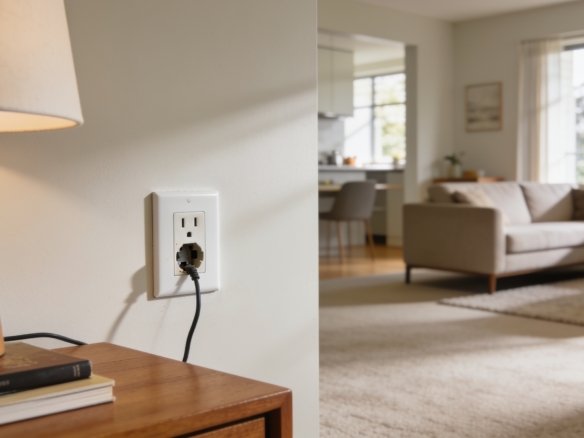
- If you have a good idea which appliance caused the trip (for example, it happened the moment you turned something on), unplug that appliance from its power point first. Only unplug or switch off regular household appliances and power points, never touch anything inside the switchboard itself.
- Firmly flip the tripped switch back up to the “on” position.
- If it stays up and power is restored, you’re done. If you unplugged an appliance, leave it unplugged and have it checked before using it again.
If it trips again straight away
Don’t keep flipping the switch back on repeatedly. A safety switch that trips again immediately, or trips more than once in a short period, is telling you there’s a genuine fault somewhere in the circuit or in an appliance. Repeatedly resetting it doesn’t fix the underlying problem and just means you’re relying on the safety mechanism to keep catching it. At that point, it’s time to call a licensed electrician rather than keep testing it yourself.
Common causes, for context only
A tripped safety switch is often caused by a faulty appliance, a circuit that’s become overloaded, moisture getting into an outdoor power point or fitting, or wiring that’s simply aged and needs attention. You don’t need to diagnose which of these it is yourself, that’s exactly what an electrician’s fault-finding visit is for.
When to call a licensed electrician
- The safety switch trips again as soon as you reset it, or trips repeatedly over days or weeks
- You can’t identify which switch has tripped
- There’s any sign of damage, burning, sparking or moisture at the switchboard
- Your home doesn’t seem to have a safety switch fitted at all, older properties sometimes don’t, and it’s worth having one installed
A safety switch tripping occasionally and resetting cleanly is normal. A safety switch that keeps tripping is not something to work around, it’s a sign the underlying issue needs a licensed professional to look at.
For a broader look at the kinds of issues that commonly turn up around an Australian home, our practical owner’s checklist of common household issues is a useful next read.
Join The Discussion