
 by
by 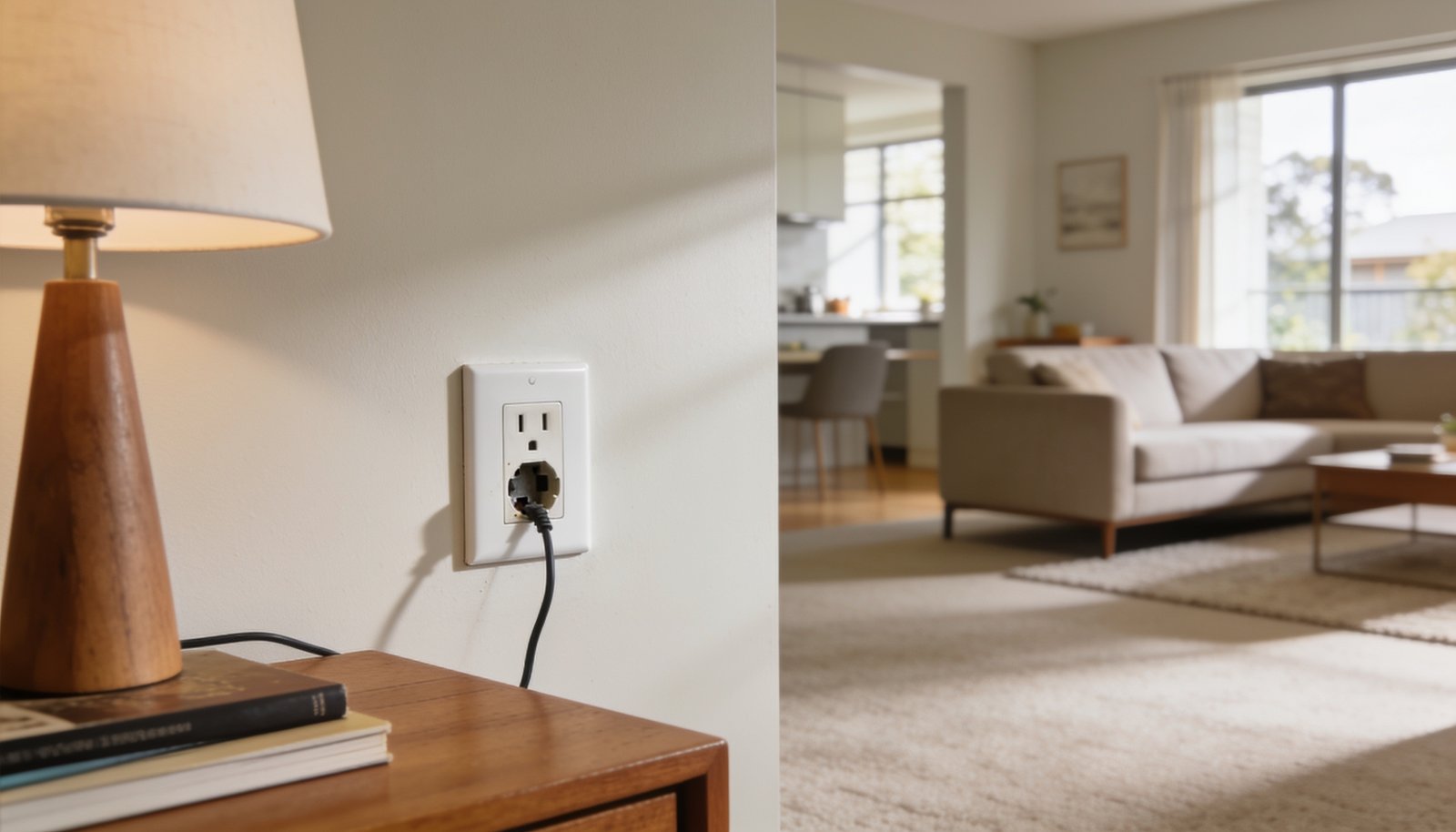
If a power point suddenly stops working, it can feel like a nuisance or a safety risk. A quick check can often reveal a simple cause, but a careful approach keeps everyone safe. Knowing what to look for helps you decide whether to fix it yourself or call a professional.
Check the Circuit Breaker
First, locate the main switchboard on the outside wall or in a hallway cupboard. Look for a breaker that has flipped to the off position or shows a slight tilt. This indicates a tripped circuit that can be reset by flipping the switch back to the on position.
If the breaker remains off after resetting, it may have tripped again, signalling a fault on that circuit. In this case, do not attempt to force the breaker back on. Instead, call a licensed electrician to investigate further.
A breaker that does not trip when overloaded may be faulty. A professional can test the breaker’s integrity and replace it if necessary.
Remember, a breaker that trips repeatedly is a sign of a deeper electrical issue that requires expert attention.
If the power point is on a separate circuit, check that specific breaker rather than the main one.
Do not rely on a visual check alone; a breaker may appear normal yet be defective.
Always turn off the main switch before working on any electrical components.
If you are unsure about any step, seek professional help.
- Locate the switchboard.
- Identify the relevant breaker.
- Reset the breaker.
- Observe if it trips again.
- Call a professional if it fails.
Inspect the Power Point Cover
Remove the cover plate carefully with a screwdriver. Look for visible signs of damage such as cracks, burn marks or water stains. These can indicate a fault that has caused the point to stop working.
Check the mounting screws for tightness. Loose screws can lead to poor contact and intermittent power.
If the cover is warped or has a loose frame, replace it with a new one of the same size.
Inspect the wiring inside for exposed conductors or frayed insulation. Exposed wires are a safety hazard and must be addressed.
If the wiring appears fine, reassemble the cover and test the point.
A damaged cover can also cause a short circuit, leading the breaker to trip.
Replacing a damaged cover is a straightforward task that restores safety and functionality.
Always ensure the power is turned off before handling any components.
- Remove cover plate.
- Check for cracks or burn marks.
- Tighten mounting screws.
- Inspect wiring for damage.
- Replace if necessary.
Test the Power Point with a Voltage Checker
Use a simple voltage tester to confirm whether power reaches the point. Place the tester’s probes on the live and neutral slots.
A correct reading indicates that electricity is flowing, while a zero reading suggests a break in the circuit.
If the tester shows no voltage, the problem may lie further up the wiring or in a fuse.
A faulty tester can give misleading results; if doubt persists, use a second device.
Always keep the tester’s probes away from each other to avoid accidental shorting.
If power is present, the issue may be with the internal switch or the device plugged into the point.
Testing with a voltage checker is a quick diagnostic tool that can save time.
If you are unfamiliar with using a tester, seek guidance from a knowledgeable friend or a professional.
- Use a voltage tester.
- Place probes on live and neutral.
- Check for correct reading.
- Avoid accidental shorting.
- Seek help if unsure.
Check the Internal Switch Mechanism
If the point supplies power but the device does not turn on, the internal switch may be faulty. Remove the cover and look for a visible switch inside the box.
Press the switch manually to see if it moves smoothly. A stiff or stuck switch can prevent power from reaching the outlet.
If the switch is damaged, it must be replaced with a new one of the same type.
Replacing the switch involves disconnecting the wiring, removing the old switch, and installing the new one before reassembling the cover.
Always ensure the power is off before working on the switch.
A faulty switch can cause intermittent power and may lead to overheating.
Replacing it restores reliable operation and reduces fire risk.
If you are not comfortable with wiring, call a licensed electrician.
- Locate the internal switch.
- Test its movement.
- Replace if damaged.
- Reassemble the cover.
- Call a professional if unsure.
Look for Signs of Overload or Damage
Heavy appliances can overload a circuit, causing breakers to trip and outlets to fail. Check if the outlet is connected to a high-power device.
If the device is plugged into multiple outlets, it may be drawing more current than the circuit can handle.
Look for signs of overheating such as a warm feel around the outlet or scorch marks on the cover.
Overloaded circuits can also cause the wiring to degrade over time.
If you notice any of these signs, redistribute the load or move the device to a different circuit.
If the outlet itself shows damage, it should be replaced.
Avoid using extension cords to bypass overloaded circuits.
A proper load distribution ensures safe and efficient use of power.
- Check for high-power devices.
- Look for warm or scorch marks.
- Redistribute load if necessary.
- Replace damaged outlets.
- Avoid extension cords.
When to Call a Licensed Electrician
If any of the checks above reveal a fault that is not easily fixed, or if you are unsure about the safety of the work, stop immediately.
Electrical work beyond basic troubleshooting involves risks that require professional skills and tools.
A licensed electrician can safely assess the wiring, replace faulty components, and ensure the system complies with safety standards.
They also have the expertise to identify hidden issues that may not be apparent to a layperson.
Engaging a professional protects both the household and the property from potential hazards.
Do not attempt to repair complex electrical faults yourself.
A professional’s intervention guarantees a reliable and safe outcome.
- Stop if unsure.
- Call a licensed electrician.
- Avoid complex repairs yourself.
- Ensure safety and reliability.
A power point that stops working can often be fixed with simple checks and precautions. If the problem persists, seeking professional help is the safest route.


Join The Discussion