
 by
by 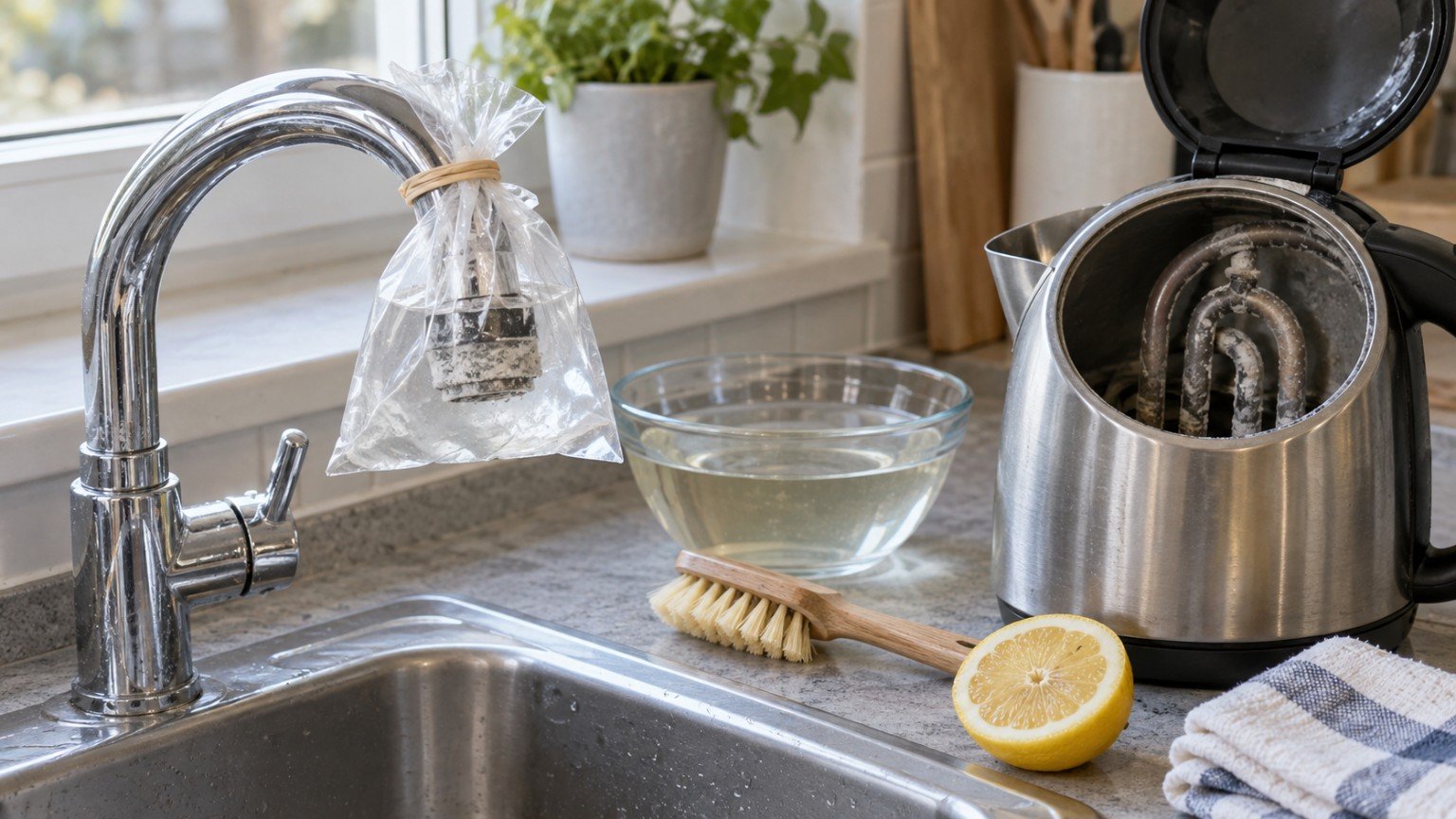
That chalky white or cloudy buildup around tap spouts, on shower fittings and crusted inside a kettle is limescale, a mineral deposit left behind as hard water evaporates or heats up. It’s more noticeable in areas with harder water, and while it’s not a hygiene risk in the way mould or grime is, it does make fittings look dull and can eventually affect how well a kettle or tap actually works. Removing it is simple, and the same basic method works on almost anything limescale builds up on.
Why limescale forms
Tap water carries dissolved minerals, mainly calcium and magnesium, and the amount varies depending on where you live. When water evaporates off a tap or shower fitting, or is repeatedly heated in a kettle, those minerals are left behind as a solid deposit. Heat speeds the process up, which is why kettles and hot taps tend to scale up faster than cold ones.
How to remove limescale from a kettle
1. Use white vinegar or citric acid
Fill the kettle roughly halfway with a mix of equal parts white vinegar and water, or use a spoonful of citric acid dissolved in water if you prefer a milder smell. Bring it to the boil, then let it sit for 20 to 30 minutes.
2. Empty, rinse and wipe
Tip the solution out, rinse the kettle thoroughly with clean water two or three times to clear any taste or smell, and wipe the inside with a soft cloth or an old toothbrush to loosen any remaining flecks around the element and spout. For a kettle with a lot of buildup, you may need to repeat the process once.
3. Boil plain water before use
Do one final boil with plain water and discard it before making tea or coffee, just to be sure there’s no vinegar taste left behind.
How to remove limescale from taps
1. Try a vinegar-soaked cloth or paper towel
Soak a cloth or a few sheets of paper towel in white vinegar and wrap it around the affected part of the tap, particularly the spout and aerator, where limescale builds up fastest. Leave it in place for 30 minutes to an hour for stubborn buildup.
2. Scrub gently and rinse
Remove the cloth and scrub gently with an old toothbrush or a soft scourer, then rinse thoroughly with clean water and dry with a microfibre cloth to avoid new water spots forming straight away.
3. Unscrew and soak the aerator if it’s removable
Many taps have a small mesh aerator screwed onto the end of the spout that can be removed and soaked separately in a bowl of vinegar and water for an hour, which is often the fastest way to clear a tap that’s lost water pressure due to scale buildup inside the mesh.
A note on safety
Vinegar and citric acid are both mild and safe to use on most metal and plastic fittings, but always avoid mixing vinegar or any acidic cleaner with bleach or bleach-based products, as combining the two can release fumes that are genuinely unsafe to breathe. If you’re not sure what a fitting is made from, particularly on older brass or a specialty finish, test on a small hidden area first, as acidic cleaners can dull some decorative coatings over time.
Keeping limescale from building back up
- Wipe taps dry with a cloth after use rather than letting water droplets evaporate on the surface
- Empty a kettle after use rather than leaving water sitting in it
- Do a quick vinegar wipe or descale roughly once a month if your area has hard water
- Consider a jug or tap filter if limescale is a constant, heavy problem in your area, as this can genuinely reduce how quickly it builds up
Limescale is one of those household jobs that looks worse than it actually is to fix. A bit of vinegar, a bit of patience and a regular wipe-down keeps taps and kettles looking clean and working properly without needing anything stronger.



Join The Discussion