
 by
by 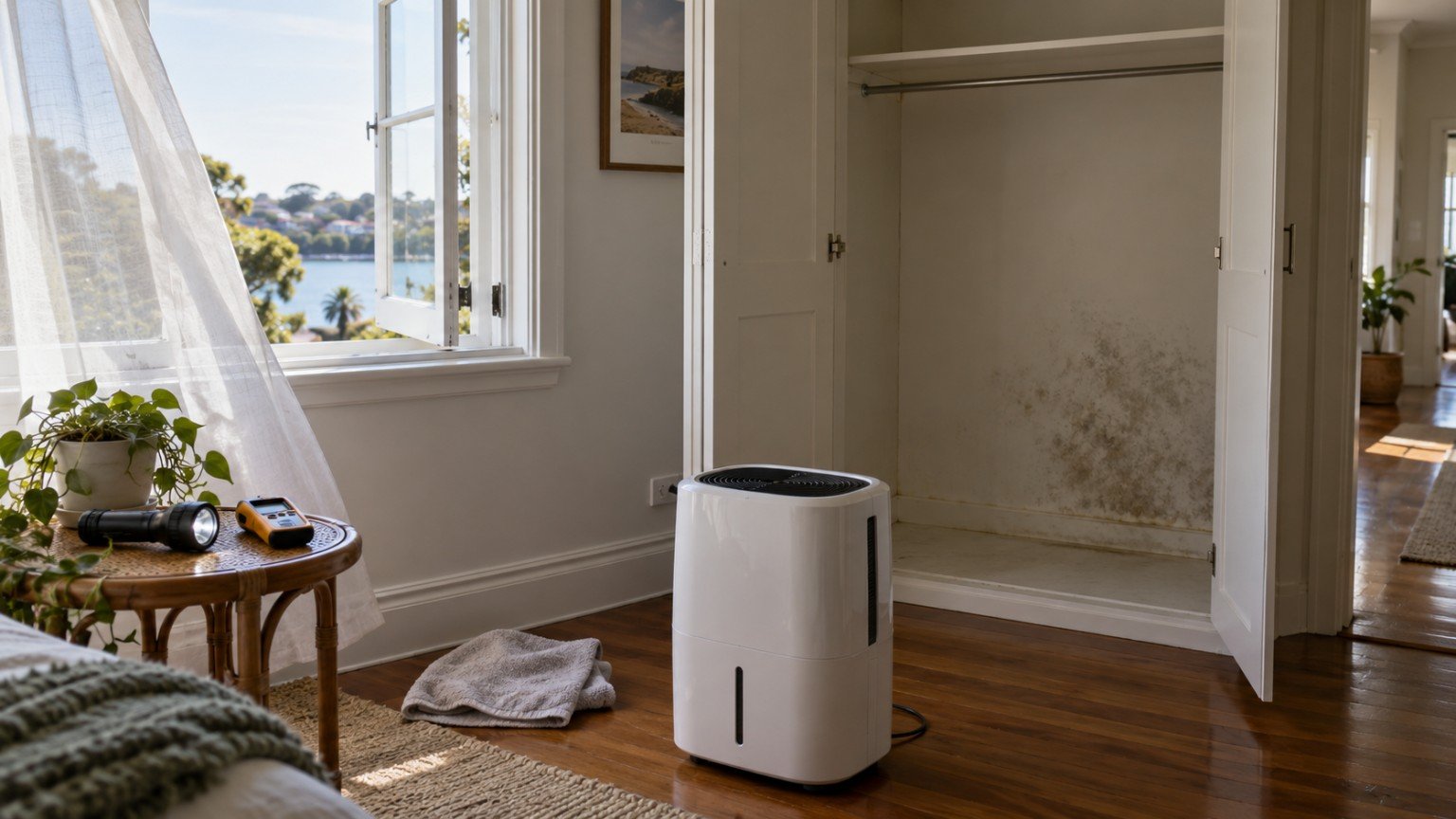
A musty smell that lingers in a home, especially one that’s hard to pin down to one exact spot, is one of the most common household complaints and almost always comes back to the same root cause: moisture that isn’t drying out properly somewhere in the house. It’s rarely one big obvious problem. More often it’s a combination of smaller things, a bit of trapped damp here, a poorly ventilated cupboard there, that together make a home smell stale even when it looks clean.
What actually causes a musty smell
Musty odour is typically produced by mould and mildew, or by the bacteria that grow in damp, low-airflow conditions. Neither needs a flood or an obvious leak to get started. All they really need is moisture, a lack of airflow, and time, which is exactly what you get in an enclosed wardrobe, an unused spare room, a bathroom without an exhaust fan, or a subfloor area that doesn’t dry out well after rain.
Where to actually check
Bathrooms and laundries
These rooms produce the most moisture in a home day to day. Check the exhaust fan is working and actually vents outside rather than into the roof cavity, look under the sink and around the base of the shower or bath for any softness or discolouration, and check whether the door is left closed too often, which traps humidity inside after every shower.
Wardrobes and enclosed cupboards
A closed wardrobe against an external wall, particularly in a bedroom that doesn’t get much sun or airflow, can trap moisture from clothes, shoes and the wall itself. A musty smell confined to one wardrobe is a strong sign the problem is localised rather than house-wide.
Under sinks and around appliances
A slow, minor leak under a kitchen or bathroom sink can sit unnoticed for months, slowly dampening the cupboard base and creating a persistent smell without ever producing a puddle you’d actually see.
Subfloor, roof cavity and window frames
In homes with a subfloor space, or in older homes with less insulation and airflow, moisture can sit under the house or around window frames for extended periods, particularly after wet weather. A smell that’s worse near skirting boards, floor level, or around window reveals often points here.
What to actually do about it
- Open windows and doors daily where it’s safe to do so, even briefly, to let fresh air genuinely move through the house
- Run exhaust fans in bathrooms during and for a while after every shower, rather than switching them off as soon as you get out
- Leave wardrobe and cupboard doors ajar occasionally, particularly on external walls, to let trapped moisture escape
- Use a dehumidifier in consistently damp rooms during humid months if ventilation alone isn’t cutting through it
- Check for and fix any small leaks under sinks, around window seals or at pipe connections promptly rather than leaving them
When it’s more than a smell
If you can see visible mould, staining, bubbling paint or soft skirting boards alongside the smell, ventilation habits alone won’t fix the underlying issue and it’s worth having the actual moisture source properly diagnosed rather than just masking the symptom. Our detailed guide to mould, humidity and ventilation in the home walks through how to tell the difference between a normal household damp issue and one that points to a genuine building problem worth getting checked by a professional.
A quick note on renting
If you’re renting and a musty smell persists despite reasonable ventilation efforts on your part, it’s worth raising it with your property manager or landlord in writing, particularly if you can see any visible damp or mould, since ongoing moisture issues can sometimes point to a maintenance problem that’s genuinely the landlord’s responsibility to address rather than something a tenant can fix alone.
Most musty smells are solvable with better airflow and a bit of consistency rather than anything drastic. Tracking down where it’s actually coming from, rather than just spraying an air freshener over the top, is what makes the difference between a smell that keeps coming back and one that actually goes away.



Join The Discussion