
 by
by 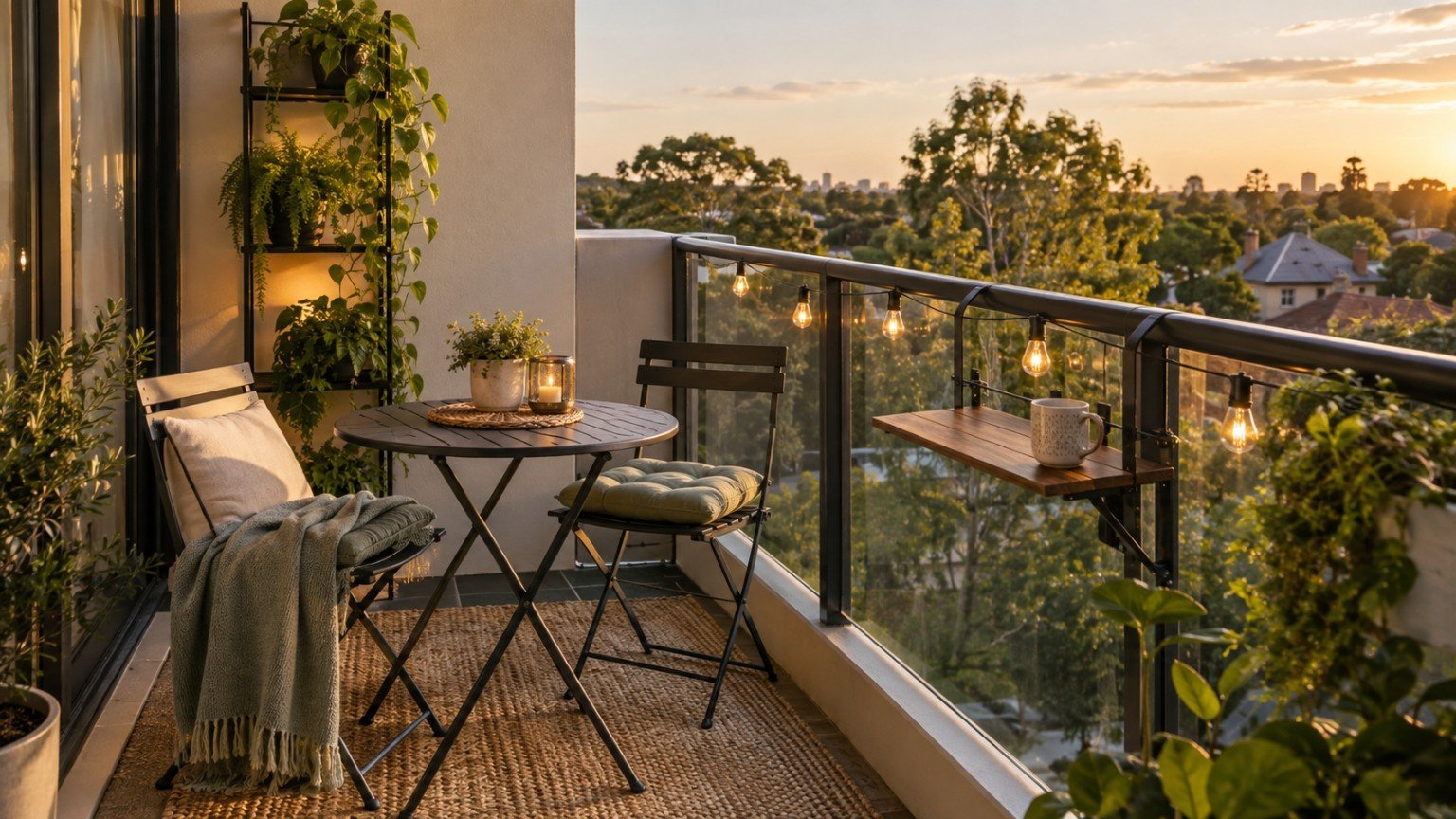
A lot of apartment balconies end up as storage for whatever doesn’t fit inside: a stack of boxes, a bike, a bin. With a bit of planning, even a genuinely small balcony, a metre or two deep, can become a spot worth actually sitting on. The trick is treating it as a small room rather than leftover space, with furniture and layout chosen specifically for its dimensions.
Start by measuring and mapping the space
Before buying anything, measure the balcony’s width, depth and any obstructions, a downpipe, a meter box, a balustrade gap that catches wind. Note which direction it faces, since a north or west-facing balcony in most of Australia will need shade for at least part of the day, while a south or east-facing one may stay usable without it. This ten-minute step avoids the common mistake of buying furniture that looks right in a shop but doesn’t actually fit once it’s home.
Furniture that earns its keep
On a small footprint, every piece of furniture should ideally do more than one job. A slim bistro table with two folding chairs is the standard solution for a reason, it seats two comfortably and folds flat against a wall when not in use. Where even that’s too much, a single wall-mounted drop-leaf shelf with one stool gives a spot to rest a coffee or a laptop without permanently occupying floor space. Round tables tend to suit tight corners better than square ones, since there are no sharp edges to navigate around.
Cushioned floor poufs or a folding outdoor daybed can work well on balconies too narrow for a table and chairs, giving a place to sit without the bulk of conventional furniture. Whatever’s chosen, look for lightweight, stackable or foldable options specifically, since being able to clear the space entirely for cleaning or storms is a genuine advantage on a small balcony.
Vertical space is the biggest asset
Once the floor is accounted for, the walls and balustrade are where a small balcony gains the most extra function. Railing planter boxes that clip over the balustrade add garden space without using any floor area at all, and most are designed to sit securely without drilling. A slim vertical shelving unit against a side wall can hold pots, a small side table’s worth of odds and ends, or a stack of folded cushions, all without eating into the space needed to actually stand or sit.
Weatherproofing and practical considerations
Outdoor fabric, the kind rated for sun and rain exposure, is worth paying for on cushions and any soft furnishings, ordinary indoor fabric fades and mildews quickly outside. A small outdoor rug defines the space and feels considerably nicer underfoot than bare concrete or tiles, and most all-weather versions can simply be hosed off. Check any strata or building rules before installing anything that attaches to the balustrade or exterior wall, some buildings restrict what can be fixed to shared structures, and it’s a quick check that avoids having to remove something later.
Privacy and shade without a permanent fix
A freestanding outdoor umbrella with a weighted base, rather than one that clamps to the balustrade, avoids drilling and can be repositioned as the sun moves through the day. Bamboo or reed screening panels that hang from the top rail or hook over the balustrade add privacy from neighbouring balconies without needing tools, and most roll up easily when not needed. For balconies that get strong afternoon sun, an outdoor blind that mounts with tension brackets rather than fixed screws is worth looking for specifically, since it comes down just as easily as it goes up at the end of a lease.
Adding greenery without the mess
Self-watering pots reduce how often plants need attention and avoid the drips and stains that come with regular watering on a hard surface. Herbs, succulents and other compact, hardy plants suit balcony conditions better than anything that needs deep soil or significant root space. Grouping a few pots of different heights, rather than spreading single plants around, tends to look more deliberate and makes better use of a small footprint.
Making it feel like an outdoor room
Small lighting touches, solar fairy lights or a battery lantern, extend how usable the space is into the evening without needing an outdoor power point. A single scented candle or citronella option adds a bit of atmosphere and helps with insects in warmer months. None of these are large purchases individually, but together they turn a balcony that’s currently a storage overflow into a small outdoor room that actually gets used.
Keeping it low-maintenance
A small balcony still needs a bit of upkeep to stay usable, sweeping leaves and dust, wiping down furniture, and checking pot drainage holes haven’t blocked after rain. Building this into a five-minute weekly habit, rather than letting it build up, keeps the space from sliding back into overflow storage. Choosing hard-wearing, easy-clean materials from the outset, powder-coated metal, all-weather wicker, treated timber, means less of that upkeep is needed in the first place.



Join The Discussion