
 by
by 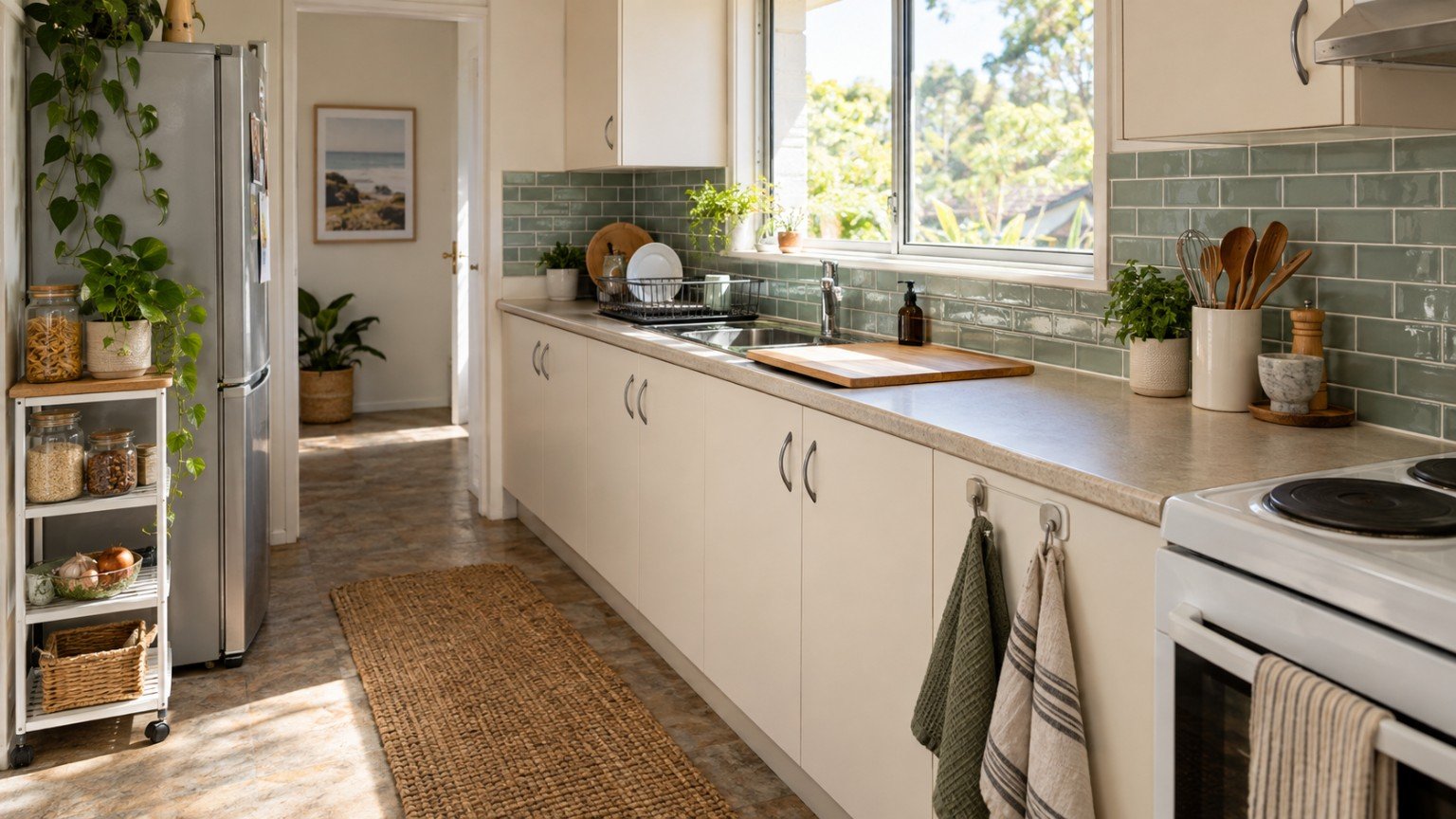
Renting doesn’t have to mean living with a kitchen exactly as it was handed over. Plenty of genuinely useful upgrades can be made without touching a single fixed surface, drilling a hole, or needing to ask a landlord for anything at all. The common thread across all of them is reversibility: everything below can be removed cleanly at the end of a lease, leaving the kitchen exactly as it was found.
What “renter-friendly” actually means
A genuinely renter-friendly upgrade meets three tests: it doesn’t alter or damage a fixed surface, it comes off without professional help, and it leaves no lasting mark once removed. Anything that involves drilling into tiles or cabinetry, permanent adhesive, or rewiring falls outside that definition, no matter how tempting the before-and-after photos look. Sticking to that filter avoids the situation of a great-looking upgrade turning into a bond deduction.
Removable upgrades that make a real difference
Peel-and-stick options
Removable wallpaper and peel-and-stick splashback panels have improved considerably in recent years, and a good-quality product applied properly to a clean, smooth surface will come away without damaging paint or tiles underneath. They work well on a small feature area, behind open shelving, on the inside of glass-fronted cabinets, or across an existing splashback, rather than needing to cover an entire kitchen to have an effect. Always test a small corner first and follow the manufacturer’s removal instructions, since not every wall paint reacts the same way.
Organisation inside cabinets and drawers
Drawer dividers, pull-out baskets that simply sit inside an existing cabinet, and adhesive-backed hooks on the inside of cabinet doors all improve how a kitchen functions without touching the kitchen itself. A lazy susan or turntable dropped into a deep corner cabinet, shelf risers to double up vertical space in a cupboard, and a fitted drawer mat all fall into the same category: genuine functional upgrades that travel with the tenant when they move.
Lighting and small appliance swaps
A plug-in under-cabinet light strip run along the underside of existing overhead cabinets makes a real difference to bench visibility for cooking and prep, and it needs nothing more than a nearby power point. Swapping a dated pendant shade for a simple clip-on or plug-in fitting can change the whole feel of a kitchen’s lighting without an electrician, provided the original fitting is left safely capped and stored for reinstallation at the end of the lease. A better kettle, a good chopping board, or a small appliance that replaces something worn out are simple, portable ways to lift the kitchen’s everyday experience.
Small styling touches that add up
A fresh set of tea towels, a matching set of canisters on the bench, or open shelving styled with a handful of everyday items can make a rental kitchen feel considered rather than borrowed. A removable adhesive-backed shelf liner in drawers and cupboards protects the existing surface and can simply be lifted out at the end of a lease, useful in kitchens where the shelving looks tired but isn’t actually damaged. A stick-on LED strip under open shelving, run from a nearby power point, adds a similar lift to open display areas without any wiring at all.
What to check with the landlord anyway
Even fully removable changes are worth a quick message to the property manager or landlord before starting, particularly for anything covering a large surface area like splashback panels or a full wall of removable wallpaper. Most landlords have no objection to genuinely reversible upgrades, but getting a quick written acknowledgment avoids any confusion at inspection time and shows good faith if a question ever comes up. It costs nothing and it’s the kind of small step that helps keep a good relationship with a landlord over the life of a lease.
Packing it all away at the end of the lease
Because everything here was chosen specifically for reversibility, moving out should mean a straightforward removal process rather than a repair job. Peel off wallpaper and panels slowly, following the same direction guidance as any adhesive product, and check underneath for residue that a mild detergent will lift. Store cabinet hardware, light fittings or anything original that was temporarily replaced, and reinstall it before the final inspection. Done properly, a renter-friendly kitchen upgrade should leave no trace it was ever there, and no reason for a bond to be affected.



Join The Discussion