
 by
by 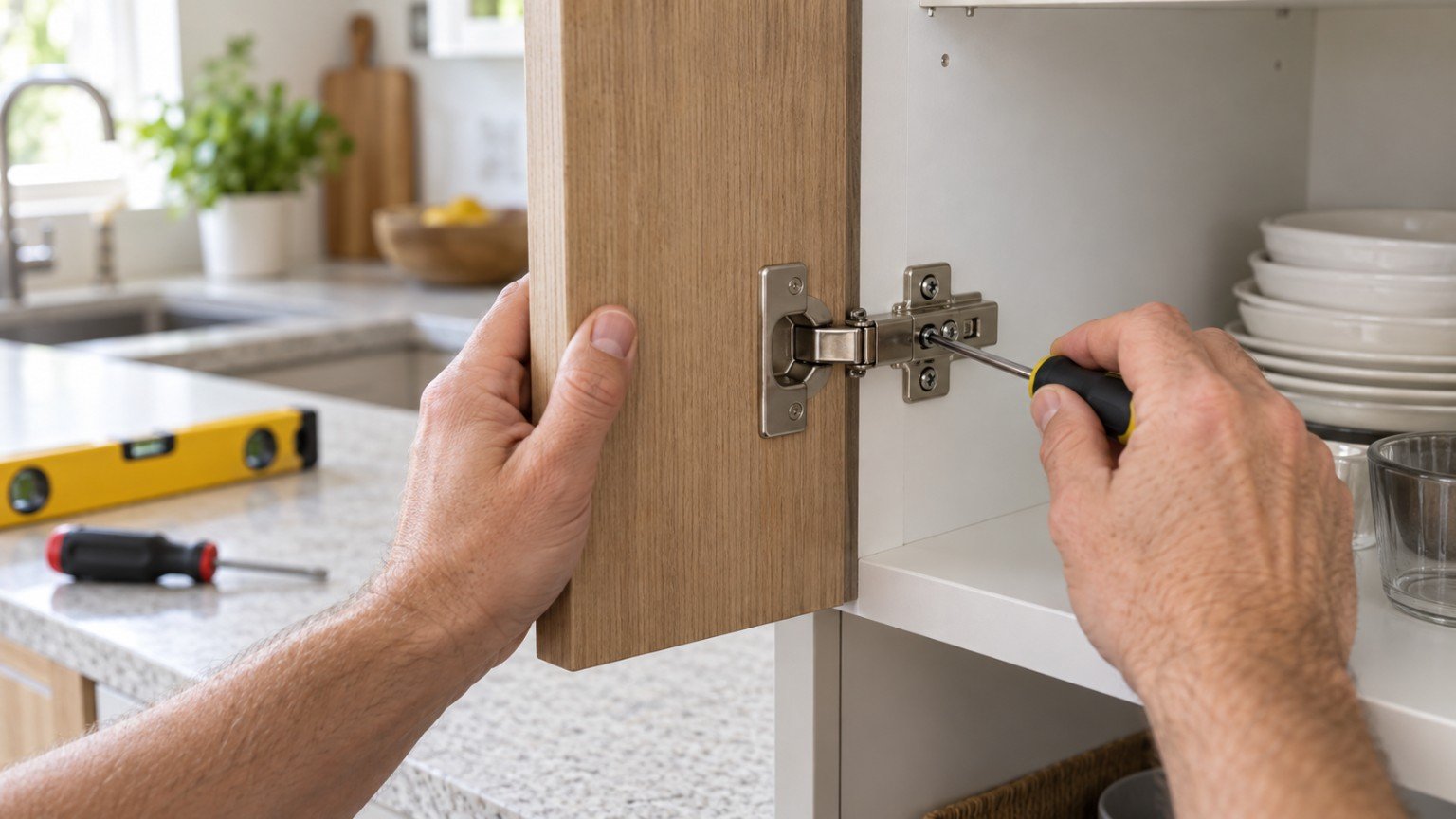
A crooked or sagging cupboard door is a common issue in Australian homes, but fixing it does not require trade qualifications. In Australia, realigning a cabinet door is classified as a non-licensed DIY repair task that home occupants can perform independently using basic hand tools.
Most modern Australian cabinetry utilizes European-style concealed hinges mounted inside the cabinet carcass. These hinges feature three distinct adjustment mechanisms that allow you to realign the door along three separate axes using a standard screwdriver.
Understanding the Three Hinge Adjustment Screws
Before turning any screws, open the cabinet door and examine the hinge mechanism attached to the carcass wall. On a standard European-style concealed hinge, you will find three main adjustment points:
- Side-to-side adjustment screw: Located closer to the door, this screw controls the horizontal positioning of the door. Turning this screw corrects tilting doors, reduces uneven gaps between adjacent cabinet doors, or recentres a door over the opening.
- Depth adjustment screw: Located toward the rear of the hinge arm, this screw controls how close the door sits relative to the cabinet frame. Adjusting this screw moves the door closer or further away from the cabinet face, resolving gaps where the door sticks out or fails to sit flush when closed.
- Vertical adjustment screws: Located on the mounting plate fixed directly to the cabinet carcass wall. By loosening these screws slightly, you can slide the entire door up or down to align the top and bottom edges with surrounding cabinetry before tightening them back into place.
Because hinge mechanisms can vary depending on the manufacturer and age of the installation, non-European hinge styles may not include all three adjustment points. If your cabinet features older or non-concealed hardware, the three-screw method may not apply.
Steps for Realigning the Door
To align a door that will not sit straight, inspect the gaps around the door while it is fully closed to identify where it is out of alignment.
- If the top corner of the door is leaning sideways or hitting an adjacent panel, locate the side-to-side screw on either the top or bottom hinge. Use a standard screwdriver to make minor, incremental turns until the door hangs straight.
- If the door projects outward from the cabinet carcass at the top or bottom, loosen the depth adjustment screw on the affected hinge, push or pull the hinge arm slightly to re-position the door depth, and tighten the screw back down.
- If the door sits too high or too low, loosen the vertical mounting plate screws on both hinges slightly, shift the door vertically to the desired height, and re-tighten the mounting screws securely.
Repairing Stripped Screw Holes in Timber
When adjusting older or timber cabinet doors, you may discover that a screw continues to turn without tightening because the surrounding wood fibers have stripped away. In timber cabinetry, a stripped hole prevents the hinge from holding proper tension, causing the door to drop out of alignment regardless of screw adjustments.
To repair a stripped screw hole in timber:
- Remove the affected screw and hinge plate from the timber frame.
- Apply PVA glue to wooden matchsticks or small wooden dowels.
- Insert the glue-coated matchsticks or dowel into the stripped hole until it is completely filled.
- Allow the PVA glue and timber to set securely, trimming any excess wood flush with the carcass or door surface.
- Re-insert and tighten the hinge screw into the repaired timber hole.
This traditional timber repair method restores solid wood fibers so the screw can grip firmly again, allowing for accurate hinge alignment.
Considerations for Tenants
If you are renting a property, performing minor maintenance like adjusting cabinet hinges can keep your home functioning smoothly. However, tenants must ensure that any repairs do not cause permanent damage to cabinet carcass materials. Avoid forcing rusted or stuck screws, drilling new holes into carcass panels, or using improper tools that could split or crush the cabinet materials.
If you are unsure about your obligations under your tenancy agreement, or if a cabinet carcass requires structural work beyond minor adjustments, consult your landlord or property manager before proceeding with repairs.
Join The Discussion