
 by
by 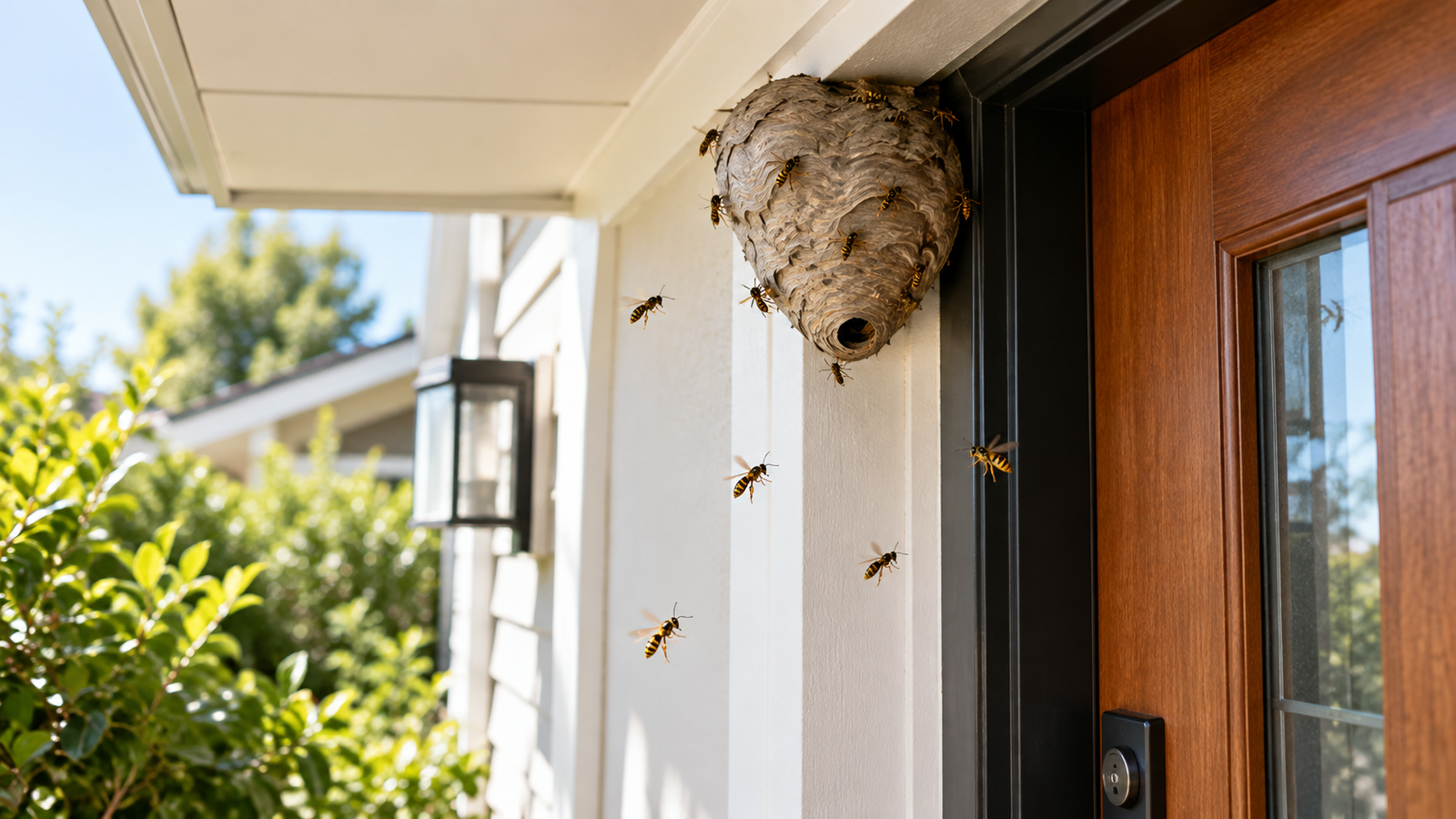
A wasp nest located directly near an entrance presents an immediate hazard. Doorways are high-traffic zones where constant movement, door swings, and foot traffic easily irritate wasps, increasing the risk of stings. Addressing a nest in this area requires accurate identification, proper protective gear, and a risk-managed approach.
Identify the Wasp Species
Before considering any action, you must identify the type of wasp nesting near your doorway. Different species exhibit distinct nesting habits and levels of aggression.
- Australian paper wasps: These native wasps construct exposed, umbrella-shaped honeycomb nests. They commonly build under eaves, porch ceilings, and door overhangs. While defensive if disturbed, they are less aggressive than introduced species.
- European wasps: European wasps are significantly more aggressive than native paper wasps. They typically build large, paper-like nests inside wall cavities, ground holes, or occasionally overhead structures. Because of their aggressive nature, European wasps present a higher sting risk.
Specific local council regulations regarding wasp removal may vary across regions. If you are unsure about local rules or the specific wasp type, check with your local government before taking action.
Evaluate Risks Before Considering DIY Treatment
Do not treat a nest near an entrance as a minor annoyance. Doorways are hazard zones, and movement nearby can irritate the nest. Individuals with known allergies to insect stings should not attempt to treat wasp nests personally under any circumstances.
DIY treatment is not suitable for every situation. Always engage a licensed pest controller in the following scenarios:
- Significant or repeat infestations around the home.
- Nests situated inside wall cavities or concealed structural gaps.
- Cases where any resident has a known allergy to insect stings.
Safety Precautions for Accessible Nests
If you choose to use an aerosol wasp spray on an accessible, exposed nest near a doorway, strictly follow these safety steps to reduce exposure.
Time the Treatment Properly
Wasps are more likely to be dormant inside the nest during night or early morning hours when temperatures are lower. Conducting treatments during these cooler, dark hours reduces wasp movement and lowers the risk of disturbing the nest.
Put On Full Protective Clothing
Never approach a nest without full-body protective clothing. Ensure you wear:
- Long pants made of thick fabric.
- Sturdy boots.
- Thick work gloves.
- A hooded sweatshirt pulled tightly over your head.
- Eye protection.
Use Approved Spray at a Safe Distance
If choosing to use an aerosol wasp spray, it must be APVMA-approved and capable of shooting 3 to 4 metres. This distance allows you to apply the treatment while staying away from the immediate doorway hazard area.
Never mix chemical products. Do not use any pesticide product in a manner inconsistent with its label instructions.
Maintain a Clear Path to Retreat
Before beginning, check your surroundings to ensure you have a clear path to retreat inside the house. Keep the doorway clear of clutter so you can move backward and enter the home safely if wasps become active.
Important Safety and Regulatory Disclosures
Any pesticide must be used strictly per the Australian product label, kept away from food surfaces, and stored away from children and pets. Always engage a licensed pest controller for significant or repeat infestations, nests inside wall cavities, or cases where a resident is allergic to insect stings.
This guidance is for general household information and does not replace the need for professional, medical, or specialized pest management advice.
Join The Discussion