
 by
by 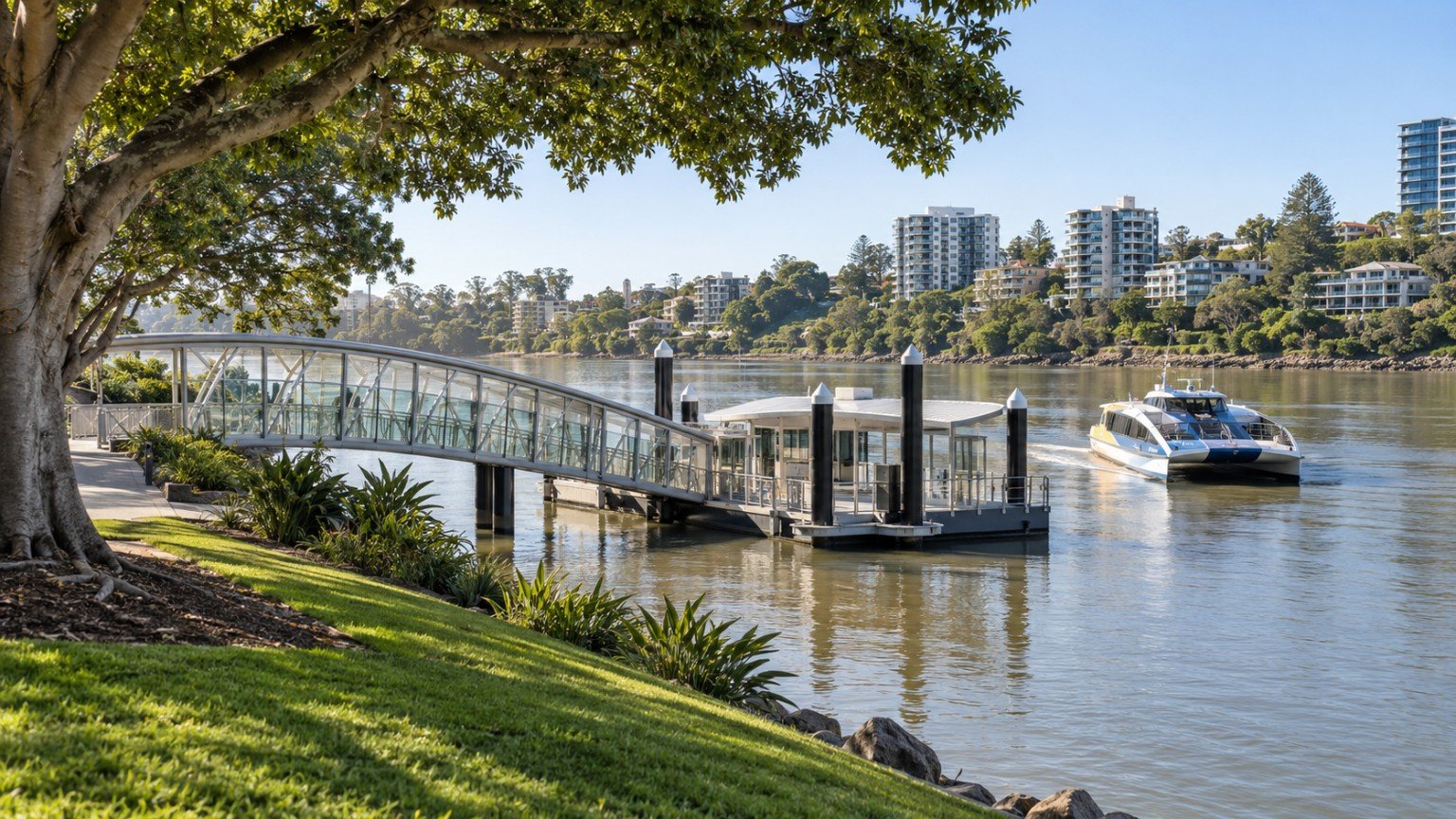
Six of Narevella’s published Brisbane suburb guides mention a ferry terminal in passing, from Bulimba to St Lucia. None of them answer the actual question a buyer has: what does living near a Brisbane ferry terminal genuinely give you, and what does it cost you in trade-offs a listing photo will never show?
What the Brisbane Ferry Network Actually Is
Brisbane’s river services are not one thing. They combine three different patterns of trip:
- All-stops CityCat services that run the length of the river, calling at most terminals along the way.
- Express CityCat services that run in peak periods and skip stops to cut journey time for commuters travelling further along the river.
- Short cross-river shuttle ferries that simply connect two terminals on opposite banks, without travelling along the river at all.
These are genuinely different products for a buyer to understand. A cross-river shuttle is a short, frequent hop that functions almost like a bridge. A CityCat trip is a longer, scenic commute that behaves more like a bus route on water.
At the time of writing, the Bulimba to Teneriffe cross-river ferry runs at roughly every 15 minutes for an approximately 5-minute crossing to Commercial Road, Teneriffe, and the all-stops CityCat service operates roughly between 5:25am and just after midnight along the river between UQ St Lucia and Northshore Hamilton. These figures were not re-verified against a live timetable for this article, so treat them as indicative only and confirm current times and frequencies on Translink before relying on them for a commute decision.
The Cost Question Is Largely Solved
Public transport fares across the Translink network, including ferries, now sit at a flat 50-cent rate per trip, and this has been made permanent by the Queensland Government. That is a genuine structural change for anyone weighing up a ferry-served suburb: the fare itself is no longer a meaningful variable in the decision. What remains to compare is time, frequency, reliability and the walk at each end, which is exactly the kind of comparison Compare Suburbs is built to hold.
The Honest Assessment of Ferry Living
Ferry commuting has genuine upsides. Services are typically less crowded than peak-hour trains, the ride is pleasant, and CityCat terminals along the river drop commuters close to the CBD’s riverside edge rather than into a station concourse.
It also has real limits that are worth stating plainly rather than glossing over.
Speed
A ferry follows the river, which does not follow the shortest line between two points. Per kilometre travelled, a ferry trip is typically slower than an equivalent rail journey, even though the experience can feel faster because it is more pleasant.
Weather and flood exposure
Brisbane’s ferries operate on the same river that periodically floods the city. Terminals close and services are suspended during high river flows, storm activity or other operational disruptions. A commute that depends entirely on the ferry has no fallback on the days the river is running high, which is precisely when many other transport options are also under pressure.
Small catchments
A ferry terminal’s useful walking catchment is small. A property advertised as “near the ferry” that is actually a 15-minute uphill walk from the terminal is functionally not a ferry property for daily use. Check the walk yourself, at the time of day you would actually be making it, rather than trusting a straight-line distance on a map.
The Flood Question Ferry Buyers Should Not Skip
This is the most distinctive research point in this whole topic, and it is one no generic transport article makes: the same river that delivers a pleasant, uncrowded commute also delivers the flood exposure that periodically affects Brisbane’s riverside suburbs. A buyer choosing a suburb specifically for ferry access is, almost by definition, looking at river-adjacent land. That makes running the FloodWise property report for the specific address a non-negotiable step, not an optional extra. FloodWise is Brisbane City Council’s own address-level flood reporting tool, and it is the right way to move from a general awareness of river flooding to a specific answer for one property.
The Suburbs, and Where the Guides Are
Narevella has published suburb guides covering most of Brisbane’s ferry-served corridor. A few distinctions worth knowing before you start comparing:
- Bulimba is the clearest ferry-first case on the network: it has no rail station, so the ferry genuinely is the primary public transport option rather than one choice among several.
- New Farm and the Teneriffe and Newstead area (covered via the Fortitude Valley guide) sit on the cross-river shuttle side of the network.
- West End, St Lucia and Toowong are all served by CityCat terminals along the river’s western and southern bends.
- Wynnum is a bayside suburb, not a river ferry suburb. It is worth naming here only to draw the distinction clearly: Wynnum’s transport story is a different one, and this article does not imply any CityCat service there.
Many of these same suburbs also carry Brisbane’s character-housing stock, so a buyer researching ferry access is often, in practice, also researching heritage and renovation rules for the same street.
A Practical Way to Test It
Before treating “near the ferry” as a settled fact about a property, walk the actual route from the front door to the terminal at the time of day you would use it, check the current timetable on Translink for the specific service that stops there (not just the network in general), and run the FloodWise report for the address. Those three checks convert a marketing phrase into a researched answer.
General Research Information Only
This article is general property research information for Queensland buyers and is not personal, financial, legal or transport advice. Ferry timetables, service patterns and flood conditions change, and Narevella is not a transport authority, insurer or valuer. Always confirm current service details on Translink and run an address-specific flood check before relying on either in a purchase decision.
Useful Narevella Reading
If you are weighing up a ferry-served suburb against other options in Brisbane, Find Property For Me can help you match what you actually need against the suburbs that deliver it.
Related reading: Bulimba Suburb Guide, New Farm Suburb Guide, West End Suburb Guide, St Lucia Suburb Guide, Toowong Suburb Guide, How to Read a Brisbane FloodWise Property Report, Buying a Character Home in Brisbane’s Inner Suburbs and Buying Near a Main Road, Railway or Flight Path in Queensland.
Join The Discussion