
 by
by 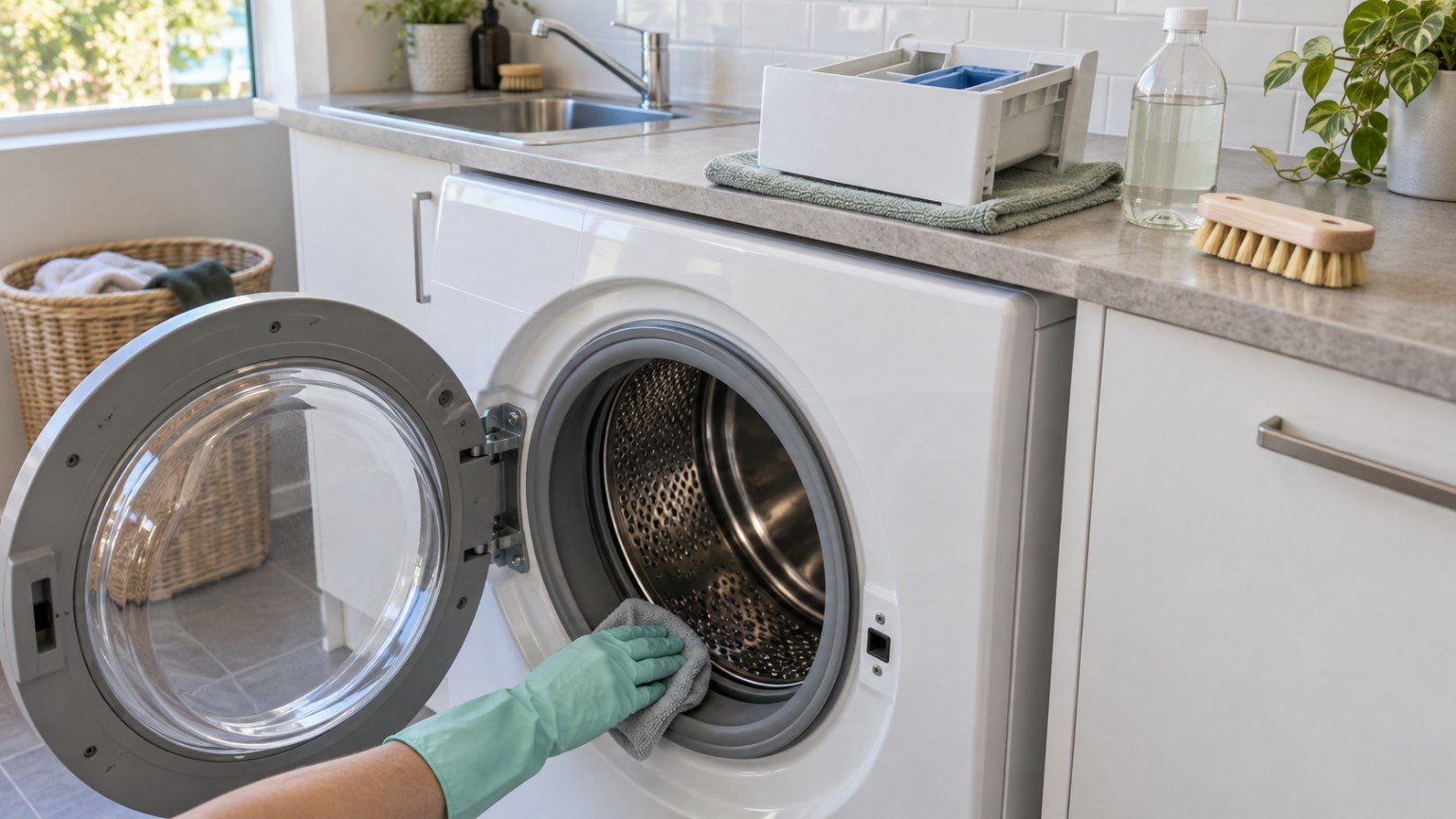
If your washing machine has started leaving clothes smelling faintly sour or musty, even straight after a wash, the machine itself is usually the problem, not your detergent or your technique. Front-loaders in particular are prone to this because their rubber door seal and enclosed drum trap moisture, lint and detergent residue in a way top-loaders don’t. The good news is that it’s almost always fixable at home with things you already have in the cupboard.
Why washing machines start to smell musty
A washing machine spends most of its life warm, damp and dark inside, which is exactly the environment mould and mildew like best. A few habits make it worse:
- Leaving wet washing sitting in the drum after the cycle ends
- Closing the door and detergent drawer straight after a wash, trapping moisture inside
- Washing everything on cold, low-temperature cycles, which don’t get hot enough to break down soap scum and biofilm
- Using more detergent or fabric softener than the load actually needs, leaving residue behind in the seal and drawer
Over time that residue builds up into a slimy film in the door seal, the detergent drawer and the drum itself, and that film is what you’re smelling, not the water supply or the clothes.
How to clean a smelly washing machine step by step
1. Clean the door seal (front-loaders)
Pull back the rubber gasket around the door and check underneath it. This is the single most common source of the smell, because water and lint collect in the fold and rarely get wiped out during a normal wash. Wipe the whole seal, inside and out, with a cloth dipped in warm water and a mild detergent, or a diluted vinegar solution. A slimy black residue is common and is mould and bacterial build-up, not damage to the machine.
2. Take out and soak the detergent drawer
Most detergent drawers lift or slide out completely. Soak it in warm soapy water for 15 to 20 minutes, then use an old toothbrush to get into the corners where powder and softener cake on. Wipe out the empty housing it sits in too, as this is another spot that rarely gets cleaned.
3. Run an empty hot maintenance wash
With the drum empty, run the hottest cycle your machine has, ideally 60°C or above if it’s available. Adding a cup of white vinegar to the drum, or using a dedicated washing machine cleaner, helps lift residue from the drum and hoses. Avoid adding both vinegar and a shop-bought machine cleaner or bleach-based product in the same cycle. Never mix bleach with vinegar or with other cleaning products, as combining chemicals like these can produce fumes that are genuinely dangerous to breathe in. Pick one method and run it on its own.
4. Clean the filter
Most front-loaders have a small drain filter behind a flap near the bottom front of the machine. Check your manual for its exact location, place a shallow tray or towel underneath before opening it, and clear out any lint, coins, hair or debris. This filter is designed to be cleaned every few months and a blocked one can genuinely affect draining as well as smell.
Habits that stop the smell coming back
Once the machine is clean, a few small habit changes make a real difference:
- Leave the door and detergent drawer open a little between washes so the drum can air out and dry
- Take washing out promptly rather than leaving it in the drum for hours
- Use only the recommended amount of detergent for the load size and water hardness in your area
- Run an empty hot maintenance wash roughly once a month
- Wipe the door seal dry after a wash every so often, especially in humid weather
When it’s more than the machine
If the machine itself is clean and the smell is still there, or if you’re noticing a musty smell more broadly through the laundry or nearby rooms, it may be worth checking ventilation and moisture levels in the room itself rather than just the appliance. Our guide to mould, humidity and ventilation in the home covers how to work out whether a smell is coming from an appliance, from poor airflow, or from a genuine moisture problem worth having looked at properly.
In most cases, though, a musty washing machine is simply asking for the clean it hasn’t had. A seal wipe, a drawer soak and a hot empty wash on a Sunday afternoon usually sorts it out completely.



Join The Discussion