
 by
by 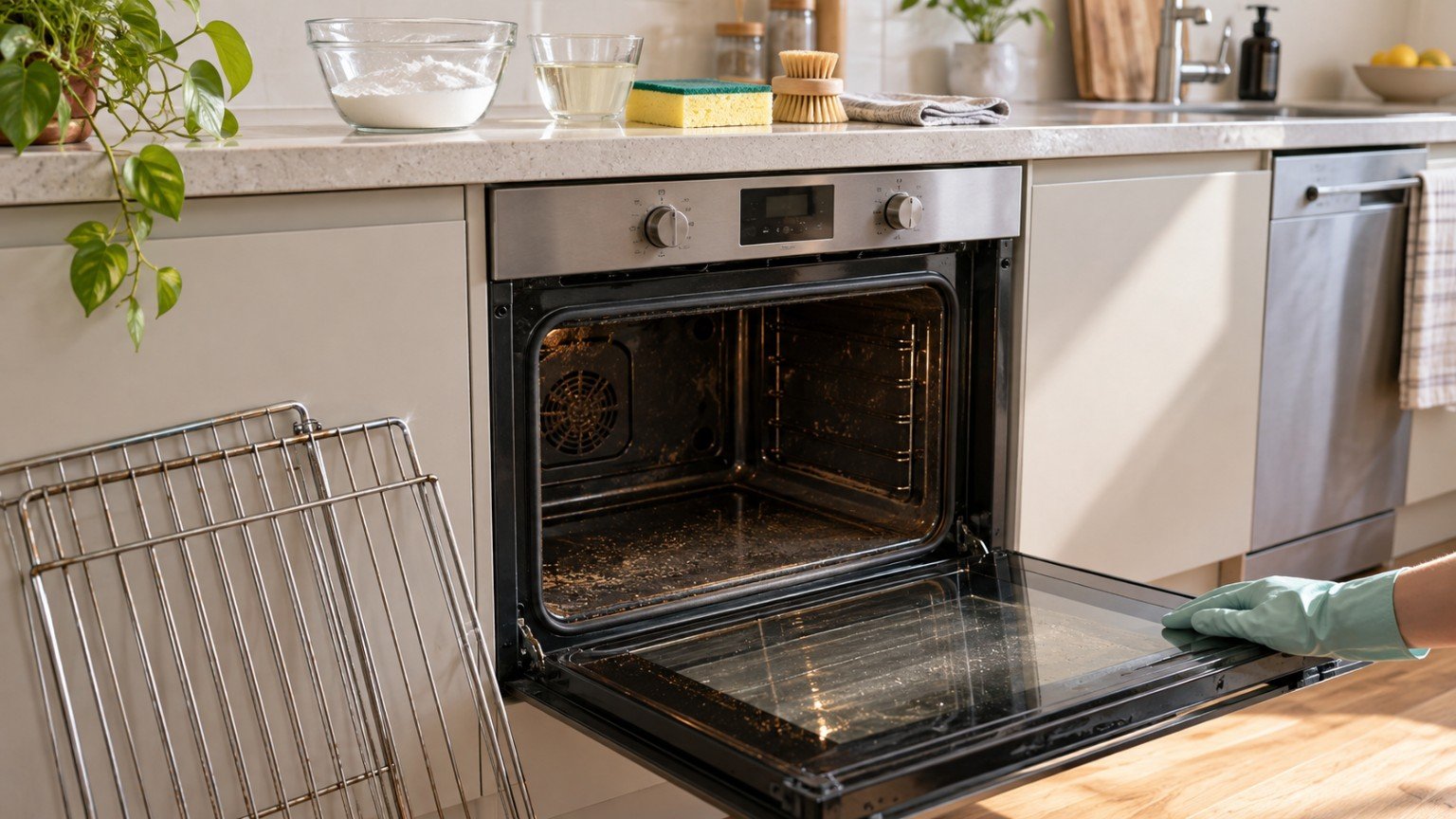
A greasy, baked-on oven is one of those jobs that gets put off because it feels like it needs strong, unpleasant chemicals to actually work. It does not. A simple baking soda and water paste, combined with a bit of patience, will lift most everyday oven grime without the fumes, the gloves, or the need to air the kitchen out for hours afterwards.
Here is a practical, chemical-free way to get an oven properly clean, from a lightly soiled home oven to one that has not been touched in months.
What you’ll need
- Bicarbonate of soda (baking soda)
- Warm water
- White vinegar in a spray bottle
- A soft cloth or sponge, plus an old toothbrush for corners
- Rubber gloves
- A plastic scraper or an old, blunt kitchen knife (never a metal one that could scratch enamel or glass)
Step 1: Make the paste
Mix bicarbonate of soda with a small amount of water until it forms a spreadable paste, roughly the consistency of a thick icing. Avoid making it too runny, since a thicker paste clings to vertical surfaces and grime better.
Step 2: Apply and leave it to work
Remove the racks and set them aside for separate cleaning. Spread the paste generously over the interior surfaces of the oven, avoiding the heating elements and any exposed electrical parts. Pay extra attention to areas with visible baked-on residue.
Leave the paste to sit for at least a few hours, or ideally overnight. This is the part that actually does the work: the longer it sits, the more it softens grease and carbon buildup, which means less scrubbing later.
Step 3: Wipe and spray with vinegar
Once the paste has had time to work, wipe out as much as you can with a damp cloth. Then lightly spray the remaining residue with white vinegar. The mild reaction between the vinegar and the leftover bicarbonate helps lift the last of the grime and makes it easier to wipe away cleanly. Finish with a final wipe using a clean, damp cloth to remove any remaining residue.
Dealing with the oven door glass
Baked-on marks on the inside of the oven door respond well to the same paste method. Apply it to the glass, leave it for an hour or two, then wipe clean with a damp cloth. For stubborn marks, a gentle scrape with a plastic scraper, held at a shallow angle, can help lift residue without scratching the glass. Avoid abrasive scourers on glass, as they can leave permanent scratches.
Cleaning the racks
Oven racks can usually be soaked separately in a bath, laundry sink or large tub with hot water, a splash of dish soap and a handful of bicarbonate of soda. Leave them to soak for an hour or more, then scrub with a sponge or old toothbrush to work grime out of the corners and grooves before rinsing and drying.
Keeping it cleaner for longer
- Wipe up spills as soon as the oven has cooled, before they get the chance to bake on again the next time it is used.
- Use a tray or sheet of baking paper under dishes that are prone to bubbling over.
- Do a quick wipe-down every few weeks rather than waiting for a build-up that needs a full deep clean.
When to call in help instead
Some ovens have a self-cleaning or pyrolytic function, which uses very high heat to burn off residue automatically, follow the manufacturer’s instructions for that feature rather than combining it with a manual clean. If your oven is under warranty, check the manual before using any cleaning method, since some manufacturers specify what is safe to use on certain interior coatings. And if you ever notice a burning smell that is not related to food, a spark, or any issue with the oven’s wiring or gas connection, stop using it and contact a licensed technician rather than attempting to diagnose or fix it yourself.

Join The Discussion