
 by
by 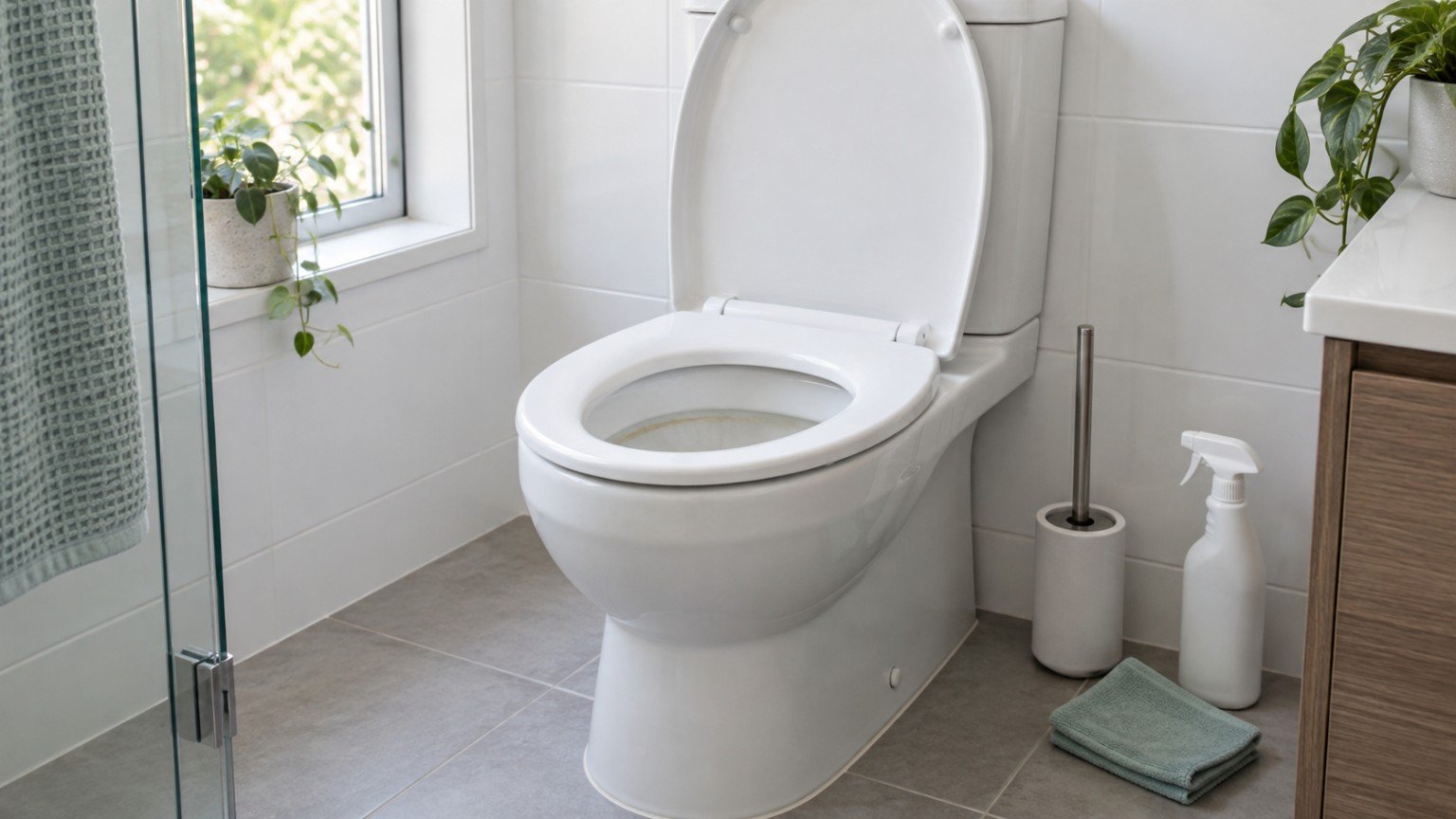
A toilet bowl that stays dull, ringed or orange no matter how often you scrub is rarely a sign you’re not cleaning enough. In most Australian homes, those stubborn marks come from what’s in the water itself, not from a lack of effort. Understanding the cause makes it much easier to actually shift the stain, rather than scrubbing the same spot week after week.
Why toilet bowls develop mineral and rust stains
Two different problems tend to get lumped together as “toilet stains”, and they respond to different treatments.
- Mineral (limescale) buildup shows up as a dull grey, white or brownish ring, usually right at the waterline. It’s caused by calcium and magnesium in hard water gradually depositing on the bowl’s surface.
- Rust stains look distinctly orange or reddish-brown. They usually come from iron in bore or tank water, or occasionally from ageing internal fittings, rather than the toilet itself being at fault.
If your stains are worse in one bathroom than another, or you notice similar marks on taps and showerheads, hard water or bore water is almost certainly the underlying cause.
What you’ll need
- White vinegar
- Bicarbonate of soda (baking soda)
- A pumice stone or a nylon (non-metal) scrubbing pad
- A toilet brush
- Rubber gloves
- Optional: cream of tartar or a toilet-safe rust remover for stubborn rust
Avoid wire brushes or metal scourers. They can scratch the bowl’s glaze, which actually makes future staining worse because grime has more surface texture to cling to.
Removing mineral (limescale) stains
- Turn off the water supply valve at the base of the toilet and flush to lower the water level in the bowl, so the stained area is fully exposed.
- Pour in enough white vinegar to cover the stained area and leave it to sit for at least an hour, longer for heavy buildup.
- Sprinkle bicarbonate of soda over the stain and scrub gently with the toilet brush or a damp pumice stone. Always keep the pumice stone wet, a dry stone can scratch porcelain.
- Rinse, turn the water supply back on, and flush.
Removing rust stains
Rust responds well to a mild acid. Cream of tartar made into a paste with a little water, or straight lemon juice, applied directly to the stain and left for 20 to 30 minutes before scrubbing, is usually enough for light to moderate staining. For heavier rust, a commercial rust-stain remover labelled safe for toilets and porcelain will do the job faster, just follow the product’s instructions and ventilate the bathroom while using it.
A safety note: never mix cleaning products, especially bleach with vinegar, lemon juice or any acidic cleaner. Combining bleach with an acid releases toxic fumes. Pick one method, rinse the bowl thoroughly, and only then move to a different product if needed.
Keeping stains from coming back
- Brush the bowl a few times a week rather than waiting for visible buildup, it’s far easier to prevent a ring than remove one.
- A monthly vinegar soak keeps mineral deposits from taking hold in hard water areas.
- An in-cistern cleaning block can help, though check the packaging if you have older rubber seals, as some products can degrade them over time.
- If hard water is a broader issue in your home (spotty glassware, dry skin after showers, scale on taps), a whole-home water softener is worth researching, though that’s a bigger investment decision than a bathroom fix.
When it’s more than a cleaning problem
Occasional light staining from hard or bore water is normal and just needs regular cleaning. If rust staining is heavy, returns within days of a thorough clean, or you notice it appearing in taps and appliances around the same time, it’s worth mentioning to your water provider or, if you’re on tank or bore water, having the water tested. That’s a water-quality question rather than a cleaning one, and no amount of scrubbing will fix it long-term if the water itself is the source.
With the right approach, most mineral and rust staining is straightforward to shift, and a little regular maintenance keeps it from building back up.
Join The Discussion