
 by
by 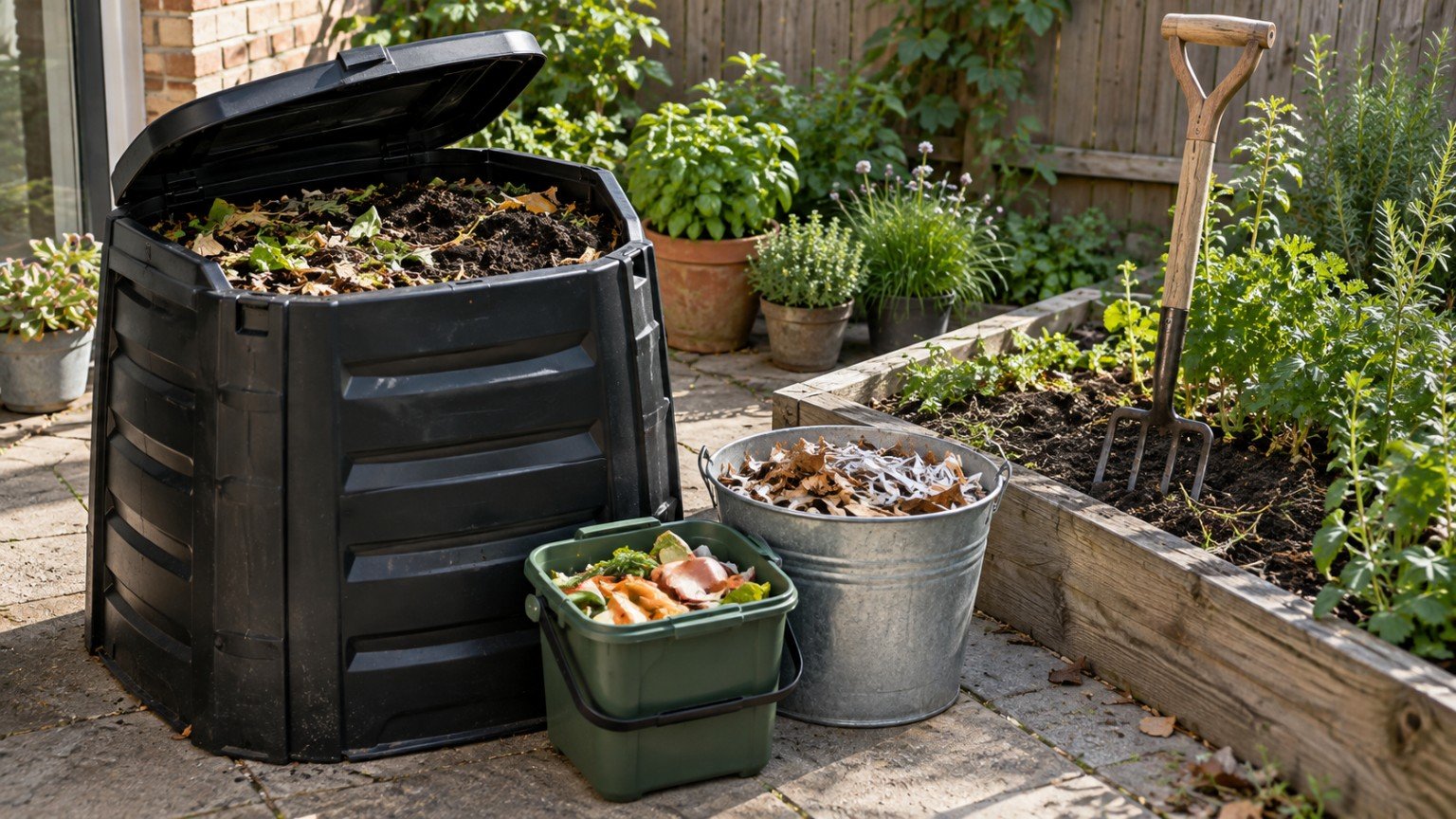
Composting is often thought of as something that needs a big backyard, but there is a workable option for almost every kind of home, from a suburban block to a small courtyard or an apartment balcony. The core idea is the same no matter the scale: turning food scraps and garden waste into a rich, usable soil additive instead of sending it to landfill.
Choosing the right composting method for your space
The right composting system depends mostly on how much outdoor space is available and how much time you want to spend maintaining it. A backyard with garden beds suits a traditional compost bin or bay well, a smaller courtyard or patio suits a compact enclosed bin or a worm farm, and an apartment with no outdoor compost space at all can still compost successfully using a bokashi bucket kept indoors.
Backyard compost bins and bays
A standard compost bin, either a purpose-built plastic bin or a simple timber bay, is the easiest starting point if you have some backyard space. Choose a spot that gets some sun but is not baking in full summer heat all day, sitting directly on soil rather than concrete, so worms and microbes can move in from the ground below. Turning the contents every week or two with a garden fork helps introduce oxygen and speeds up the whole process considerably.
Compact and enclosed compost systems for small yards
For a courtyard, small yard or paved area, a compact tumbler-style bin is a good option, since it is fully enclosed, easier to turn (usually with a handle rather than a fork), and tends to manage odour better than an open bay. These units are smaller, so they work best with a steady, moderate amount of scraps rather than large amounts all at once.
Bokashi composting for units and apartments
Bokashi is a fermentation-based system that works entirely indoors in a sealed bucket, which makes it genuinely suited to units, apartments and homes without any outdoor space. Food scraps, including small amounts of meat and dairy that are not suitable for a standard compost bin, are layered with a bokashi bran that kickstarts fermentation rather than decomposition. After a few weeks, the fermented contents still need to be buried in soil, added to a garden bed, or handed to a community garden or council collection point to fully break down, so it is worth knowing where that final step will happen before you start.
What can and can’t go in the compost
Fruit and vegetable scraps, coffee grounds, tea leaves, eggshells, shredded paper and cardboard, and garden clippings are all safe for a standard compost bin. Meat, dairy, oily food, diseased plants, weeds that have gone to seed, and pet waste are best left out of a standard bin, since they can attract pests, create odour, or introduce problems into the finished compost. A bokashi system is the exception, since its sealed, fermentation-based process can handle small amounts of meat and dairy that a standard bin cannot.
Getting the balance right
Good compost relies on a rough balance between “greens” (moist, nitrogen-rich material like food scraps and fresh grass clippings) and “browns” (dry, carbon-rich material like dried leaves, shredded cardboard and straw). As a general guide, aim for roughly three parts browns to one part greens by volume. Too many greens and not enough browns is the most common reason a home compost bin turns slimy and starts to smell.
Troubleshooting common compost problems
- Bad smell: usually too many greens or not enough airflow. Add dry browns and turn the pile.
- Too dry and not breaking down: add some water and more green material, and turn it through.
- Attracting pests: bury fresh scraps under existing material rather than leaving them on top, and avoid meat and dairy in a standard bin.
- Slow to break down: chop scraps smaller before adding them, and turn the pile more often to introduce oxygen.
Using your finished compost
Finished compost is dark, crumbly and smells earthy rather than like food waste, which usually takes a few months in a backyard bin and can take longer in a smaller system. It can be dug through garden beds, used as mulch, or mixed into potting mix for container plants. Even a small, imperfect compost system genuinely reduces household waste and gives back something useful for the garden, so it is worth starting small rather than waiting for the ideal setup.



Join The Discussion